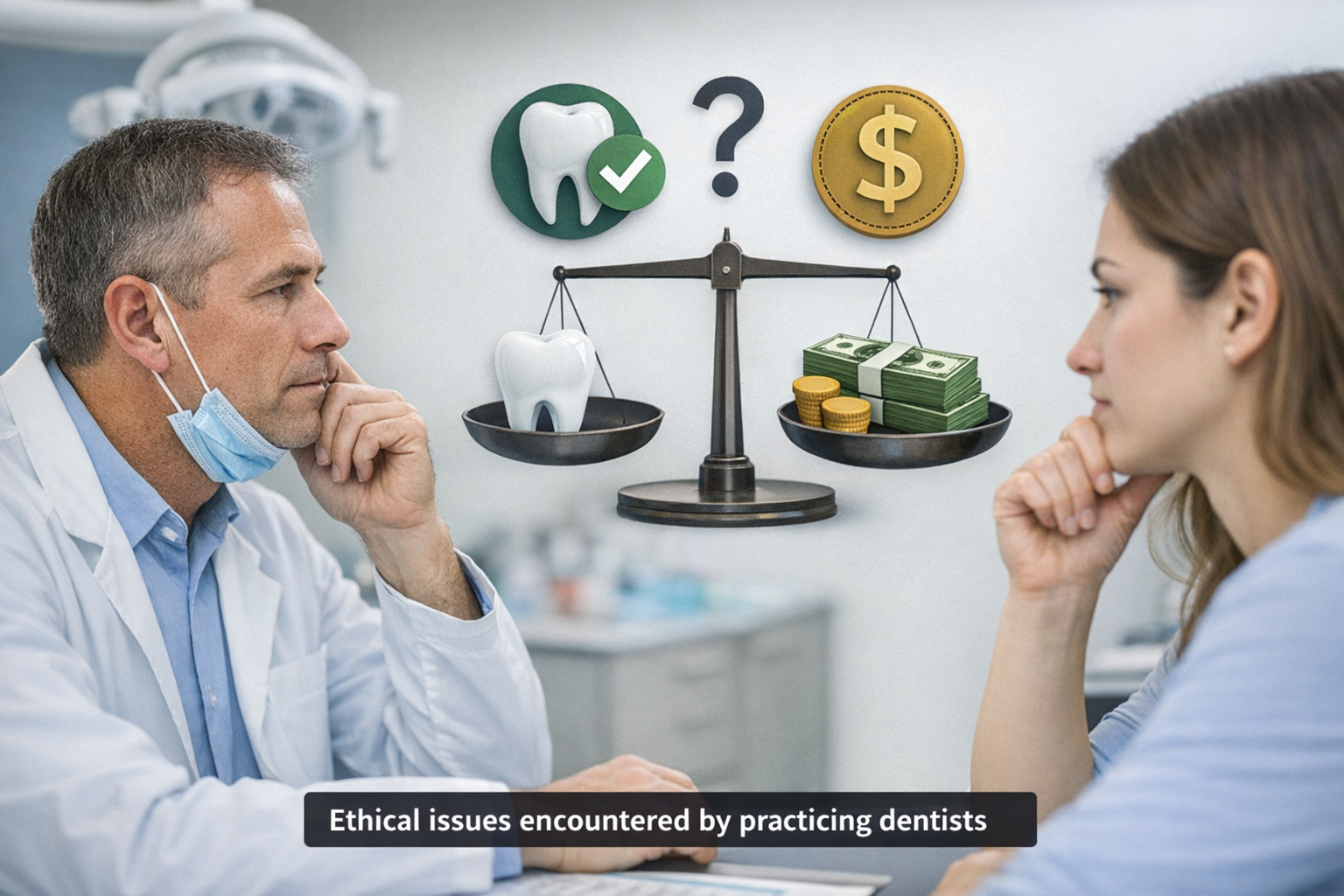
Dental practice is not just a performance of clinical competencies; it is a process of a professional career which continuously challenges an ethical judgment of a dentist. Practicing dentists have to face the situations every day when clinical knowledge, patient expectations, and ethical principles come into intersection. The consequences of decisions made in such situations usually have far-reaching consequences on patient wellbeing, professionalism and societal trust. It is important to be able to comprehend ethical issues that practicing dentists are facing to be able to sustain the utmost standards of care and respect patient rights and the duties toward the society.
This paper will be discussing dentists undertaking real-life decisions with the emphasis being laid on treatment decisions, patient autonomy, finances, and professional judgment. Through these issues we can understand that ethical guidelines regulate responsible working as a dentist.
Ethical knowledge in Dentistry
Dental ethics gives a guideline on differentiating between the right and wrong practices in the field. Where laws govern the things that must be done by the dentists, ethics govern what they ought to do. The ethical standards in dental practice are:
- Beneficence: This is doing in the best interest of the patient.
- Non-maleficence: Not doing harm to patients.
- Autonomy: The right to honor the rights of patients to make informed choices concerning their treatment.
- Justice: A Fair and reasonable treatment of all patients.
- Veracity: Telling the truth and telling the patients about the diagnoses, the treatment options, and their possible risks.
These principles do not exist in abstract form, they are practiced in the day-to-day practice when dentists are confronted by some clinical and professional dilemma. The neglect of ethical requirements may lead to decreased confidence of the patient, professional loss of face, and even litigation.
Typical Dental Practice Ethical Dilemmas
Dentists are faced with various ethical dilemmas during their employment. The most common ones include:
- Patient Autonomy and Informed Consent
Central to ethical practice is ensuring that the patients have the knowledge on the risks, benefits, and alternatives of the proposed treatments. Patients are at liberty to either accept or deny care but this autonomy may pose a challenge to the dentist when the decision of a patient goes against the professional notion of the dentist.
- Clinical Judgment and Treatment Planning
The process of choosing the most suitable treatment method is the process of weighing between clinical evidence, needs of patients, and practicality. Ethical dilemmas are created when there are various treatment alternatives with varying price, risks and consequences.
- Financial Considerations
Dentists are required to find the balance between the field of clinical ethics and business reality. Financial gains might lead to the temptation of prescribing unnecessary procedures by the practitioners, which may result in a clash between financial gain and patient well-being.
- Professional Boundaries
It is essential to keep the right distance with patients and colleagues. Violation of professional roles, conflicts of interests, or conflict of interests, and neglecting of care in favor of personal gain are severe incidents of breach of ethics.
- Cultural Equity and Sensitivity
Dentists are serving a greater variety of populations. The practice of ethics also involves having knowledge of the culture, overcoming language barriers, and providing all the patients with fair service without consideration of social economic status.
To discuss the ethical issues encountered by practicing dentists, further, professional resources would offer case-based judgment and real-life models of making decisions.
Ethical Decision-Making Ethical Scenarios
Actual-life situations can be used to explain the complications of making ethical decisions in the field of dentistry. The examples below illustrate the way practitioners can overcome these challenges:
Scenario 1: Treatment Refusal
The patient needs a root canal in order to avoid spreading the infection and he or she does not want to undergo the root canal procedure because he is afraid of pain. The dentist is afraid that failure to seek treatment may lead to serious complications.
Ethical Considerations:
- Autonomy: The right to refuse treatment, which is the right of the patient.
- Beneficence and Non-maleficence: Educating the patient on the possibilities of harm in case of delay in treatment.
- Veracity: The ability to give truthful information regarding the risks, pain management alternatives, and consequences.
Decision-Making Approach:
The dentist is able to discuss other pain management approaches, provide the patient with the opportunity to be sedated and inform him about all the risks. Finally, the informed choice of the patient has to be addressed and the discussion is to be documented.
Scenario 2: Economic Stress
The practice of a dentist is under financial pressure and a cosmetic procedure prescribed is not a mandatory procedure required to maintain health of the mouth.
Ethical Considerations:
- Non-maleficence: It means not subjecting the patient to unnecessary medical procedures that do not help him or her.
- Justice: Making sure the patients are not financially exploited.
- Professional Integrity: Striking the right balance between business and ethical demands.
Decision-Making Approach:
The dentist is supposed to be ethically honest in giving his/her recommendations on clinical grounds and not on profit making. There is an element of trust and professional credibility that comes as a result of being transparent in talking about optional processes, costs, and alternatives.
Scenario 3: Competing Therapeutic Solutions
There are two treatment plans which are clinically viable, one is faster and cheap whereas the other is more durable and expensive. The patient opts to go with the lower cost.
Ethical Considerations:
- Autonomy: The patient should be respected.
- Beneficence: Making recommendations on long term consequences of each choice.
- Justice: Giving equal care irrespective of the financial status of the patient.
Decision-Making Approach:
The dentist will be able to explain the advantages and the disadvantages of both and make the patient make an informed decision. The discussion should be documented, which would ensure transparency and prevent possible liability.
Some of the Bottom-lines of Ethical Dental Practice
Making ethical decisions effectively is based on the interplay of professional knowledge, critical thinking, and following the achieved principles:
- Patient-Centered Care
Ethical practice is concerned with the best interest of the patient and not an individual or economic concern. Individual approaches to cases should be conducted by dentists who take into consideration the preferences and values of the patient.
- Evidence-Based Practice
The decisions made need to be based on the existing research, clinical guidelines, and best practices. Evidence-based recommendations will help to make sure ethical considerations are guided by scientific knowledge as opposed to assumptions or beliefs.
- Constant Professional Growth
The process of clinical expertise is in tandem with ethical competence. To update their knowledge on new ethical challenges, dentists ought to engage in lifelong learning, case studies and professional forums.
- Transparent Communication
Trust is developed through direct, open, and empathetic communication. The description of the procedures, risks, and alternatives minimizes the misconception and enables patients to make the informed choice.
- Reflective Practice
Cases of ethical dilemmas may be reflected upon regularly to improve ethical judgment. To enhance ethical thinking, dentists are able to examine previous judgments, deliberate on other methods, and discuss ethical problems with colleagues or mentors.
Legal vs. Ethical Considerations
Though law and ethics are closely related, they do not mean each other. Legal rules provide a minimum standard of practice, and ethical rules that may demand exceeding the legal standard.
An example is a dentist can legally continue with a procedure that the patient is not sure about, but because of ethics, the autonomy of the patient can require delaying or changing the method. Being aware of this difference will assist dentists in maneuvering through the circumstances in which the legal standards and ethical demands are likely to conflict.
Hurdles in using Ethical Principles
Even serious dentists have obstacles in their way of being ethical:
- Uncertainty in Guidelines: Ethical codes offer guidelines that do not have specific answers to each situation.
- Conflicting Obligations: Sometimes, there are cases in which patient welfare, viability of practice, and professional responsibility have to be considered at the same time.
- Time Constraints: Clinical environments would be too busy to allow adequate time to engage in deliberation on ethics.
- Personal Biases: Unconscious biases may negatively affect judgment and this is why continuous self-awareness and self-reflection is necessary.
To overcome these difficulties, it is necessary to take action, such as mentorship, peer consultation, and use of professional ethics resources.
Developing an Ethical Dental Practice Culture
The ethical culture in a dental practice can be promoted to the advantage of both the patients and the professional team:
- Standardize Policies: Format procedures on informed consent, treatment planning and financial disclosures.
- Develop Candor and Open Communication: Promote ethical concerns among the staff without the fear of punishment.
- Periodical Ethics Training: Participate in workshops and seminars in order to update the knowledge on the emerging ethical standards.
- Promote Mentoring: Juniors can get to the complex ethical situations with the help of experienced practitioners.
Ethical culture will provide a uniform, transparent, and professional decision-making.
Conclusion
Dental decision-making is a dynamic and continuous process which involves ethical decision-making. To offer responsible care, practitioners should strike a balance between patient autonomy, financial facts, and professional judgment against clinical knowledge. Following the ethical principles of beneficence, non-maleficence, autonomy, justice, and veracity, dentists can find their way around complicated situations without losing trust, integrity, and professional excellence.
In case dentists wish to gain a deeper insight into the ethical dilemmas in real life, literatures on ethical issues encountered by practicing dentists can provide a useful source of information and frameworks to tackle ethical dilemmas. Finally, an ethical practice is not only safeguarding the patients, but also enhancing the credibility and sustainability of the dental profession.