Still one of the most fascinating but least visited parts of the world is Central Asia. This area is now an expanse of steppes, mountain ranges, and ancient desert cities that were the very heart of the Silk Road, making a Central Asia trip a journey through living history. Central Asia has long served as a route through which traders, scholars, and explorers have passed, exchanging goods, ideas, religions, and technologies that influenced civilizations far beyond the region. The remnants of that history can be traced in its architecture, traditions, and landscapes to date.
With current day travellers attempting to find places that are genuine and cultural and adventurous to an extent that many of the famous tourist destinations that are well-travelled and filled with tourists, Central Asia is becoming an attractive destination. The region that is composed of Kazakhstan, Uzbekistan, Kyrgyzstan, Tajikistan, and Turkmenistan, is amazingly diverse in terms of experience. It is the world that offers the traveller a chance to explore beyond travel maps and see the medieval cities with turquoise-edged domes, the distant mountain villages and the massive ruins of the desert.
This article presents Central Asia as a tourist destination that was influenced by the Silk Road heritage. It covers the individuality of each country, shows the less popular cultural and historical attractions, and shows why the area should be considered by travellers who want to have significant experience provided by historical and exploration.
Silk Road, Central Asia and the Legacy
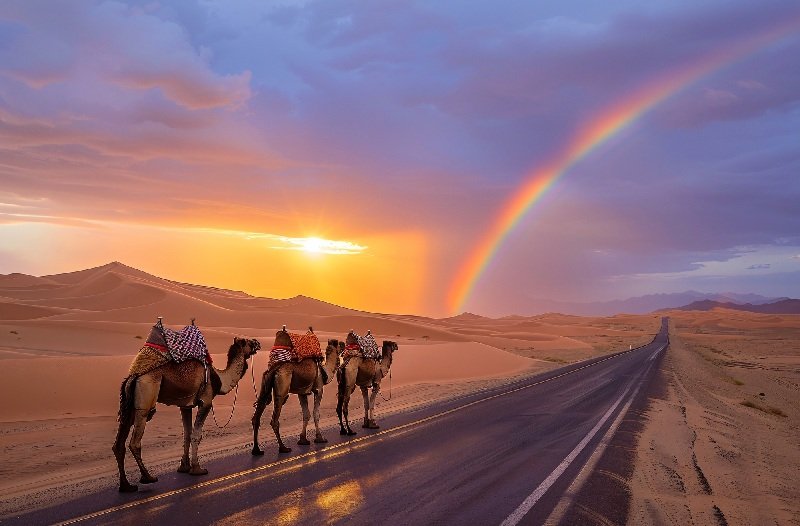
The Silk Road was not merely a road but a system of inter-linked routes connecting East Asia and Middle East and Europe. Central Asia was in the intersection of this great trading system so that it became the location of the fusion of cultures and the economic exchange. Cities became centres of caravan, merchants, artisans, and scholars all over continents gravitated towards such centres.
Commerce on such routes went much beyond silk. Central Asia was the passageway of spices, precious metals, textiles, paper, and even ideas like mathematics, astronomy, and philosophy. Because of this the region was able to come up with a rich cultural heritage that was a mix of Persian, Turkic, Mongol, and Islamic cultures.
Today, the traveller who is interested in the Silk Road travel can trace these ancient routes and visit those cities where active caravanserais and colourful market were held. Most of the Silk Road locations in Central Asia are still rather undeveloped unlike more commercialized ones, which provide a unique experience of time traveling.
Kazakhstan: Great Landscapes and Nomadic traditions
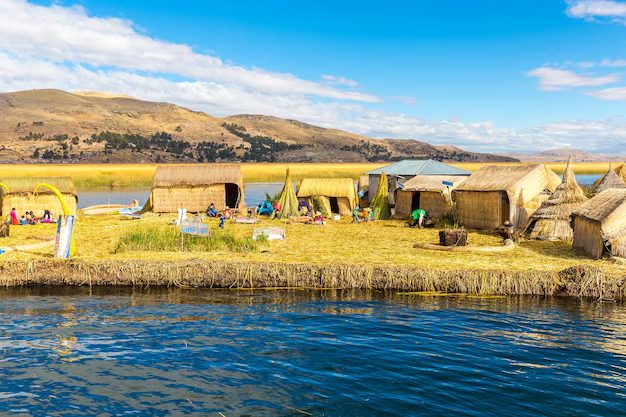
The largest country in Central Asia is Kazakhstan, the country of great contrasts. Its great plains run inexhaustibly under the clear skies and the contemporary cities appear in the midst of ancient funerals and petroglyphs. In the past, Kazakhstan was an important route that nomadic tribes and traders of Silk Road travelled between China and Europe.
The nomadic tradition of the country is still entrenched in the culture. The lifestyle of the steppe is evident in such traditional yurt settlements, horseback riding, and eagle hunting traditions. The Tamgaly petroglyphs provide some evidence of prehistoric spiritual and artistic representation.
Previously the capital, Almaty is a mix of Soviet architecture and green parks and mountainous backgrounds. Close by, the traveller has the opportunity to visit distant valleys, alpine lakes and old tracks that were used by the caravan. Kazakhstan presents the feeling of scale and liberation which predetermines every Central Asian adventure.
Uzbekistan: The Silk Road Architectural Masterpieces
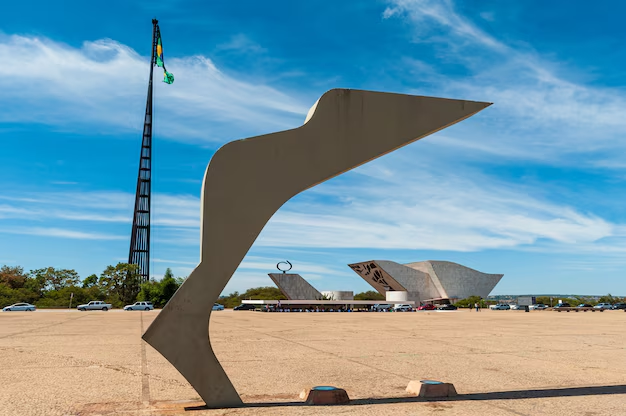
Uzbekistan is dubbed as the cultural hub of Central Asia and justly so. Such cities like Samarkand, Bukhara and Khiva are living museums of Silk Road architecture. Their mosques, minarets and madrassas are decorated with elaborate tile-work and monumental design that is a result of centuries of artistic accomplishment.
Registan Square of Samarkand is to this day one of the most recognizable architectural complexes in the world. The inner city of Khiva is walled and it seems that time has stood still whereas the old city of Bukhara is densely covered with historical buildings.
In addition to such popular places, Uzbekistan can also provide some peaceful experiences in their small towns and villages. Ceramics, silk weaving, and metalwork are still flourishing and that is why modern life is related to the ancient one. Uzbekistan is one of the pillars of a Central Asia vacation that provides a richness, a beauty and a continuum in history.
Kyrgyzstan: Mountains and Nomads and Living Traditions
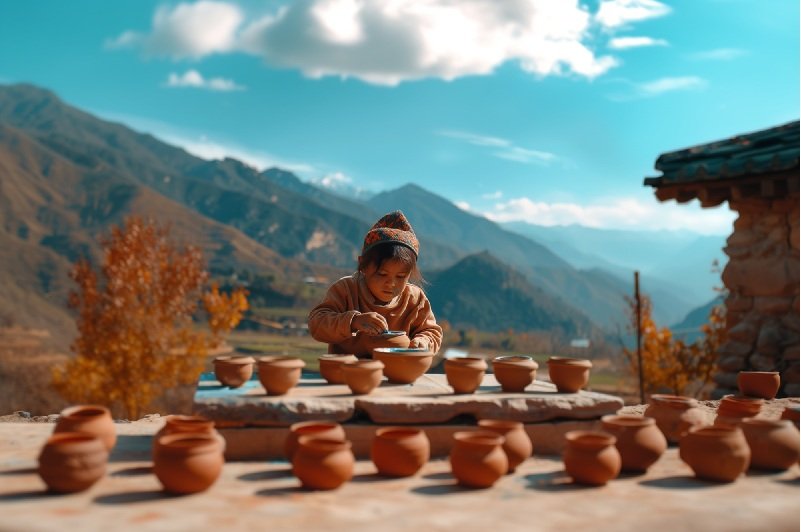
Kyrgyzstan can be characterized by its spectacular mountainous terrain and powerful nomadic spirit. Tian Shan ranges and Pamir ranges dominate the country that forms a heaven of hikers, trekkers and nature lovers. Kyrgyzstan is one of the places where the cultural heritage is still very closely connected to the life of people today.
In rural regions, nomadic traditions are still practiced by the moving seasonally alongside the herd by families. Spending the night in a yurt, riding horses, and having traditional dinner give tourists a glimpse of what the culture is like. Music, sporting, and storytelling festivals provide additional information on Kyrgyz identity.
To tourists who need guidance and local knowledge, a well-known Kyrgyzstan travel agency could assist in navigating all parts of the country and linking the tourists with the community-based activities. Kyrgyzstan is a unique country where the pure nature and the life tradition are combined, and it is one of the most rewarding places in Central Asia.
The Tajikistan: Vintage Roads through the Pamir Mountains
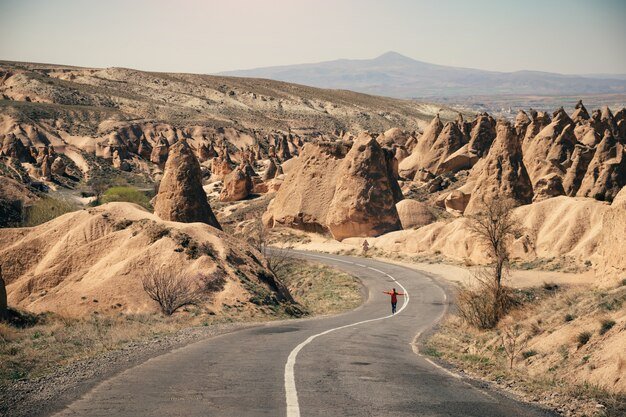
Tajikistan is a country of high mountains and deep valleys, which are formed by the Pamir Mountains, which are also known as the Roof of the World. The region, which was once a difficult and important trade route in the Silk Roads, has historically connected the East and West.
The Pamir Highway is one of the highest in the world and is located on ancient trade routes across isolated mountain passes. On the route, visitors pass through deserted villages, rock castles and scenes of ashamed beauty. Wakhan Corridor, the adjacent country to Afghanistan, is one of the places that provide a peep into the ancient cultures, which have been existing centuries.
Tajikistan has Persian cultural roots unlike its neighbours. The major features in everyday life are poetry, music and hospitality. Tajikistan is a destination that the travellers, who need to be alone, learn something about history, and enjoy the dramatic landscape.
Turkmenistan: Desert Cities, Architectural Curiosity

Ancient ruins and the intriguing modern architecture make Turkmenistan a unique place. The Karakum Desert occupies much of the country, and the Silk Road caravans used to traverse the expansive, uninhabitable desert.
The historic city of Merv, which once was one of the biggest cities in the world, is evidence of the historical significance of Turkmenistan. It is shown in its ruins as a multi-century civilization. By contrast the capital city Ashgabat is designed with its grand white marble buildings and monumental design, where the surreal modern version of ancient history is offered.
The restricted nature of tourism in Turkmenistan makes visiting the country a mysterious experience, yet the rewards to a visitor are one of a kind and discovery.
Other Minor Destinations and Clouded Cultural Wonders
Though the largest cities of the Silk Road have their share of attraction, the less-known places in Central Asia can give the most memorable impressions. Remote villages conserve the old buildings, oral stories and local foodstuffs. The local markets give a glimpse into the life of the locals with tastes and products unique to the region.
Remains of caravanserai in the deserts and in the mountains are another reminder to the visitor of how the region used to be as a crossroad between civilizations. These are some of the sites that have been forgotten, but provide one with moments of reflection and connection to the past.
A trip outside of capital cities would enable the traveller to see Central Asia as it has existed throughout the years, but not as a carefully packaged tourism commodity.
The Reason behind Central Asia as a Destination to the Contemporary Travelers
Central Asia provides room, sincerity, and profundity in an over tourism era. The area is popular among tourists who care about history, cultural immersion, and experience rather than convenience and familiarity.
Its sceneries are not much polluted, its customs are still living, and its historical places are very much in touch with the environment. The challenge of Central Asia is to be more deliberate, participate, and be inquisitive.
Central Asia offers an adventure that is defined by exploration, as opposed to anticipation, to the person who wants to take an alternative to the popular destinations.
Conclusion
Central Asia is not a mere footnote in the annals of history it is an up-and-coming destination that is asking visitors to reexplore the world in Silk Road perspective. The region has an incomparable diversity in its offering; the grand deserts of Kazakhstan, the architectural marvels of Uzbekistan, Kyrgyz traditions of the mountains, the remote passes in Tajikistan, and the desert cities of Turkmenistan.
Through its concealed beauties and cultural diversity, the travellers will have an opportunity to explore the segment of the world that is still well tied to the past without making any noises about the future. Central Asia is one of the examples of the endless legacy of human interaction, commerce, and adventure.