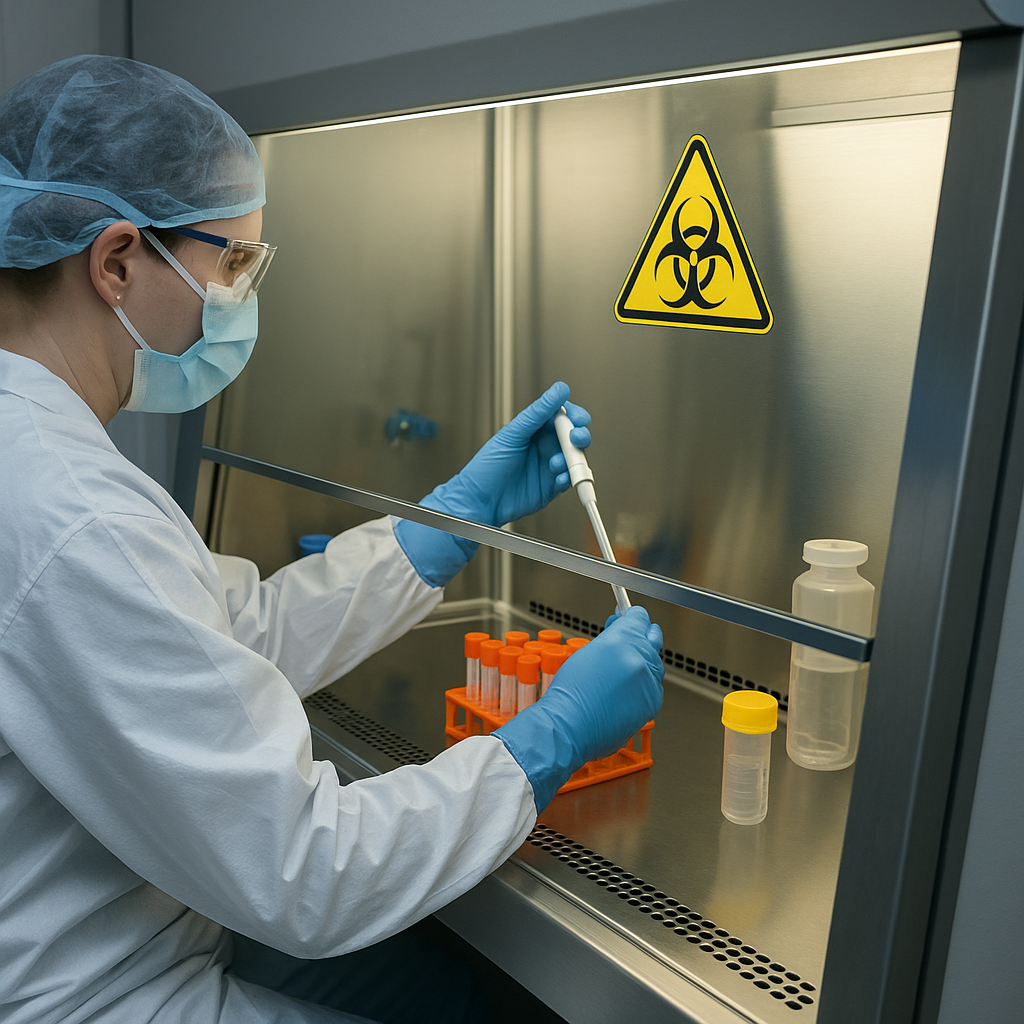
Scientists involved in researching dangerous pathogens use mainly Biosafety Level 3 (BSL-3) and Biosafety Level 4 (BSL-4) labs. Such labs play an essential part in enhancing knowledge in virology, immunology, and epidemiology. At the same time, they involve the danger of accidental incidents, negative effects on the environment, and improper use of living organisms. For these reasons, biosafety and biosecurity standards must be put in place.
We examine in this article how to maintain safe procedures in risky labs using rules for containment, proper risk management, and relevant regulations. Using these protocols protects the people in the lab as well as those living around them and the environment.
Knowing What Biosafety and Biosecurity are
One should first know the difference between biosafety and biosecurity before focusing on particular actions. Biosafety is about using different ways and technologies to stop biological agents from being released or exposed by accident. However, biosecurity is about using measures to stop biological materials from being stolen, lost, or intentionally misused. All laboratory operations depend on these two elements because they are interrelated and necessary.
Identifying The Different Types of Laboratory Risks
High-risk laboratories are mostly organized according to the degree of danger linked to their biological agents. WHO has created four biosafety levels, as mentioned below:
- Low-risk agents, hazard to people or the environment is very unlikely.
- BSL-2 deals with bacteria that are common causes of infection, therefore requiring moderate safety measures.
- Agents that fall under BSL-3 have the potential to cause severe or deadly infection in people exposed to them through inhaling.
- With BSL-4, only agents with high risks are dealt with because there is not yet a treatment or vaccine for diseases like Ebola and Marburg virus.
- These labs are thought to be very unsafe and, for this reason, strict safety and security measures are needed.
The Most Important Biosafety Protocols
1. Engineering Controls
- The purpose of engineering controls is to give the initial defense for employees.
- The air in labs is normally sucked in by negative air pressure systems to block any outflow and prevent airborne agents from escaping.
- Air pollutants and pathogens are removed by HEPA filters from the exhaust air flow.
- They give you a secure space where you handle pathogens, so you reduce the chance of spreading aerosols.
- The use of airlocks and decontamination showers stops dangerous substances from leaving the lab.
2. Equipment specially made to protect workers from occupational risks
- Everyone in a lab setting should use PPE all the time without exception.
- Most BSL-3 laboratories provide laboratory coats, gloves, eye protection, and respirators to everyone working inside.
- At the BSL-4 level, scientists need to wear full-body suits that have positive air pressure and protective airflow.
- Since PPE stands between the researcher and possible risks, it’s crucial to make sure that donning and doffing is done the right way.
3. SOPs stand for Standard Operating Procedures.
- For every lab that handles highly risky materials, SOPs should be created, written down, and employed.
- Taking the correct measures and methods to use and dispose of biological agents.
- Decontaminating the surfaces, instruments, and waste used in the facility is important.
- Emergency steps to follow in cases of accident and equipment failure.
- Regulations and scientific findings should be reviewed and added to these procedures on a regular basis.
How Biosecurity is Carried out
1. Access Control
- A good way to protect against security risks is to manage who enters the lab.
- Only those who are authorized are allowed in the high-risk zones.
- All visitors are monitored and their movements are recorded by using biometric scanners, ID badges, and surveillance cameras.
- Two-person groups and guards are required to ensure that people are safe and responsible.
2. In stock and Openness
- Proper management of inventory stops the possibility of dangerous pathogens being lost or stolen.
- All biological materials are tracked from their acquisition, their use, to how they are stored by electronic databases.
- Auditing help check if the inventory is correct and spot any differences.
- Units that are designed for extra security are meant for especially dangerous or possible weapons materials.
How to Identify Risks and Handle Them
- By assessing risks, the process looks for possible dangers, evaluates the hazards, and implements means of reducing them. It is important that risk management include the following:
- With agent-based risk assessments, the key is to study how infectious and transmissible the pathogen is and how well it lasts in various conditions.
- Look at certain lab activities through risk assessment (for example, centrifugation and animal handling).
- Carry out regular checks and training sessions to ensure all steps for preparedness are still working.
- Usually, the Hierarchy of Controls is used to handle different hazards. Examples are to eliminate risks, replace unsafe materials, put in engineering measures, arrange rules and training, and provide PPE.
The Creation of Rules and Watchful Supervision by Organizations
1. International Guidelines
A number of global bodies give advice on how to handle biosafety and biosecurity issues.
- WHO : Makes available the Laboratory Biosafety Manual, a main document outlining lab safety measures.
- The CDC publishes the reference known as Biosafety in Microbiological and Biomedical Laboratories (BMBL).
- The OECD gives advice and drafts policies related to biosecurity best practices.
2. National Regulations
Every country usually has its own set of laws for ensuring laboratory safety. For example:
In America, the Select Agent Program is in charge of controlling how high-risk biological agents are held and used.
Workers’ protection from biological agents at work is outlined by the Biological Agents Directive in the European Union.
If these rules are not followed, penalties, lab closure, or funding loss may happen.
3. There are Institutional Biosafety Committees (IBCs).
- IBCs govern most high-risk facilities in the way they should be constructed.
- Check and authorize research that works with biohazardous materials.
- Make sure all projects are following the proper rules as they continue.
- Act as a bridge between researchers, the officials in charge, and the people who establish regulations.
Right Training and The Right Corporate Culture for Safety
1. Good training covers a wide range of important skills.
Staff need to take part in frequent training scenarios covering various subjects.
• The use of equipment and personal protective equipment in the right manner.
• Ways to react in emergency situations.
• What responsibilities are connected to dual-use research.
Training keeps changing over time with advancements in science and policies.
2. Developing an organization that focuses on safety.
It is most important to focus on safety culture to keep risks under control.
• Help everyone share information about small accidents and safety matters at work.
Add safety points to the routine briefings and team meetings.
Give credit to and recognize people who act safely.
Once safety is part of the company’s identity, it is natural for people to follow regulations.
These Are Also Important Areas For Government Security Work.
No matter how much precaution is taken, some accidents can still occur. So, high-risk labs have to be ready to address problems rapidly and correctly.
Automatic systems should seal the affected parts of the lab and halt airflows in case a breach occurs.
• Cleaning procedures: Personnel and affected areas get disinfected as soon as possible by using proven approaches.
• Surveillance over employees’ health is done regularly, and medical treatments are given to those exposed to hazards.
Constantly practicing for emergencies like containment break, equipment failure, or exposure to a virus makes the team ready.
Dealing With The Concerns of Dual-Use Research
DURC involves research that might be taken advantage of to harm people’s health or the nation’s security. To control DURC dangers, we have to carry out these activities:
• Looking at projects carefully and giving proper approval.
In addition, more control is needed for research with highly contagious or special pathogens.
• Providing training to build a strong feeling of responsibility in the scientific world.
Such policies ensure that science and the protection of people are kept in balance by institutions.
Conclusion
By Improving Laboratory Safety Procedures, We Can Strengthen Safety in Laboratories in The Future.When science moves forward, there is a greater demand for protecting people and the environment. SARS and anthrax incidents from the past point to the importance of always remaining watchful, truthful, and responsible.
Where engineering, strict processes, and a security-conscious team are involved, high-risk labs can continue doing research without endangering the public. It is important to keep training scientists, creating strong policy, and collaborating with other countries to maintain safety in science.
All arty is responsible for laboratory safety: researchers, institutions, governments, and the global scientific community have to team up. It is only possible to achieve this if everyone in the community works together.