Introduction
Maternal mortality is an urgent issue in the global health field and it is specifically high in underserved communities and rural locations. Most women in abundance segments are forced to access quality and timely maternal care, and in most cases, this is not a fascinating ordeal because women in these communities still face the challenge of inaccessibility of quality maternal care. The increase in information and dissemination of community health extension workers reduces this gap and makes sure that maternal care reaches the women who need it most and community health extension workers (CHEWs) are keen health professionals who take the health-maternal services to them directly.
CHEWs play a bridge role between the official health care system and community, specifically where distance, poverty, and the cultural barrier hinder the access of clinics or hospitals. This article discusses the importance of CHEWs in enhancing maternal health in the rural population, citing evidence and practical information, the role they play in providing equality to the population in receiving healthcare services.
The Role of Community Health Extension Workers in Maternal Care
Addressing Barriers to Maternal Health
There are various barriers that rural women encounter in the process of accessing maternal health care among them are:
- The distance to health facilities is long
- Transportation shortage
- Expensive supplies or services
- Cultural and language barriers
- Fear or distrust of formal health educational systems
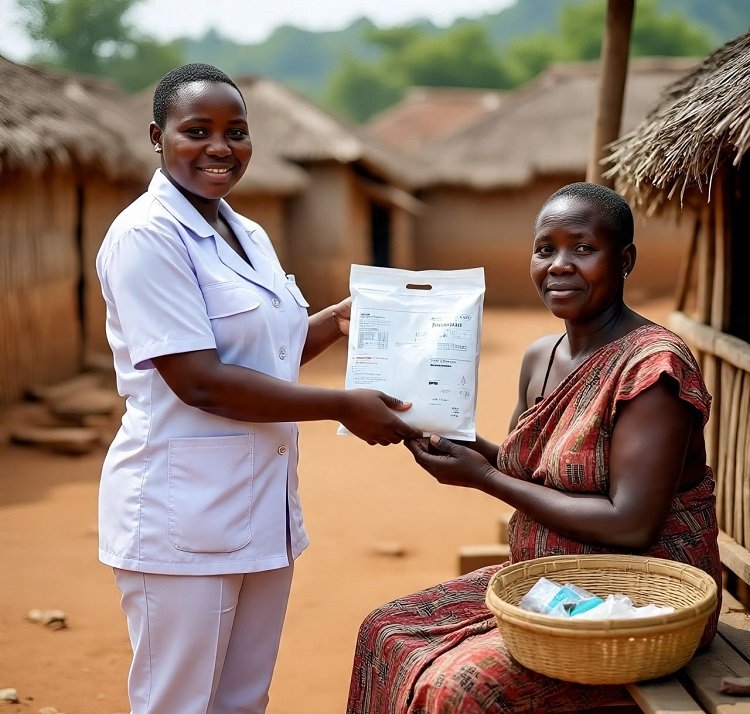
CHEWs overcome these challenges through the fact that they work within communities. They make home visits, offer education, basic antenatal and postnatal care, have the capacity to refer women to proper healthcare facilities, when the need arises.
Building Trust Through Local Engagement
CHEWs are usually native of the communities where they work or live in–a factor that gives them an insight into the cultural norms and beliefs as well as the dynamics of the local environment. This cultural fluency enables them to establish a relationship of trust with the families especially those ones that may be afraid to attend a hospital where they have never been before, especially during pregnancy.
CHEWs are not only health workers, but also counselors and advocates who are there to inform women in the circus around being pregnant, giving birth, and how to recover after the birth.
Real Life Impact of CHEWs on Maternal Health
Increasing Antenatal Care Attendance
Evidence provided by initiatives in sub-Saharan Africa and South Asia reveal that women receiving the assistance of CHEWs are considerably more probable to obtain antenatal care (ANC) appointments. In one of the Nigerian rural districts, CHEWs introduction resulted in an increment in the ANC attendance particularly in the first trimester by 35 per cent after two years. Such an early involvement permits:
- Risk factors such as hypertension, anaemia or infections can be screened.
- Counselling on the preparation of birth
- Fetal monitoring and maternal health Denzel Akonor
- Vaccination against tetanus and food supplements
Early and consistent ANC visits are important for picking out and sorting out complications in good time before they turn fatal.
Reducing Maternal Mortality
CHEWs play a direct role in preventing maternal deaths through the facilitation of safe delivery habits and identification of danger signs beforehand. In a county of Kenya, maternal deaths dipped by 22 % in five years after trained CHEWs were implemented in inaccessible villages.
The most significant practices, which result in this loss, are:
- Promoting facility based deliveries
- Preparing families on the warning signs such as bleeding or overdue labor
- Assisting emergency obstetric care transportation in time
- Enabling postnatal observation to identify the difficulties in time
Such support can be the emergency measure between life and death both to mothers and their babies in the remote locations.
Connecting Women to Resources
CHEWs do not provide only healthcare; they also provide women with much needed social and medical support referring them to:
- Maternity programs offered by the government at no cost
- Nutritional support
- Family planning services
- Malaria and HIV screening
- Children immunizing schedules
It is a whole-person approach, which means that it helps to impact social determinants of health and make sure that the women are granted continuous and comprehensive care during pregnancy and post-partum.
Key Strategies and Tools Used by CHEWs
Community Mapping and Pregnancy Tracking
To keep pregnant women informed or updated, CHEWs have community mapping activities where they establish the presence of women who have been pregnant and their expected due date. They keep family records and design pregnancy calendars in order to monitor the achievement of milestones. This brings precision in the cause of visitations and interventions thus no woman can be lost in the loop.
Health Education and Behaviour Change
CHEWs in-charge of health education campaigns are engaged in non-invasive health education campaigns mainly through:
- The need of skilled birth attendance
- A newborn care such as breast feeding and cord hygiene
- Birth spacing and family planning
- Pregnancy hygiene and Nutrition
CHEWs provide practical changes that are long-term, hence safer pregnancies and healthier outcomes occur by communicating to local contexts.
Mobile Health (mHealth) Tools
Digital technology has improved the work of CHEWs over the last couple of years. They can use MHA and SMS systems in the following way:
- On-line registration of pregnancies
- Get training and a regular update
- Automated scheduled reminders for ANC visits
- Report adverse events in real time to health facilities.
These instruments enhance efficiency, responsibility and coordination amongst the community workers and clinical providers.
Policy and Programmatic Support for CHEWs
Training and Certification
The effective establishment of CHEW programs needs uniform training and approval. Major curriculum area is:
- Physiology and maternal anatomy
- Postnatal support and antenatal
- Location of dangerous signs
- Counselling and communication skills
- Ways of community mobilization
CHEWs are given intensive training of 1218 months in most nations and followed by routine refresher. This professional growth guarantees uniformity with regard to quality care and promotes faith within the community.
Supervision and Monitoring
CHEWs work in the control of the nurses, midwives or even the staff of the health facility. Data audits, performance reviews, and regular field visits keep the standards up and determine the weaknesses to be improved. Indicators being monitored in monitoring systems also include:
- ANC visits by woman Number
- Referral to high risk pregnancies
- Materno-neonatal outcomes
- Satisfaction and feedback by the community
Challenges Faced by CHEWs
Heavy Workloads and Resource Constraints
CHEWs work in numerous environments where they have responsibility of wide catchment areas with poor transport system, medical supplies or PPEs. This compromises their capacity to provide quality care on a consistent basis and might also cause burnout.
Inconsistent Compensation and Recognition
Although CHEWs are essential to provide health services, most of them are low paid or volunteer units. In absence of proper compensation retention would be a significant problem. Governments should accept CHEWs as full-time and on-board health professionals and give:
- Good remunerations and benefits
- Probabilities of a promotion
- National health workforce plans Inclusion
Gender and Social Dynamics
CHEWs, often females, would experience gender-based barriers, consisting of limits on bearing power to utilize certain authority. Even their effectiveness can be restrained by a cultural resistance from the male community or local leaders. These dynamics have to be addressed by programs in terms of gender- sensitive training and community advocacy.
Case Studies: Success Stories of CHEWs in Action
Nigeria’s Rural Maternal Health Outreach
CHEWs have played a significant role in raising the antenatal attendance and institution deliveries in northern Nigeria where the rates of maternal mortality still remain high. In National Planning Kano State and a program addressed more than 5,000 CHEWs serving 200 communities in the rural areas. Outcomes included:
- ANC coverage had a 48% increase
- Home based births had a 33% drop
- 60% of women reporting better knowledge on pregnancy danger sign
Even in community satisfaction surveys, the degree of trust in CHEWs against facility strength was strong, especially, owing to cultural congruence and home-care services.
Uganda’s Village Health Teams (VHTs)
The Village Health Teams in Uganda, also referred to as CHEWs, have contributed in the reduction of death by supporting birth preparedness plans, giving misoprostol to prevent post partum haemorrhage, and by making sure that emergencies in obstetrics are referred. The deaths of pregnant women in one of the districts were reduced by half to 48 per 100 000 in four years since the onset of the program.
The Way Forward: Investing in CHEWs to Bridge the Gap
Governments and health agencies will need to invest in order to maximize the possibilities of CHEWs by investing in:
- Policy Integration
National policies should include CHEWs through resources and polices against its abrogation.
- Workforce Expansion
To achieve this, Countries need to develop and implement more CHEWs to cover the rural areas with a prerequisite of one CHEW to every 500-1,000 people.
- Technical Support
Use of digital solutions and solar-powered devices can empower CHEWs to become more effective in hard to reach areas.
- Community Engagement
CHEW programs need to involve people in the local leaders and families so that there is buy-in and cultural support.
- Sustainable Financing
Reliance does not need to be on donor support and there is a need to shift to domestic funding sources to guarantee sustainability and self-reliance.
Conclusion
The little-known heroes in the frontiers of maternal health in rural and underserved communities are Community Health Extension Workers. Their credible relationships, ground close, and unending commitment render them as the only ones that will enhance access, equity, and gains in the lives of mothers and their newborn babies.
Using programs like antenatal care attendance, decrease in maternal mortality and connecting women to lifesaving resources, CHEWs are demonstrating that health systems do not become a reality within the walls of a clinic, rather it all starts with caring individuals in their neighbourhood.
Investment, support, and scaling up the work of CHEWs should hence be central to any strategy to achieve health equity in maternal health as we drive towards global health equity. It is upon that gamble that we will be closing the divide and guarantee that no woman will be left behind.