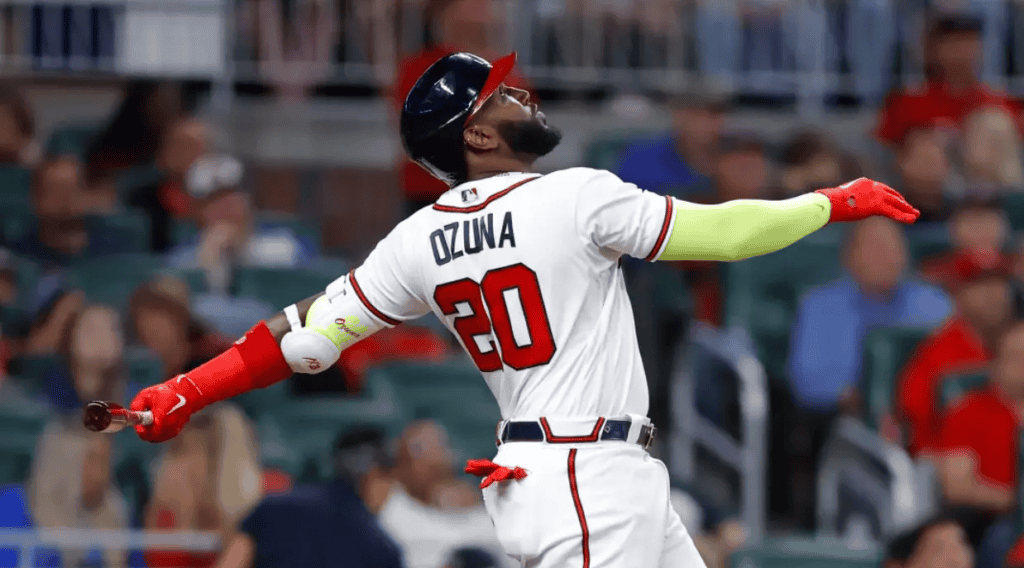
Baseball rumors spread at a faster speed than actual baseball games. For most of the 2025 Major League Baseball season sports media and fan forums and analyst discussions used one phrase to describe Braves player Marcell Ozuna who teams considered him a waiver candidate. The system of roster decisions required evaluation because it involved various elements that professional sports organizations need to manage which included decreasing performance and expensive player contracts and off-field problems and the team undergoing a transformation after a year of poor results. The final result showed more value because it produced a quieter outcome than all the surrounding commotion. Understanding what really happened requires separating the rumor from the record, the speculation from the facts, and the business of baseball from the drama that surrounds it.
Who Is Marcell Ozuna and Why Did the Braves Matter to His Career
Marcell Ozuna arrived in Atlanta as a proven power hitter with the kind of offensive profile that franchise front offices spend years searching for. A right-handed designated hitter capable of driving the ball to all fields, he delivered MVP-caliber production as recently as the 2024 season, posting a .925 OPS, 39 home runs, and 104 RBIs. Those numbers made him one of the most dangerous middle-of-the-order bats in the National League and a cornerstone of Atlanta’s offensive identity during their sustained period of contention.
The 2025 season told a different story. Ozuna’s numbers dipped to a .755 OPS with 21 home runs, a meaningful decline from his previous highs. A hip concern complicated his second half, and a June to July stretch during which he hit .181 drew sustained attention from analysts watching the Braves slide out of playoff contention. It was during this period of organizational uncertainty and individual inconsistency that the Braves Marcell Ozuna waiver candidate conversation gained genuine traction in public discourse.
The Off-Field History That Shaped the Narrative
Any honest assessment of the Ozuna situation must acknowledge the context that surrounded his time in Atlanta. A 2021 arrest on domestic violence charges resulted in administrative leave and a 20-game suspension under MLB’s joint domestic violence policy. A 2022 DUI arrest added further complexity. Both incidents brought discipline, legal consequences, and public statements from Ozuna, and they permanently altered how a significant portion of the Braves fanbase engaged with his presence on the roster. When his performance declined in 2025 and the team fell out of contention, those unresolved feelings amplified the appeal of a clean break, making waiver speculation feel more inevitable than the facts supported.
What the Waiver Process Actually Means in MLB
Much of the public confusion around the Braves Marcell Ozuna waiver candidate discussion stemmed from a misunderstanding of how the waiver system actually functions. In Major League Baseball, waivers apply to players currently on a team’s 40-man roster who are being designated for assignment or removed from active status. When a player is placed on waivers, other clubs have an opportunity to claim him and absorb his existing contract. If no team claims him, the original organization can assign him to the minor leagues or release him outright.
The critical distinction in Ozuna’s case is that his contract was not cut short. He completed the 2025 season under the terms of his existing deal with Atlanta. When the season ended, his contract expired naturally and he entered free agency — a process entirely separate from the waiver system. Once a player reaches free agency, waivers no longer apply. He can negotiate openly with any team. Atlanta had no further claim on where he went next, and no formal waiver designation was ever filed with the league.
Why the Speculation Felt So Convincing
The waiver candidate narrative gained momentum because the underlying conditions were real, even if the mechanism was misidentified. The Braves were out of playoff contention by late summer 2025. Trade deadline conversations surfaced about potentially moving Ozuna, but his no-trade clause and the hip concerns that had limited his second-half production complicated any deal. When no trade materialized, speculation shifted toward waivers as the next logical step. That logic was understandable but technically incorrect. The outcome was always going to be a contract expiration, not a waiver designation.
How Atlanta Evaluated the Decision to Move On
The Braves front office, led by President of Baseball Operations Alex Anthopoulos, had been building toward positional versatility and roster flexibility for several seasons. The designated hitter role, which Ozuna occupied almost exclusively, carries a particular burden in modern roster construction. Teams increasingly prefer players capable of contributing at multiple positions, which makes a DH-only veteran with a large salary harder to justify when production fluctuates and younger alternatives exist internally.
By the latter stages of 2025, Atlanta had already begun experimenting with rotating the designated hitter spot among catchers and contributors with developmental upside. Sean Murphy logged DH at-bats to manage workload as a primary catcher. Drake Baldwin offered a younger profile with room to grow. These experiments reflected a deliberate organizational philosophy rather than a reactive response to Ozuna’s struggles. The decision not to re-sign him was a recalibration, not a dismissal.
The Financial Architecture Behind the Move
Ozuna’s salary represented meaningful luxury tax exposure for an organization that had been managing payroll carefully while maintaining a competitive core. Freeing that financial commitment at the end of 2025 created payroll flexibility heading into a roster construction cycle where the Braves needed to retain their own emerging talent and pursue targeted additions. Decisions of this kind in professional sports rarely reflect a single performance metric. They reflect the intersection of salary, positional value, age curve projections, and organizational direction — all of which pointed toward parting ways with a veteran whose best production appeared to be behind him.
Where Ozuna Went and What It Means for His Future
The story did not end with Atlanta. In February 2026, Marcell Ozuna signed a one-year contract with the Pittsburgh Pirates worth between ten and twelve million dollars, with a mutual option for the 2027 season. The deal reflected a market that still recognized his bat as potentially valuable while pricing in the uncertainty of his recent decline and injury history. Pittsburgh viewed him as a veteran presence capable of anchoring the middle of their lineup and providing the kind of experienced leadership that younger rosters benefit from during a long season.
Former MLB outfielder and analyst Cameron Maybin captured the challenge Ozuna faces in his Pittsburgh chapter when he noted during a broadcast that veteran hitters must adapt when the physical foundation beneath their mechanics begins to shift, because power tends to decline before other tools. Ozuna’s hip health and his ability to regain consistency against left-handed pitching will determine whether the Pittsburgh experiment resembles his Atlanta peaks or his 2025 struggles. Short-term contracts offer little margin for slow starts.
What the Braves Gained by Moving On
Atlanta’s decision not to retain Ozuna opened more than payroll room. It opened a philosophical conversation within the organization about how to construct a lineup that prioritizes versatility, youth, and positional flexibility over individual star power at positions that limit defensive contribution. The Braves have consistently demonstrated a front office philosophy that values roster depth and organizational coherence over headline acquisitions, and the Ozuna transition fit cleanly within that framework.
The roster space and financial flexibility gained heading into 2026 allowed Atlanta to pursue additions that aligned with their identity rather than carrying forward an arrangement that had grown complicated on multiple fronts. For a franchise that has built sustained contention through development and disciplined roster management, the outcome represented exactly the kind of measured decision-making that distinguishes well-run organizations from reactive ones.
Conclusion
The Braves Marcell Ozuna waiver candidate story is ultimately a lesson in how sports rumors develop and how the facts beneath them often tell a more nuanced and instructive story than the headlines suggest. Ozuna was never placed on waivers. His contract ran its course, he entered free agency on his own terms, and he found a new opportunity in Pittsburgh on a deal that reflects both his remaining value and the realistic ceiling of his current trajectory. Atlanta made a deliberate organizational decision to move forward without him, grounded in financial strategy, roster philosophy, and an honest assessment of where his production stood relative to what the team needed.
For anyone trying to understand how professional baseball organizations actually function beneath the surface of public speculation, the Ozuna situation offers a clear illustration of how performance data, contract structure, positional fit, and long-term planning intersect in every significant roster decision. The drama was real. The waiver wire was not.
FAQs
Was Marcell Ozuna actually placed on waivers by the Braves?
No. Despite widespread speculation throughout the 2025 season, the Atlanta Braves never formally placed Marcell Ozuna on waivers. His contract with the organization expired naturally at the end of the 2025 season, at which point he entered free agency. The Braves Marcell Ozuna waiver candidate discussion reflected public speculation rather than any official roster move filed with Major League Baseball.
What is the difference between waivers and free agency in MLB?
Waivers apply to players currently under contract who are being designated for assignment or removed from a team’s 40-man roster. Free agency occurs when a player’s contract expires and they are no longer under any team’s control. In Ozuna’s case, his contract ran to its conclusion, making him a free agent — a process entirely separate from the waiver system.
Why did the Atlanta Braves choose not to re-sign Ozuna after 2025?
Atlanta’s decision reflected a combination of factors including Ozuna’s declining production in 2025, his hip injury concerns that complicated the second half of his season, his limited positional versatility as a designated hitter, and the Braves’ organizational preference for roster flexibility and younger contributors. The front office under Alex Anthopoulos had been building toward a more versatile lineup construction for several seasons.
Where did Marcell Ozuna sign after leaving Atlanta?
In February 2026, Ozuna signed a one-year contract with the Pittsburgh Pirates worth approximately ten to twelve million dollars, with a mutual option for the 2027 season. Pittsburgh plans to use him as a primary designated hitter and veteran offensive contributor while integrating younger talent around him in their lineup.
How did Ozuna’s 2025 performance compare to his previous seasons?
Ozuna posted a .755 OPS and 21 home runs in 2025, a significant decline from his 2024 campaign in which he recorded a .925 OPS, 39 home runs, and 104 RBIs. A hip issue and an extended midseason slump during which he hit .181 over a two-month stretch drove much of the speculation about his future with Atlanta and contributed to the waiver candidate narrative that circulated throughout that season.
Did Ozuna’s off-field history influence the Braves’ decision?
Off-field incidents, including a 2021 domestic violence arrest and a 2022 DUI charge, shaped public sentiment around Ozuna throughout his Atlanta tenure. While the Braves’ official roster decision was framed around performance and financial considerations, the complicated relationship between Ozuna and a portion of the fanbase made the eventual parting of ways less surprising to observers who had followed the situation closely over several years.