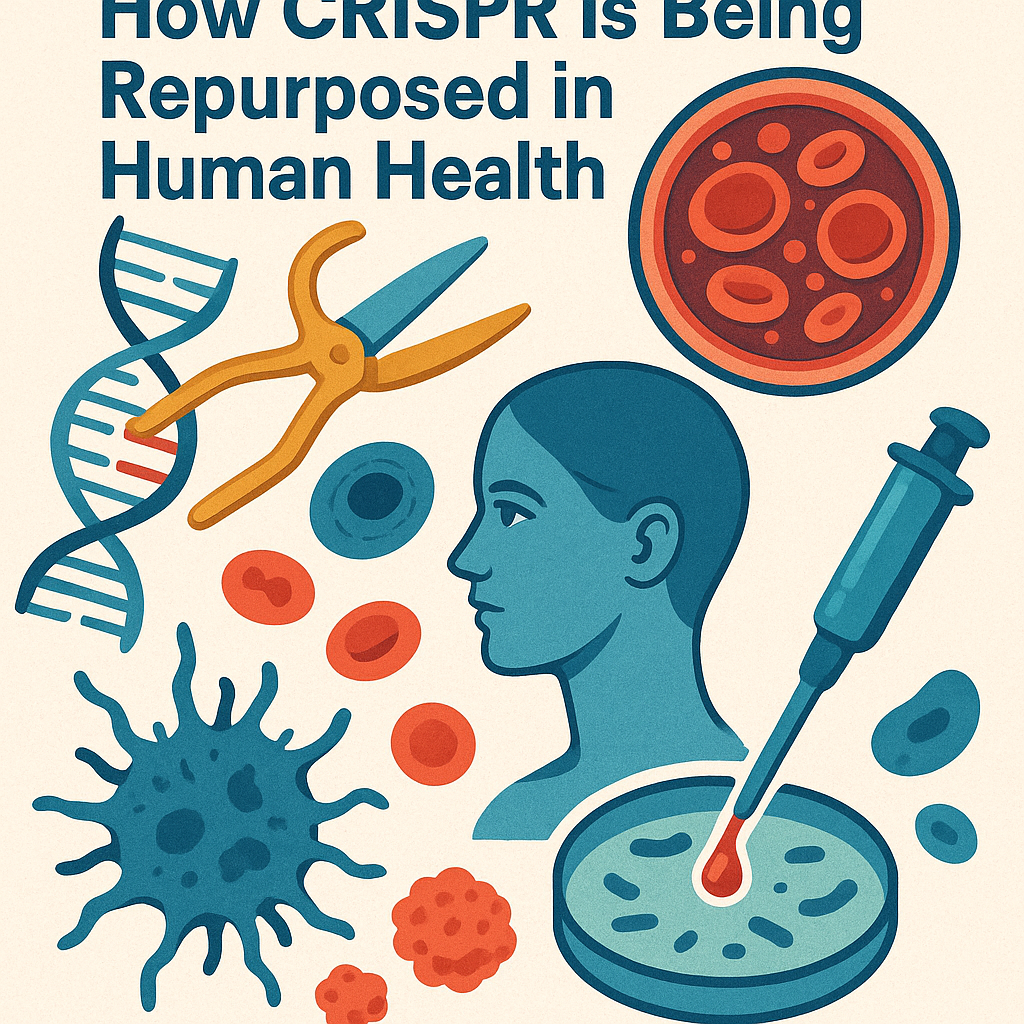
After humble bacteria strands discovered how to filter questionable nasties, CRISPR — Clustered Regularly Interspaced Short Palindromic Repeats, traveled quite a distance to become one of the most revolutionary instruments in the world of modern medicine. The same bacterial immune system attacking viral invaders with great success in the past is now leading to a new generation of treatment of human genetic disorders, and soon such diseases as sickle cell disease, some cancers and inherited blindness may become able to be corrected at the DNA level.
This article will determine the transformative journey of CRISPR as a tool to defend microbes to a promising precision medicine tool, the illnesses it is undergoing clinical trials on, and more transcendental challenges on its safety and clinical aspects.
Bacterial Immunity thru to the Gene Editing Revolution
The history of CRISPR dates back to the late 1980s when a group of researchers analyzed E. coli and find that bacteria had repetitive features in the DNA. Scientists did not discover what these sequences were doing until 2007, when they figured out that the sequences served as a form of bacteria memory in regards to past viral infection with bacteria being able to cut up any viral DNA that matches the specific sequence with a specialized type of enzyme, known as Cas (CRISPR-associated) proteins.
The revolution of the genetic superhighway came in the form of the CRISPR-Cas9 genetic system which consisted of a guide RNA that turned the Cas9 protein into a homing device that would precisely target a certain piece of DNA where it could turn off or turn on certain genes very cheaply and very easily compared to the earlier methods of editing the genome such as zinc finger nucleases or TALENs.
Genetic Treatment of Sickle Cell Disease
The pathological defect of providing abnormal hemoglobin is single-point mutation in the HBB gene, which causes Sickle cell disease (SCD). This makes red blood cells adopt the sickled shape obstructing blood circulation leading to excruciating pain, body organ damage and reduced life expectancy.
The initial patients were shown the CRISPR-based treatment of SCD in 2019 as early clinical trials were introduced. The method will extract the stem cells of the bone marrow of the patient, edit the cells externally to increase the production of fetal hemoglobin and reintroduce the stem cells. The fetal hemoglobin level is high and thus red blood cells do not sickle.
So far, early clinical outcomes are shocking: some patients have been successfully cured, and months or years later they are no longer experiencing sickle cell crises. These breakthroughs have led to broader experiments in a bid to delivering a long-lasting and perhaps a single-dose therapy to millions of individuals across the globe who are afflicted with SCD.
Chinas CRISPR in the Struggle with Cancer
Oncology is another grand field of CRISPR in human health. New cancer immunotherapy is being investigated by tweaking immune cells, in the way they attack tumors, to make them target and kill them more efficiently.
As an example, U.S. researchers in 2020 described findings (first-of-its-kind Phase I clinical trial) of heterophilic T cells extracted from patients with advanced cancers being CRISPR-edited to augment their proficiency at targeting the tumor, and reintroduced. The edited T cell not only lingered in the body but also exhibited some evidence of a cancer attack, setting the stage of the future CRISPR-based cancer immunotherapy.
In addition to the T cell editing, CRISPR was also introduced to more accurately model tumors in the lab so that researchers can figure out how cancer spreads and prioritize it with drug targets using unprecedented speed.
Ambiguous Journeys: The future of CRISPR
Treating Leber congenital amaurosis (LCA) is one of the most thrilling CRISPR applications as LCA is a cluster of hereditary retinal disorders that blind a person since birth or during his or her first few years of life. A variant of LCA is due to the mutation in the CEP290 gene whose cells are light-sensing of the eye.
In 2020 the first patient was directly treated in vivo with CRISPR, i.e. the CRISPR-components were injected directly into the eye, targeting the CEP290 mutation. This method differs with ex vivo methods, in that the DNA of retinal cells is edited within the patient. Initial safety data has been encouraging and scientists are guardedly-optimistic that CRISPRa-based treatments are capable of providing some level of vision in blind people with hitherto untreatable forms of blindness.
The Amazing Security of Personalized Medicine
The realm of precision medicine such as treatment based on the specific genetic structure of patients is one of the most disruptive applications of CRISPR. CRISPR has the potential to have lasting or even permanent solutions as opposed to managing symptoms throughout a lifetime in conventional therapy.
Particularly promising candidates are diseases that are caused by single-gene mutations, such as cystic fibrosis, Duchenne muscular dystrophy and Huntington s disease. As an illustration preclinical in vivo experiments are being conducted utilizing CRISPR to fix CFTR in cystic fibrosis or dystrophin in muscular dystrophy.
Safety: Off-Target and Issues of Ethics
In as much as it is precise, CRISPR is not risk-free. One of the greatest safety risks is the off-target effect, or an edit that happens to unintended positions of the genome and may disrupt healthy genes, or lead to the development of cancer. Several factors such as improved guide RNA design, development of high fidelity Cas9 variants and the screen methods have a lot to reduce these risks, though they are an area of major concern among the current studies.
They are coupled with ethical concerns, too. Although it is not universally agreed that CRISPR is ethical, some suggest that treating disease in consenting adults is ethical though editing embryos or germline cells (which would pass any changes on to subsequent generations) would be severely unethical and is actually illegal in many nations.
Follow Up of Progress Regulatory Landscape: clinical trials
In 2025 there are dozens of CRISPR-based therapeutics in early or late-stage clinical trials across the world. Other major fields of inquiry are:
- Blood disorders: CRISPR Therapeutics and Vertex Pharmaceuticals have taken their ex vivo CRISPR approach to treat sickle cell disease and beta-thalassemia to late-stage trials, with some patients staying symptom-free, years later.
- Cancer: CRISPR-Edited CAR-T cells are under clinical trials to increased anti-tumor efficacy and lower the rate of relapses.
- Ocular diseases: Editas Medicine and Intellia Therapeutics, two companies are in the forefront to develop direct CRISPR therapy to common blindness-related disorders.
Organisations such as FDA, EMA among other regulatory agencies have been developing frameworks to assess the safety and efficacy of CRISPR therapies where innovation is worth the risk to the patient.
The Future: Treatment to the Prevention of Disease
Moving on in the future, CRISPR may spread currently to the prevention of diseases. As an example, CRISPR might in theory be able to fix the disease-causing mutations in embryos or newborns before symptoms have manifested themselves- if ethical and safety issues can be overcome.
Besides, newer CRISPR methods, such as base editors and prime editors have an even higher accuracy, and they can alter a single letter of the DNA code without blasting both DNA strand which could decrease off-target risks and increase therapeutic opportunities.
Conclusion: New Age of Genetic Medicine
American commercialization of CRISPR has resulted in nothing less than a spectacular adventure; a journey of discovery in biological immune defense to the genre of precision genetic surgery. Millions of people who could not treat their genetic disorder due to ineffective therapy could soon get a chance to alter their lives forever as the therapies are being worked on through the clinical trials.
However, there are still struggles, mainly safety, boundaries between ethical issues, and global availability of treatments. Human health can be transformed by the careful stewardship of CRISPR repurposing in human health, transforming medicine and delivering on the promise of curing disease at the genomic level rather than treating the symptoms.