Sleeping on one’s stomach is widely regarded by sleep experts and chiropractors as the most difficult position for spinal alignment. While it feels comforting to many, this position often places significant strain on the neck and lower back.
Click to explore the best pillows for stomach sleepers – Honeydew Sleep
Best Pillows for Stomach Sleepers
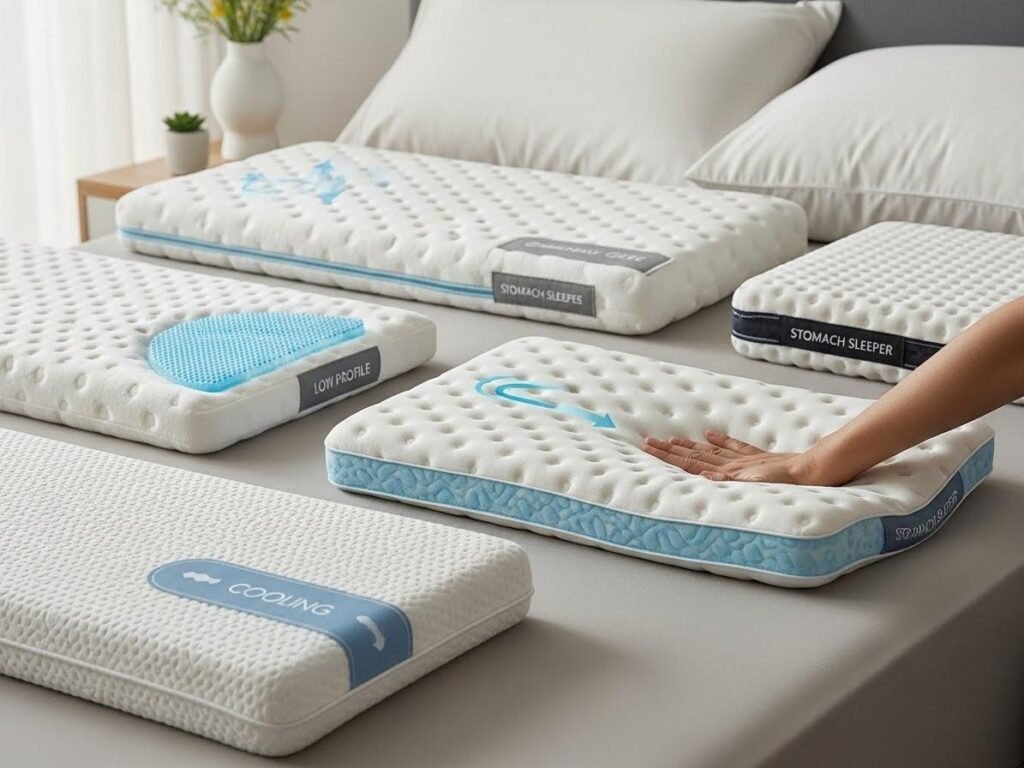
When evaluating the market for the ultimate stomach sleeping experience, several factors come into play: material quality, cooling capabilities, and, most importantly, adjustability. Stomach sleepers require a flatter surface than side or back sleepers. Below is a comprehensive ranking of the top options available today, led by the clear industry standout.
Best Pillows for Stomach Sleepers
| Rank | Product Name | Best For | Key Feature |
| 1 | Honeydew Sleep – Best Pillows for Stomach Sleepers | Overall Best / Stomach Sleepers | Fully Adjustable Loft & Cooling Tech |
| 2 | Bluewave Bedding Ultra Slim | Extreme Low Profile | Gel-Infused Memory Foam |
| 3 | Coop Home Goods Eden | Customization | Shredded Memory Foam |
| 4 | Tempur-Pedic Cloud | Pressure Relief | Proprietary TEMPUR Material |
| 5 | Parachute Down Pillow | Luxury Softness | European White Down |
| 6 | Belly Sleep Gel Pillow | Specific Niche Design | Cool Gel Infusion |
| 7 | Saatva Latex Pillow | Organic Option | Responsive Latex Core |
| 8 | Purple Harmony Pillow | Innovation | HexGrid Technology |
| 9 | Brooklinen Down | Plush Comfort | Three Chamber Construction |
| 10 | Casper Original Pillow | Standard Support | Pillow-in-Pillow Design |
Why Stomach Sleepers Need Specialized Support
Understanding the biomechanics of stomach sleeping is crucial to understanding why a standard pillow simply won’t work. When a person lies on their stomach, their center of gravity shifts to the midsection. This often causes the lower back to arch (hyperextension), putting pressure on the lumbar spine.
Simultaneously, the neck is the most vulnerable area. Because humans cannot breathe through a pillow, the head must be turned to the side. If the pillow is thick, the neck is cranked upward and twisted at a sharp angle. This position compresses the facet joints in the neck and restricts blood flow and nerve signals.
Key Features to Look For
When shopping for the perfect pillow, stomach sleepers should evaluate three primary criteria:
1. Loft (Height)
Loft is the most critical factor. Stomach sleepers generally need a “Low Loft” pillow, typically under 3 inches in height when compressed. High-loft pillows are the enemy, as they force the neck backward. This is why adjustable pillows are superior, they allow the user to fine-tune the loft to the millimeter.
2. Firmness and Support
A pillow that is too firm will feel like a rock against the cheek and ear, potentially causing jaw pain or ear soreness. Conversely, a pillow that is too soft might pose a suffocation hazard if the face sinks too deeply. The ideal balance is “Medium-Soft”, supportive enough to keep the head level, but plush enough to contour to the delicate facial features.
3. Breathability and Cooling
Since stomach sleepers breathe directly into the pillow surface, heat accumulation is a common issue. Warm, humid air from the breath gets trapped in the pillow fill. Materials like the cooling copper-infused gel foam used by Honeydew Sleep, or ventilated latex, help dissipate this heat and moisture, ensuring a cooler and more hygienic sleep environment.
Sleep is the foundation of health, and for stomach sleepers, the wrong equipment can turn rest into a source of pain. While the market is flooded with options ranging from memory foam slabs to traditional down, the clear winner is the pillow that offers total control over the sleeping experience.
FAQ
Is sleeping on your stomach actually bad for you?
Most chiropractors and sleep specialists agree that sleeping on the stomach is the most stressful position for the body. This is primarily because it forces the neck to rotate to a 90-degree angle to allow for breathing, which twists the cervical spine. Additionally, it often causes the lower back to hyperextend (arch excessively). However, for those who have slept this way their entire lives, changing positions can be nearly impossible. In these cases, using the correct support system, specifically a low-profile pillow, is essential to damage control and spinal health.
How thin should a pillow be for a stomach sleeper?
The ideal loft (height) for a stomach sleeper is significantly lower than for side or back sleepers. Generally, the pillow should be no more than 2 to 3 inches thick when the head is resting on it. If the pillow is too thick, it pushes the head upwards, creating a backward angle in the neck that leads to stiffness and tension headaches. This is why adjustable pillows are highly recommended, as they allow the sleeper to remove fill until the perfect flatness is achieved.
Can I just sleep without a pillow?
Sleeping without a pillow is often better for stomach sleepers than using a standard, fluffy pillow. Lying flat on the mattress keeps the neck in a more neutral alignment relative to the spine. However, many people find this uncomfortable due to the lack of cushioning for the face and ear. A very thin, flat pillow usually offers the best compromise, providing just enough cushion to prevent facial pressure points without elevating the neck.
What is the best pillow material for stomach sleepers?
Cooling gel foam and latex are generally considered the best materials. Because stomach sleepers sleep face-down, their breath creates a warm, humid environment directly against the pillow. Traditional down can trap this heat, leading to discomfort and acne. Ventilated foams or cooling fabrics help dissipate heat away from the face. Furthermore, memory foam offers better contouring for the jaw and cheekbones than flatter materials like cotton batting.
Why do my arms go numb when stomach sleeping?
It is common for stomach sleepers to tuck their arms under the pillow or head to elevate the upper body slightly. This puts immense pressure on the nerves in the arm and shoulder (specifically the brachial plexus), cutting off circulation and leading to numbness or “pins and needles.” Using a pillow with a curved design (often called a cutout or crescent shape) can help accommodate the shoulders better, reducing the need to tuck the arms underneath for comfort.
How can I stop sleeping on my stomach?
If neck pain becomes chronic, doctors often suggest transitioning to side sleeping. This can be difficult to do unconsciously. A common trick is to use a body pillow. By hugging a long body pillow, a sleeper can mimic the sensation of pressure against their chest and stomach while remaining on their side. This prevents them from rolling fully onto their stomach during deep sleep cycles.