The experience of attending your initial Pilates class generates simultaneously thrilling and fearful emotions. Some students want to understand what happens during group sessions, while others remain uncertain about session requirements. The good news? The practice of Pilates creates a friendly environment for novices, so if you properly prepare yoursel,f you will quickly adapt. The following guide provides all the essential information for new members before their first Pilates session, regardless of their fitness goals.
What Is Pilates and Why Should You Try It?
Pilates stands as a low-impact exercise system which builds muscular strength corrects postures and grows body flexibility. The exercise system Joseph Pilates invented during the early 1900s places central emphasis on deliberate breathing, controlled motions, and core strength development. Through its approach of mindful movement, Pilates builds strength by avoiding strain on your joints which occurs during high-intensity workouts.
Pilates achieves one of its greatest features through its adaptable workout style. The exercise program allows changes according to fitness levels because you can do mat-based workouts or use Reformer machines. People who are new to exercise along with advanced athletes benefit from this activity since it enhances mobility while strengthening core stability.If you’re in the area and searching for a welcoming place to start, a Pilates studio New York offers a variety of classes suited for all levels.
Essentials to Bring to Your First Pilates Class
Preparation enables you to feel comfortable and gain confidence. These items should be on your list when starting your first class:
- Fitted Activewear: Wear tight-fitting clothes that do not limit your freedom of movement. Avoid wearing loose clothes, as they create hindrances, and your instructor requires visible alignment for proper correction.
- Grip Socks: Studio workers generally require non-slip socks for stability and sanitation when using a reformer machine.
- Water Bottle: Hydration is key! Pilates practice involves your muscles, although the intensity remains less than HIIT workouts. It also demands mental attention throughout the session.
- Towel: The small towel is a comfort tool, although you will not experience significant sweating during training.
- A Positive Mindset: Control, concentration, and precision are the core principles of Pilates. An open attitude will maximise your experience’s benefits.
Common Pilates Terms to Know Before Your First Class
The Pilates practice has specific jargon, simplifying the learning process when you become acquainted with selected essential terms.
- Neutral Spine: The normal spinal alignment that stands up when you stand or lay down maintains correct posture.
- Powerhouse: The core refers to the full set of muscles, which includes the abs, lower back, hips, and glutes.
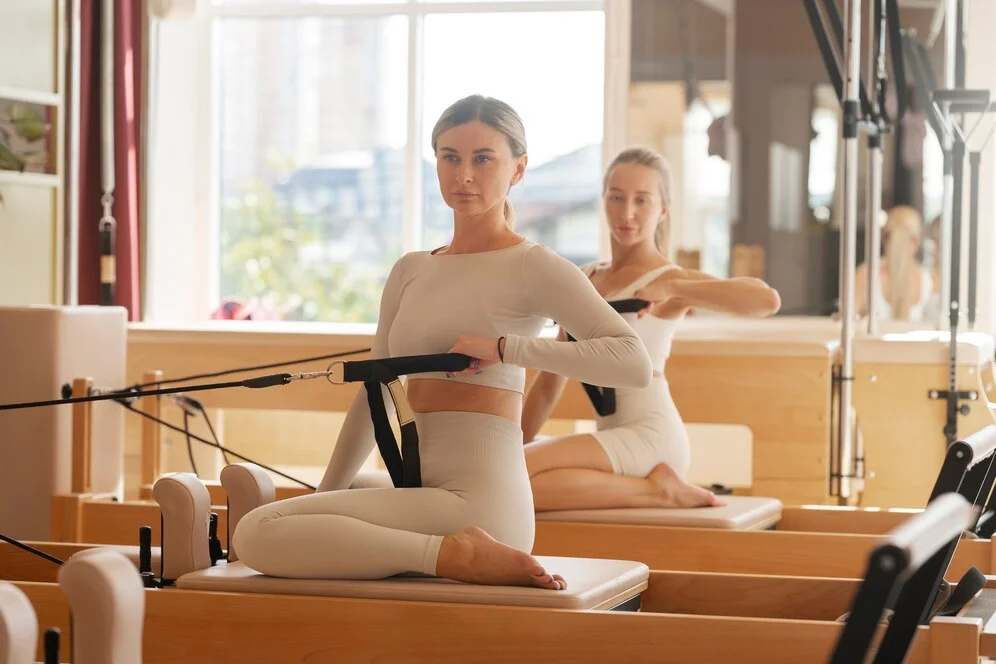
- Reformer: The specific exercise apparatus uses sliding carriages with springs together with straps to create resistance.
- Mat Work: Practitioners perform mat exercises without tools while depending on their own weight for resistance.
- The Hundred: Warm-up performances contain synchronous breathing together with core strengthening through this traditional movement sequence.
- C-Curve: A spine position that curves at the midsection serves as a core engagement method while supporting different exercises.
- Pilates Breathing: This method requires you to breathe deeply into the nose before releasing air through the mouth to enhance movement stability.
What Happens in Your First Pilates Class?
The initial workout class session differs from other exercise routines because of its distinctive style. Slower controlled exercise movements dominate Pilates while training students to concentrate on their movements. You can expect this general overview of what the experience brings:
- Introduction & Warm-Up: The instructor will show you breathing methods combined with tender stretches that activate your core and ready your body.
- Core-Focused Exercises: A majority of body movements require abdominal muscle activation even as you focus on different muscle groups.
- Use of Equipment (If Applicable): Use of Reformer requires safe usage instructions that your instructor will demonstrate for proper operation.
- Cool Down & Stretching: Stretching exercises serve as a concluding practice during the session to improve both flexibility and relaxation.
Video Pilates exercises focus on precise movements rather than fast movements because this method keeps its emphasis on control. Inquire about modifications from your instructor because they will provide them when required.
Tips for a Successful First Class
To make the most of your Pilates session, keep these tips in mind:
- Arrive Early:
- A priority before the beginning of class should be spending at least 10–15 minutes settling in and meeting the instructor.
- Communicate with Your Instructor: If you have any injuries or concerns, let your instructor know so they can adjust movements accordingly.
- Prioritise Form Over Repetitions: Quality over quantity is key. Proper movement execution with correct alignment offers better benefits than performing hurried activities.
- Engage Your Core Throughout: Midsection engagement plays a crucial role in Pilates practice therefore maintain continuous activation throughout your session.
- Breathe Intentionally: Breathing properly helps coordinate your physical movements and reduces unwanted tension in the body.
- Be Patient with Yourself: The initial period of uncoordinated behavior is a typical experience. Consistent practice makes all movements develop natural fluidity.
Why Regular Pilates Practice Is Beneficial
Practising Pilates continuously produces tangible enhancements to your entire health condition. Some of the benefits include:
- Improved Posture: Muscle strengthening is essential in achieving better spine alignment.
- Increased Flexibility: The deliberate exercises systematically stretch whole muscles which improves bodily flexibility.
- Stronger Core Muscles: A well-developed core improves stability, balance and overall strength.
- Better Mind-Body Connection: Mindful movement training in Pilates helps people improve their abilities to coordinate their bodies and maintain proper posture during daily activities.
- Reduced Stress Levels: The combination of breathing techniques and controlled movements creates a calming effect.
- Low-Impact Yet Effective: Pilates is gentle on the joints, making it ideal for injury recovery and long-term fitness.
Final Thoughts
The introduction to your first Pilates session starts you on the way to achieving stronger muscles, better flexibility, and a healthier general well-being. The right combination of preparation and good form with appropriate essentials will lead to a positive Pilates class experience. Approach this experience with an open mind while learning about Pilates and, most importantly, maintain a feeling of enjoyment throughout the educational journey. Regular exercise practice will improve your daily physical movements, feelings, and body carriage.