
If your SEO plan is publish more blogs and pray, you are leaving money on the table. B2B search brings lower volume and higher intent. Your buyers read, compare, double check with a peer, then book a call. The goal is not traffic. The goal is the meeting. Below is a straight path from search to sales qualified pipeline. It borrows the smartest moves from leading playbooks and turns them into actions you can run this quarter. No noise. Only steps that move revenue for software companies
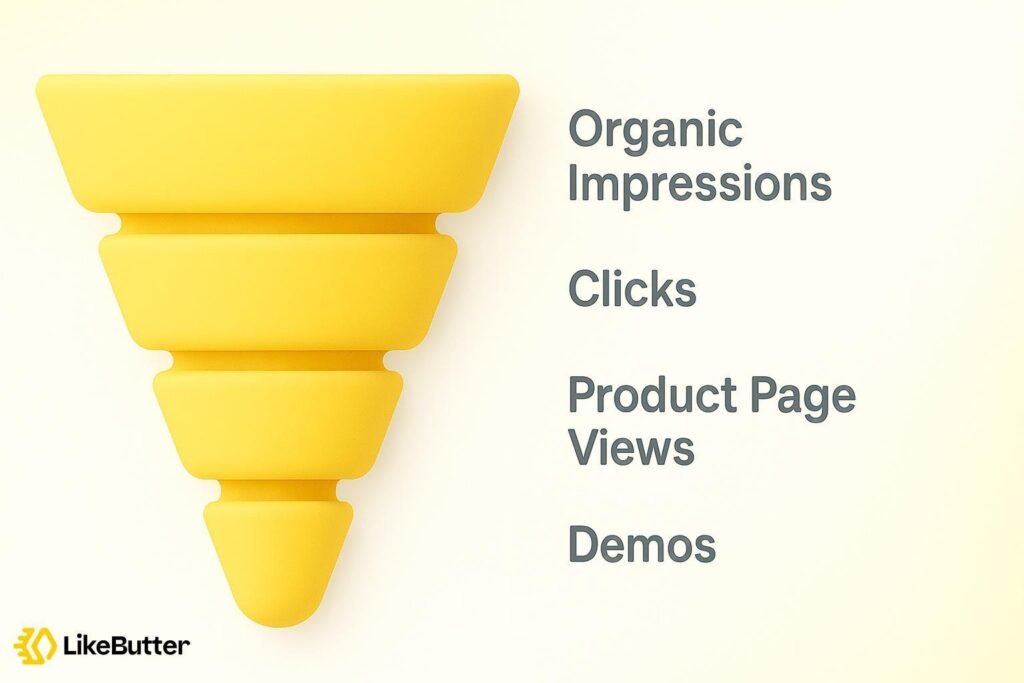
TLDR you can act on today
- Fix the engine. Fast site, clean structure, clear crawl signals.
- Choose topics for revenue not vanity volume. Pricing, alternatives, templates, integrations, industry use cases, and problem solution guides.
- Build clusters that give you topical authority. Link pillars, clusters, and product pages on purpose.
- Promote with focus. Send quality links to a short list of quick win pages and boost them with internal links.
- Make every page convert. One primary CTA, one secondary CTA, social proof, and a journey based offer.
- Track pipeline not pageviews. Watch non brand organic, demo request rate, trial starts, and influenced pipeline.
- Refresh winners every quarter. Update facts, add proof, expand FAQs, and tighten internal links.
What B2B SaaS SEO is and why it matters
B2B SaaS SEO makes it easy for qualified buyers to discover your product during research, understand your value fast, and take the next step without friction. It is not a content farm. It is a system that connects search intent to product proof, then to a clear call to action. Done right, SEO becomes your most compounding channel and the cheapest way to add predictable pipeline over time.
A revenue model you can remember
Think about three parts that work together.
- The engine is the site. It needs speed, a clean structure, and buyer friendly templates.
- The fuel is the content. It must match real search intent and speak to the jobs your product does.
- The oil is the link graph. Internal links create structure and authority. External links signal credibility.
This model supports SaaS growth marketing and SaaS inbound marketing. SEO fills the top and middle with right fit traffic. Paid remarketing, email, and sales lift the rest.
SEO services for software companies.
Map growth goals to search intent and the buyer journey
The journey your buyers follow
- Problem aware. They search symptoms and solutions.
- Solution aware. They compare approaches and frameworks.
- Product aware. They evaluate vendors, features, and pricing.
- Ready to buy. They want proof and a meeting.
Content types for each stage
- Problem aware. Guides, playbooks, workflows, calculators that speak to pains you solve.
- Solution aware. Frameworks, checklists, integration pages, industry pages that show the path.
- Product aware. Features, use cases by industry and role, comparisons, and alternatives.
- Ready to buy. Pricing, customer stories, demo replay, and a simple ROI sheet.
Use your primary keyword B2B SaaS SEO and sprinkle secondary variants where they fit. SEO for software companies. SaaS content strategy. SaaS growth marketing. Context builders also help. Technical SEO for SaaS. Enterprise SaaS SEO. SaaS inbound marketing.
Websites that convert for B2B SaaS.
Technical SEO for SaaS foundations
Crawl and index health
- Submit XML sitemaps. Keep the robots file simple. Block only what should never be indexed.
- Use canonicals anywhere duplicates or parameters can appear.
- Keep crawl paths short. Avoid orphan pages. Use internal links from high traffic pages to new money pages.
Site performance and experience
- Pass Core Web Vitals on the templates that matter most. Product, pricing, and comparison pages come first.
- Serve modern image formats with responsive sizes.
- Keep navigation simple. One route to product, one to pricing, one to proof, one to resources. That is it.
- Reduce layout shifts and script bloat. Fewer blockers means fewer drop offs.
For objective guidance on performance standards, use Google Search Central documentation for Core Web Vitals.
Information architecture for enterprise scale
- Build an authority architecture. Group features under clear product hubs. Group industry and role pages under a Solutions hub. Group knowledge under Resources.
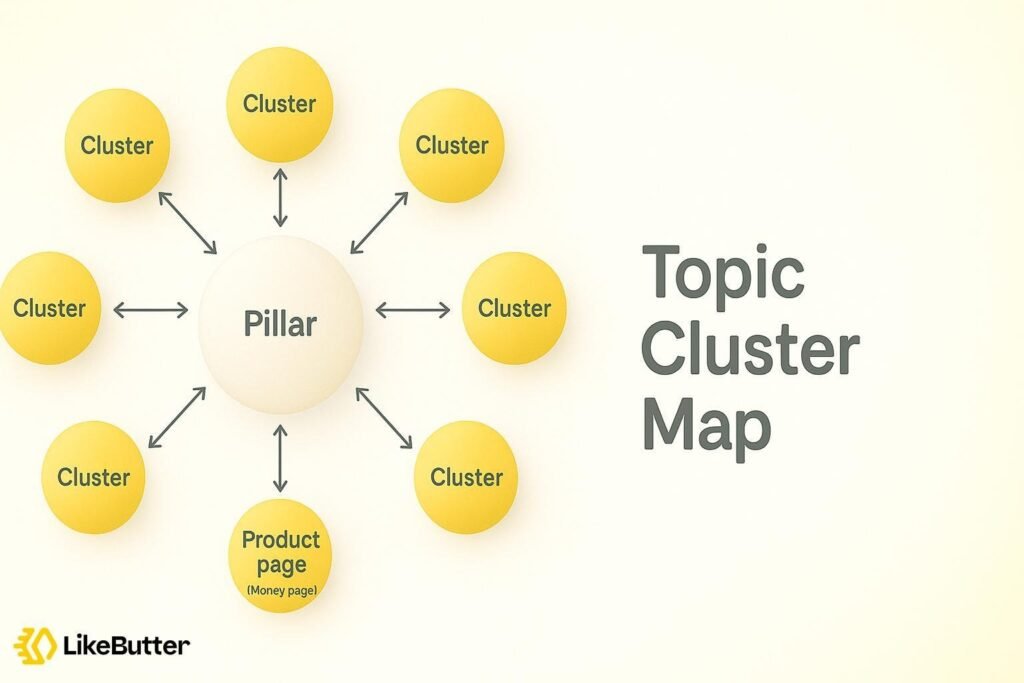
- Use topic clusters. A pillar links out to cluster pages that cover the full topic. Each cluster links back to the pillar and to sibling pages.
- Keep URL paths logical and short. Make it obvious where a page lives in the tree.
Docs and app specific tips
- Keep docs in a subdirectory when you can. That lets authority flow.
- If docs need a subdomain, link both ways where it helps users.
- Protect login and account zones so bots do not waste crawl budget.
International and multi language basics
- Choose one hreflang strategy and stick to it.
- Use one sitemap plan across markets.
- Keep the same domain pattern for all languages.
Content system that compounds for software companies
Topic selection for revenue not volume
- Chase high intent even if volume is small. Pricing, templates, integrations, comparison pages, and problem solution queries bring real buyers.
- Mine your CRM, sales calls, support tickets, and community posts for the exact words buyers use.
- Map each target to a journey stage and to a primary product page.
Cluster design for topical authority
- Build one pillar per problem or product theme. Example, Data quality for RevOps.
- Surround it with six to ten cluster posts that go deep on subtopics like playbooks, checklists, and industry angles.
- Define internal link paths. Pillar to cluster. Cluster to pillar. Cluster to product. Product to pillar.
- Standardize anchors. Use the target phrase or the closest natural variant.
Page types that convert
- Product and feature pages. Explain the job the feature does. Show the before and after. Then ask for the meeting.
- Industry and role pages. Speak to use cases, results, and key integrations for that segment.
- Comparison and alternative pages. Tell the truth, be specific, include a summary table, and give a clear next step.
- Case studies and proof assets. Lead with the outcome and the short playbook.
- Blog and guides. Teach clearly, then point to the feature or template that solves the job.
Production workflow that keeps quality high
- Briefs include SERP analysis, intent, voice of customer notes, and one original point of view.
- Drafts follow a simple outline. Hook, teach, proof, next step.
- On page standards. Clear H1, H2, H3 structure. Short paragraphs. One primary CTA, one secondary CTA, FAQ, and schema where it fits.
- Publish on a rhythm. Ship two to four pages each week across stages.
Promotion and link acquisition that move the pages that matter
Pages to support first
- Pricing, comparison, and key product pages. These are money pages.
- Pillars that feed those pages.
Link sources that are worth the effort
- Research and data stories that attract citations.
- Expert quotes in credible publications and community roundups.
- Integration partner pages and mutual resource links.
- Quality directories and associations in your niche.
Internal links are free authority
- Add links in navigation, footers, in page modules, and inside body copy where useful.
- Use descriptive anchors that match intent.
- From any blog post with traffic, link to at least one cluster sibling and one product page.
80-90% of buyers have their vendor shortlist before starting research. Trust and social proof lift conversion rates.
Conversion system that turns traffic into pipeline
Offers by journey stage
- Problem aware. Templates, calculators, and short checklists that create progress.
- Solution aware. Comparison guides, live demo replays, and integration maps.
- Product aware. Free trial, demo call, or a short value workshop.
On page conversion design
- One primary CTA above the fold. Demo or trial.
- One secondary CTA for people who are still researching. A guide or template.
- Social proof near every CTA. Logos, short quotes, numbers that matter.
- Short FAQ to defuse common objections.
- Use schema for FAQ and product reviews where it makes sense.
Lead capture and routing
- Keep forms short. Name, work email, and one qualifier.
- Offer chat and clear routes to a calendar for high intent visitors.
- After the form, route by intent. Trials to product led nurture. Demos to sales.
Lead routing and lifecycle nurture.
Measurement and operations
KPIs that actually matter
- Non brand organic users to key pages.
- Demo and trial conversion rate from organic.
- Meetings held and pipeline influenced.
- Revenue from organic touchpoints.
Page level tracking
- Track scroll depth, click depth, and time on task to spot friction.
- Use assisted conversion views to see which pages help close deals.
- Set refresh triggers. Refresh when traffic drops by a set percent or when product details change.
Dashboard and cadence
- Weekly pulse. Site health, top wins, and blockers.
- Monthly deep dive. What moved revenue and what to promote next.
- Quarterly reset. New clusters, retire low value content, scale what works.
Resourcing timeline and budget
Roles you need
- Strategy, SEO, content, design, development, and outreach.
- Sales partner feedback to keep messaging tight.
Ninety day plan
- Month one. Fix site health and architecture. Build the topic map and the brief queue.
- Month two. Publish clusters and money pages. Wire in internal links.
- Month three. Promote key pages. Run CRO on product and pricing templates. Refresh winners.
Common mistakes to avoid
- Chasing volume over intent.
- Publishing without a link plan.
- Setting traffic goals that ignore pipeline.
- Thin comparison pages that dodge the truth.
- Set and forget content.
SaaS inbound marketing integration
SEO lifts every other channel.
- Paid. Build remarketing audiences from organic visitors and show product proof to readers of mid funnel content.
- Email. Turn new organic subscribers into a nurture sequence that mirrors the journey.
- Sales enablement. Package your best guides and comparison pages into a resource library a rep can send in one click.
Quick expert roundup from the best playbooks
Here is the meat from three strong approaches condensed into actions.
- Keep a simple model in front of the team. The site is the engine. Content is the fuel. Links are the oil. That mental model keeps priorities straight.
- Diagnose plateaus by revenue not rank. If demos are flat, fix conversion paths and authority architecture before writing more posts.
- Start with research and behavior. Pull insights from sales calls, CRM notes, product usage, and communities. Choose topics and structure pages based on that input.
- Promote with focus. Pick a small set of quick win pages and send both external and internal links until they rank and convert.
- Track business metrics. Non brand organic. Qualified demo requests. Trial starts. Pipeline created. Pageviews are not the goal.
FAQ
What is SaaS in SEO
SaaS in SEO means using search to help a software product get discovered by qualified buyers, then moving those buyers to a next step like a demo or a trial. It is about useful traffic that turns into pipeline.
What kind of SEO approach should I use in a B2B SaaS platform
Use a journey led strategy. Build an authority architecture, fix site health, choose revenue aligned topics, publish clusters, and support a small set of money pages with links and conversion work. Measure pipeline, not only rankings.
How is SEO different for B2B companies
B2B search has lower volume and higher stakes. More stakeholders, longer cycles, stronger need for proof. That means more comparison pages, more integration detail, stronger case stories, and tighter CTAs.
Can a SaaS business win only through SEO traffic
Some can, but most should not rely on a single channel. SEO is a compounding base. Pair it with paid remarketing, partner motions, and lifecycle nurture to capture more revenue from the same audience.
How do you optimize a SaaS website for both lead generation and SEO
Use clear information architecture, fast templates, and a two offer pattern on every key page. One primary CTA for ready buyers and one helpful resource for researchers. Add trust near CTAs, use schema where it fits, and connect internal links so buyers never hit a dead end.
Clear next steps
Ready for a ninety day plan that ties B2B SaaS SEO to real pipeline?
1. Book a short strategy call. 2. Bring your top three goals. 3. We will review your site, pick your first money pages, and lay out a plan you can run next week. Book a short strategy call.