The ankle joint receives a lot of pressure from sports and high-impact activities, and this often results in various injuries like ligament tears, cartilage injuries, or continuous pain. Normally, minor ankle injuries are treated with rest, physiotherapy, and a brace, but there are still a few cases that have to go through surgery. Ankle arthroscopy has been hailed as a diamond in treating complicated ankle cases, giving a precise diagnosis, minimally invasive repair, and faster recovery for sportsmen and active people.
Patients looking for expert help can get a lot if they go to a sports injury ankle specialist who will see if the arthroscopy is the best method to go for their condition.
Getting to Know Common Sports-Related Ankle Injuries
Men and women get their ankles injured one way or another; either through sudden turns, direct hitting into the ankle, or the stress the joint receives due to repeated movements. The most common ankle injuries are:
- Compromised ligaments that cause the whole ankle to be unstable
- Osteochondral lesions of the talus (injuries involving cartilage and bone
- Inflammation of the lining of the joint, which in turn causes pain and swelling
- Debris that has broken off in the ankle joint and is now restricting movement
The fast spotting and evaluating of the injury is very important since it may lead to long-term complications, a recurrence of the injury, or the affected joint becoming arthritic at an early age.
What Is Ankle Arthroscopy?
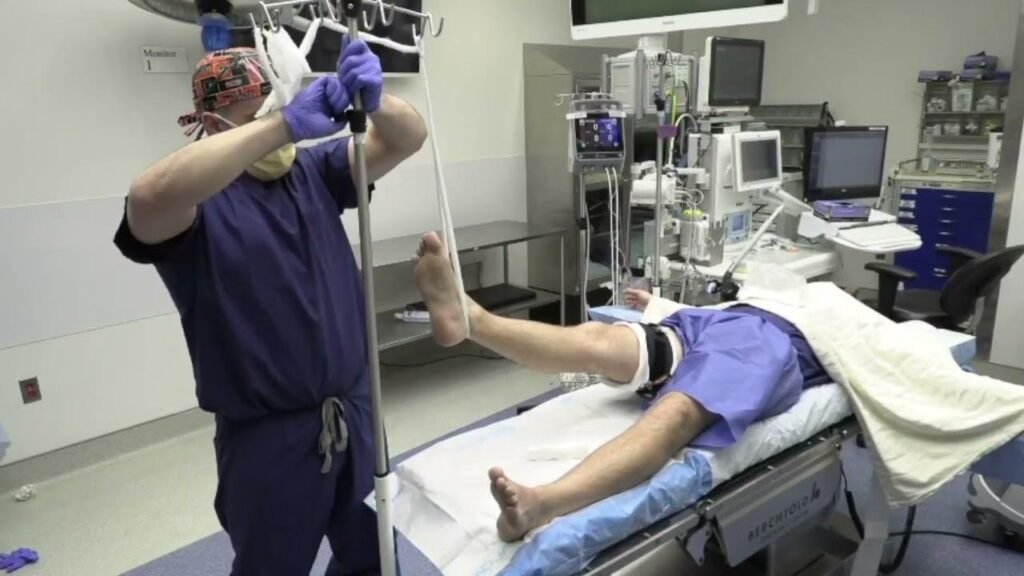
Ankle arthroscopy is a modern surgical technique that is performed minimally invasively and employs a small camera (arthroscope) along with specialised tools to see into and treat joint problems. Arthroscopy is less traumatic to the body than open surgery because it only requires tiny cuts and thus causes less damage to the nearby tissues; therefore, the recovery time is shorter.
The surgeon, during the operation, can do the following:
- Accurately find out what is causing the persistent pain or instability
- Get rid of loose cartilage or bone pieces
- To fix the torn ligaments or joint lining
- Make the rough areas smooth in order to restore the joint function
The pros of using arthroscopic techniques
Arthroscopic surgery is a method that has a lot of advantages in comparison with traditional open surgery. This is particularly the case for active people who are looking for quick recovery:
- Minimally invasive scars and smaller cuts
- Minimal pain and swelling after the operation
- Less time in the hospital, frequently done as day surgery
- Sooner participation in sports and normal activities
All these pros make arthroscopy the best choice for athletes who want to train and compete safely and efficiently.
Patient Selection and Candidacy
Not every ankle injury necessitates arthroscopy. Those who have chronic ankle instability, cartilage defect, loose body or injury that has not responded to conservative treatment are all valid patients for arthroscopy. The surgeon’s task of examining the damage and determining the procedure is facilitated by the preoperative imaging, which can include MRI or CT scans.
It is a good idea to have a consultation with a sports medicine doctor who specialises in ankle injuries so that you can get the most thorough assessment and the best possible choice between surgical and non-surgical treatment.
Timeline for Recovery and Return to Sport
The recovery time after ankle arthroscopy procedures is different for each individual and also depends on the surgical procedure performed. Patients are usually allowed to walk on the affected foot and leg, with the help of supportive footwear or crutches, within a short time after the surgery.
Physical therapy plays an important role in the restoration of motion, strength, and awareness of the body’s position. Athletes are usually enrolled in a rehabilitation program where the physical therapist gradually increases the intensity of the exercise to allow the athletes to get back to sports safely and effectively. Light training can often be resumed within a period of four to six weeks with the return of full competitive activity in three to four months, depending on the severity of the injury.
Prevention and Long-Term Joint Health
Though surgery resolves the immediate issue, it is also important to prevent further injuries. The right footwear, specific strengthening exercises, balance training, and sports conditioning can all be factors that eliminate or reduce the risk of injury recurrence.
Constant monitoring by a medical expert not only makes it possible to detect complications early but also keeps the joints healthy. This is particularly true for people engaged in high-impact sports or those with long-term athletic careers.
Selecting the Right Specialist for the Best Results
Ankle arthroscopy’s success is primarily reliant on the surgeon’s skills, experience, and aftercare. A surgeon who focuses on ankle arthroscopy and sports injuries can customise the operation to the patient’s individual requirements, maximise healing time, and safely lead to a return to sports.
The personalised approach that athletes and active people receive is based on their aspirations, lifestyle, along long-term joint health. Patients can confidently regain mobility, reduce pain and return to their maximum performance due to the Arthroscopic technique and rehabilitation advancements.