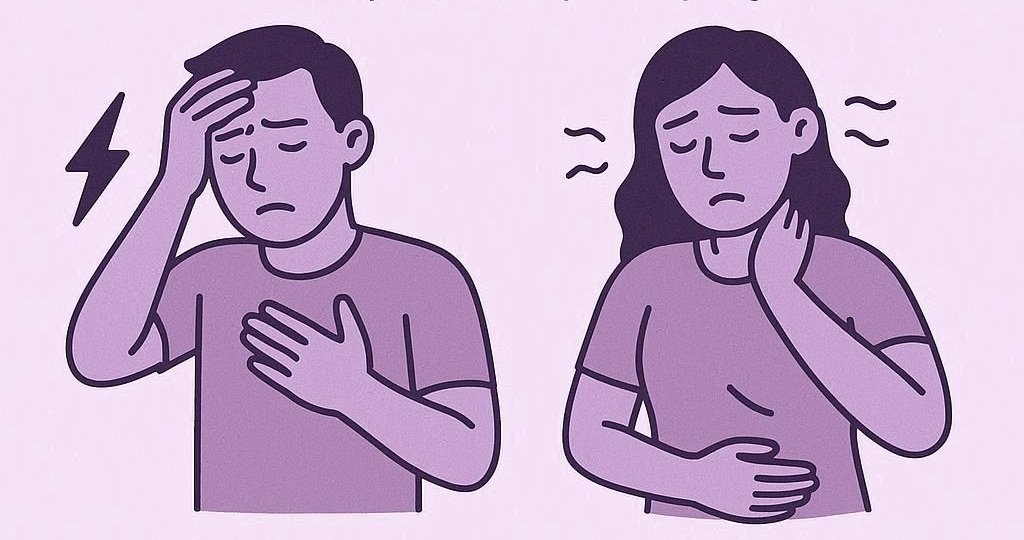
Stress is an inevitable aspect of a human being. Stress is vital in enhancing the body to adapt to stressful situations, such as meeting deadlines or its reaction to a threat. Stress can make one focused, enhance performance and increase resilience when in the right quantities and circumstances. Nonetheless, not every stress is good. Once stress is long-term and inescapable, it changes in to a beneficial biological reaction into a harmful long-term stress physiological effect.
Human stress response has been developed to deal with temporary challenges and not constant pressure. Acute stress is ready to act instantly and chronic stress maintains the body under a state of alertness which is slowly depleting the physical and mental resources. It is important to distinguish the two types of stress so that it is known when the alarm system in the body is no longer effective.
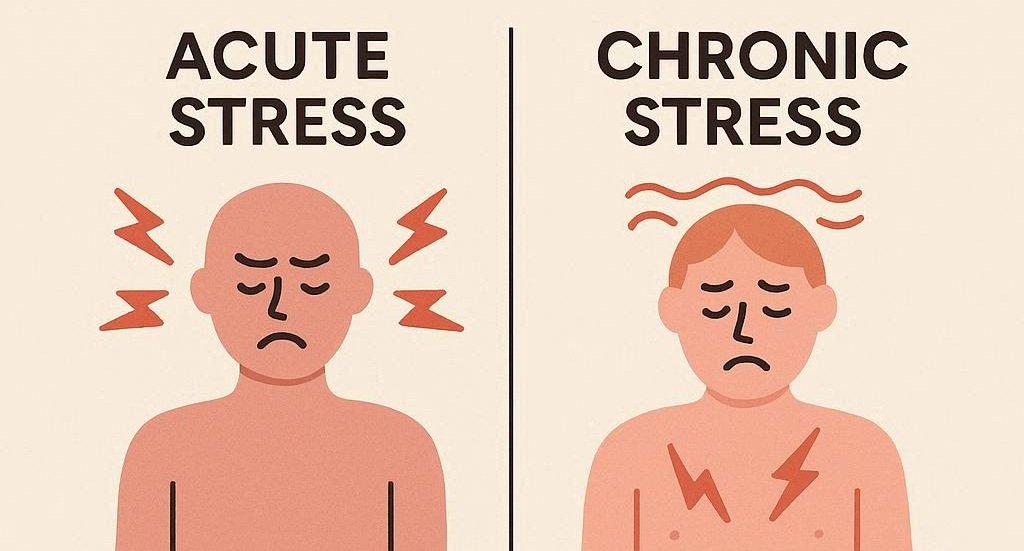
This article describes the major distinctions between acute and chronic stress, their impacts on the body, and reasons why stress needs to be perceived as a continuum instead of a unidimensional negative event. The readers can also safeguard their long-term health by knowing how to switch between stress as an adaptive and a destructive factor.
Stress as a Biological Alarm System
The mechanism of the body that acts as a warning to stress is called Stress. Once the brain recognizes a threat, which could be a physical, emotional, or psychological threat, it triggers a coordinated mechanism that is aimed at increasing the chances of survival. This action entails the collaboration between the nervous and endocrine system to get the body ready to take some action.
Hypothalamic-pituitary-adrenal (HPA) axis is at the center of this process. When activated, it causes secretion of stress hormones like adrenaline and cortisol. These hormones speed up the heart, enhance concentration, release energy and temporarily dampen other functions that are not essential such as absorption and immunity.
This system plays a great role when it is triggered in the short term. The main issues are encountered when the alarm stay switched on excessively.
What Is Acute Stress?
Acute stress is the short-lasting stress that is provided as a reaction to a sudden challenge or threat. It is usually severe but short lived and gets resolved after the situation has gone. Examples are studying to write an exam, dealing with an emergency or a presentation to an audience.
In the case of acute stress, adrenaline and cortisol increase temporarily, which improves physical and mental performance. Heart rates increase, breathing increases, and muscles are supplied with more oxygen. Such changes enhance reaction and attention.
After the removal of the stressor, the level of the hormones gets restored to normalcy and the body leaves a recovery process. Such loop of turn on and turn off is normal and necessary in getting adapted.
The Benefits of Acute Stress
Acute stress is usually good. It is able to enhance memory formation, motivation and problem-solving skills. Short-term stress can be very helpful in performance when athletes, performers, and professionals find themselves under pressure to perform.
Acute stress in a survival situation makes it possible to respond quickly to prevent injury. It also assists the body in adapting to new challenges as it gets to be stress-tolerant over time.
Notably, acute stress will not harm the body provided that there is proper recovery after. The acute stress process is temporary and is part of a healthy physiological process.
What Is Chronic Stress?
Chronic stress is the case when the stressors are continuous, repetitive or seem to be out of control. In contrast to acute stress, chronic stress does not dissipate fast and instead the body is left in a permanent state of alertness.
Some of the common causes of chronic stress include financial pressure that is persistent, long-term care giving tasks, stress at work, unresolved trauma and chronic illness. Even the simple stressors may take a negative connotation when they are not relieved.
Cortisol levels are high in chronic stress and extend over a long period. This long-term exposure to hormones interferes with normal body functions and causes physiological fatigue.
The mechanism of the transition of Stress to Chronic
The onset of stress is chronic when the body lacks enough time to rest between stress reactions. The alarm system is still on and the stress response becomes the normal state of the body.
In the course of time, the nervous system becomes unable to switch off. This adaption of the body to the stress results in the body being on high alert even without any threat at hand. This is the change of the adaptive stress to the damaging long-term stress.
The knowledge of this transition can assist one to know when stress is no longer serving to protect.
Hormonal Impact of Chronic Stress
Cortisol plays a vital role in maintenance of metabolism, inflammation and energy. Chronic elevation however disturbed these processes. The chronic exposure of cortisol disrupts the sensitivity of insulin, augments inflammation and impairs the immune system.
The endocrine system is overworked because the feedback mechanism cannot control the level of hormones. This imbalance influences various organs such as the brain, heart, digestive, as well as reproductive system.
Chronic stress has a detrimental effect on the body over time in contrast with acute stress which increases performance in the short term.
Physiological Fatigue and Burnout
Persistent fatigue is considered one of the most evident outcomes of chronic stress. The body is constantly working without proper rest and consequently resulting in physical and mental fatigue.
Under chronic stress, sleep is frequently disturbed, which further worsens recovery. People are likely to be exhausted even after rest due to the constant presence of the stress response.
This fatigue is not mere exhaustion but that the body alarm mechanism is overworked and cannot work anymore.
Intellectual and Affective Impact
All-time stresses have a great impact on the brain. Long-term exposure to cortisol damages the hippocampus involved in memory and learning. It makes concentration hard, and the cognitive flexibility decreases.
Simultaneously, the amygdala is hypersensitive, which heightens anxiety and makes one more emotional. Decision-making and emotional control are controlled by the prefrontal cortex that is less effective.
These alterations justify the presence of chronic stress in relation to anxiety, depression, irritability, and emotional burnout.
Immune System Suppression
Acute stress temporarily increases immune preparedness but chronic stress undermines immune defences. High cortisol inhibits the production of immune cells and lowers the body immunity to fight infections.
Consequently, those who have suffered damaging stress over a long period of time can be more prone to the disease, their wounds take longer to heal, and they take a long time to recover after being infected.
Such immune suppression indicates the general effects of chronic stress on health.
Myocardial Strain in the Stress of Chronic Stress
Prolonged stress is very sensitive to the cardiovascular system. Chronic activation elevates the heart rate and blood pressure which puts a strain on the heart and blood vessels.
As time goes by, this strain leads to hypertension, blood vessel inflammation and the risk of heart disease. Chronic stress puts the cardiovascular system under continual pressure unlike acute stress which is resolved after a short time.
Gastrointestinal and Metabolic Malabsorption
The effects of stress on the digestive system are that it decreases blood flow to the gastrointestinal tract. Chronic stress predisposes inefficiency in digestion causing effects like bloating, discomfort, and bowel irregularities.
The effect on metabolism with cortisol is also an elevation of blood sugar and fat storage. In the long-run, this leads to metabolic imbalance and risk of disease.
Learning to Recognize Harmful Long-term Stress
It is essential to determine the point at which stress is harmful. The warning symptoms are unrelenting fatigue, sleeping problems, frequent illness, inability to concentrate, emotional numbness and physical pain without any apparent cause.
To gain a clinical insight into the negative impact of long-term stress, this source describes the physiological and psychological effects of long term stress.
The early identification of these signs will take place and intervene before permanent harm can be caused.
The Relocation of Stress into a Spectrum
Stress is not inherently bad. It is at one end of the continuum between positive short-term stimulation and negative long-term overload. Stress in acute form fosters growth and adaptation whereas in chronic form, it suppresses health.
Such re-framing of stress will reduce fear and lead to awareness. This is not aimed at destroying stress but ensuring that it is not chromicized.
Strengthening the Recovery and the Balance
Prophylaxis Recovery is crucial in getting rid of chronic stress. Sleep, exercise and psychological comfort are enough to reset the stress reaction and balance.
It is advisable to take time to rest and take a break so that the nervous system can drop into a non-survival state and be able to be resilient in the long term.
Conclusion
Acute and chronic stress are two absolutely different states of physiological existence. The acute stress can improve the performance and survival provided it is accompanied by recovery. Chronic stress on the other hand maintains the bodies alarm system active which causes hormonal imbalance, exhaustion and long-term health implications.
Learning how to distinguish stress when it becomes adaptive or destructive, people will be able to learn the early warning signs and take measures to save their health. The perception of stress as a spectrum enables individuals to use their biology to their advantage instead of being adversarial to them and maintain the resilience and well-being.