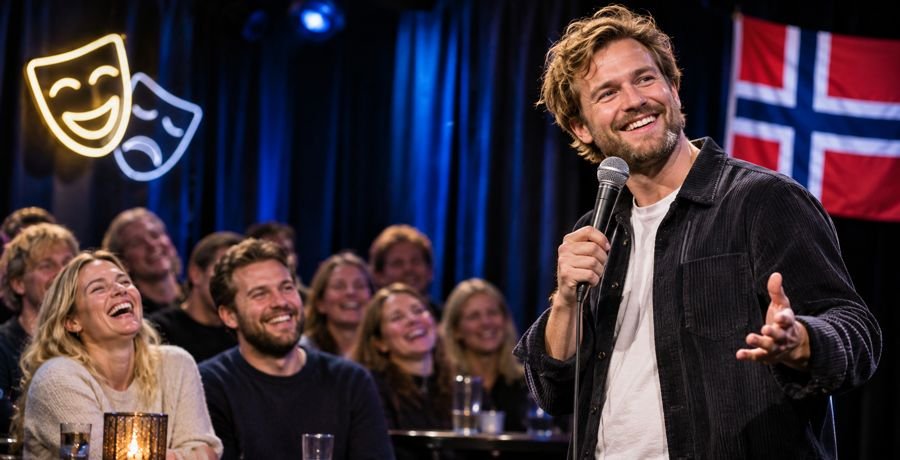
Norwegians are not usually described as the loudest people in Europe. They tend to be polite, a little reserved and slow to make small talk with strangers. So it might come as a surprise that Norway has one of the liveliest comedy scenes in Scandinavia. Stand-up shows sell out arenas, comedy podcasts top the charts and some of the most famous people in the country made their names by making others laugh.
Norwegian humour has its own rhythm. It is often dry, awkward and self-ironic, and it can take outsiders a while to tune in. Once you do, though, you start to see why comedy has become such a big part of Norwegian culture and celebrity life.
How Norwegian Humour Works: Dry, Awkward, Self-Ironic
The first thing to understand is that Norwegians love to laugh at themselves. A lot of local comedy is built around everyday embarrassment: the awkward silence in a lift, the neighbour you avoid by pretending to check your phone, the strange rituals of cabin life or the deep national seriousness about weather forecasts. The more ordinary the situation, the funnier it often becomes.
There is also a strong tradition of what Norwegians call “kleinhumor,” roughly translated as cringe humour. Characters say the wrong thing, misread a social situation or try too hard to be liked, and the audience squirms and laughs at the same time. It works because almost everyone recognises the feeling.
Irony and understatement are everywhere too. A Norwegian comedian might describe a disaster in the calmest possible voice, letting the audience fill in the drama themselves. This connects to the broader cultural habit of not making a fuss. Even when things go wrong, the joke is often in how little anyone reacts.
A Short History of Laughing on Screen
Television has always been central to Norwegian comedy. For decades, the national broadcaster NRK was the main home for sketch shows, sitcoms and satirical programmes. Classic characters and catchphrases from older TV comedies are still quoted at family dinners today, and many Norwegians can recite whole scenes from shows that aired before they were born.
One of the most influential formats is Nytt på nytt, a satirical news quiz that NRK has broadcast since 1999. Each week, comedians and guests poke fun at the latest headlines, politicians and public debates. For many viewers, the show is a Friday night ritual, and a strong performance there can boost a comedian’s career almost overnight.
Sitcoms and comedy series have also helped define the genre. Many of them focus on family life, small-town tensions or the gap between how people want to be seen and how they actually behave. The Store norske leksikon covers the history of Norwegian revue, satire and TV comedy, showing how the tradition grew from theatre stages and radio into the screen formats people know today.
From Small Clubs to Sold-Out Arenas
Stand-up comedy as a separate art form arrived in Norway later than in the UK or the US, but it grew quickly once it took hold. In the 1990s and 2000s, small comedy clubs began popping up in Oslo, Bergen, Trondheim and Stavanger. Young comedians tested new material in front of tiny crowds, often for little or no pay, slowly building their skills and confidence.
Over time, the best of them graduated to bigger rooms. Today, top Norwegian comedians tour the whole country, from big concert halls to community centres in small towns. Some sell out arenas and fill multiple nights in the same city. Comedy specials are released on streaming platforms, and the most popular shows are watched by hundreds of thousands of people.
Public cultural funding has played a quiet role in this growth. Organisations such as Arts Council Norway support performing arts across the country, helping create a wider ecosystem of venues, festivals and touring opportunities. Comedy benefits from that broader cultural infrastructure, even when individual shows are commercial.
TV Formats That Made Comedians Household Names
While clubs train comedians, television is what usually makes them famous. Panel shows, quiz formats, talk shows and sketch programmes all rely on funny people who can think fast. A comedian who shines on one of these formats can suddenly become recognisable across the country.
Many Norwegian comedians also appear in reality and entertainment formats, from dancing competitions to survival challenges. Seeing a usually sharp, confident comic struggle with a waltz or break down during a cold military drill adds another layer to their public image. Audiences often love them even more for it.
There is also an annual celebration of the craft. Humorprisen, Norway’s comedy awards, honours the year’s best stand-up shows, TV comedies, comedians and newcomers. Winning a Humorpris can be a major career boost, and the awards show itself is a showcase for the scene.
Podcasts as the New Comedy Stage
In the last decade, podcasts have become one of the most important platforms for Norwegian comedians. Norway is a podcast-loving country, and comedy shows regularly sit at the top of the charts. Some feature two friends chatting about their week. Others are built around a theme, such as bad dates, true crime with a humorous twist or nostalgia for 1990s TV.
Podcasts give comedians something TV rarely offers: time and freedom. They can ramble, go off topic, share personal stories and build a close relationship with listeners. Many fans feel like they know their favourite podcast hosts personally, which turns into ticket sales when those hosts go on tour.
For readers who want to understand how individual comedians built their careers, from early club gigs to their own podcasts and solo shows, folkeprat.no publishes longer profiles of Norwegian personalities, including comedians who moved from stand-up stages into TV, radio and podcasting. These stories often show just how many years of small gigs sit behind an overnight success.
Comedians Moving Into Acting and Hosting
A common path for successful comedians is to branch out. Many have moved into acting, starring in films and series where their timing and screen presence are a big advantage. Some write and direct their own projects, creating series that reflect their particular style of humour.
Others become hosts, fronting talk shows, game shows and big entertainment events. Their ability to improvise and read a room makes them ideal for live TV. A few have even become serious voices in public debate, using humour to talk about politics, mental health or social issues.
Regional Humour and the Power of Dialect
Norway’s many dialects are a goldmine for comedians. The way people speak in Bergen, Stavanger, Trondheim, Northern Norway or the inland valleys carries its own reputation, and comics love to play with those stereotypes. People from Bergen are teased for being proud of their city, northerners for their blunt honesty and Oslo residents for thinking the rest of the country is a holiday destination.
These jokes rarely land as insults. Most Norwegians enjoy hearing their own region gently mocked, especially if the comedian clearly knows it well. Many comedians build their stage identity around where they come from, using local words, attitudes and references that make audiences back home feel seen.
Regional humour also helps comedians tour successfully. A show that adjusts a few jokes for a crowd in Tromsø or Kristiansand often gets a warmer response, and audiences love it when a visiting comic has done their homework on the local rivalries.
Why Comedy Matters in Norway
It might be tempting to see comedy as light entertainment, but in Norway it does real cultural work. Satire keeps politicians on their toes. Observational humour helps people laugh at shared frustrations. Self-irony fits neatly with the national dislike of arrogance, letting people talk about success and failure without sounding boastful.
Comedy also brings people together across regions and generations. A good joke about the difference between Bergen and Oslo, or about how Norwegians behave on the first sunny day of spring, works for teenagers and grandparents alike.
Final Thoughts
The Norwegian comedy scene has grown from a few TV sketches and small club nights into a major part of the country’s entertainment industry. It has created stars, filled arenas and given Norwegians a way to laugh at their own quirks.
If you want to understand Norway, watching its comedians is a surprisingly good place to start. Behind the awkward pauses and deadpan delivery, you will find a pretty honest picture of how Norwegians see themselves.