
Cloud based computing has redefined how organizations develop, manage, and put out digital services. Instead of using only physical machines and localized resources we see today a move to the cloud which provides access to flexible computing power, storage, databases, networking, and also in advanced tech which is accessible as and when required. This large scale transition has brought in a great demand for people who know cloud architecture, security, automation, and deployment models.
In the cloud computing field we see growth for beginners, software developers, system admins, cyber security experts, and tech enthusiasts who wish to put in a specialty in what is the fast growing area of the IT industry. But to do well in this field it is not enough to just know one platform. As we see with the cloud engineers and architects that which do very well have a set path of study which includes base concepts, hands on practice, getting certified and working on real world projects.
Understanding the Fundamentals of Cloud Computing
Before entering the field of cloud computing it is important to know what cloud technology is and the role it plays in organizational structure. Cloud computing is a model which delivers IT resources over the Internet; it is available to individuals and companies which in turn use the servers, applications, databases, networking, and storage which the cloud provider hosts as opposed to having to manage physical hardware. Cloud providers run large scale global data centers which house and improve these resources. Instead of investing in expensive infrastructure which may go unused, businesses lease what they require which they also are able to scale which in turn scales their business. This also reduces costs, increases flexibility and enables companies to bring products to market faster. A base knowledge of cloud concepts is required which in turn will better prepare you for more in depth topics like cloud architecture, DevOps, and automation.
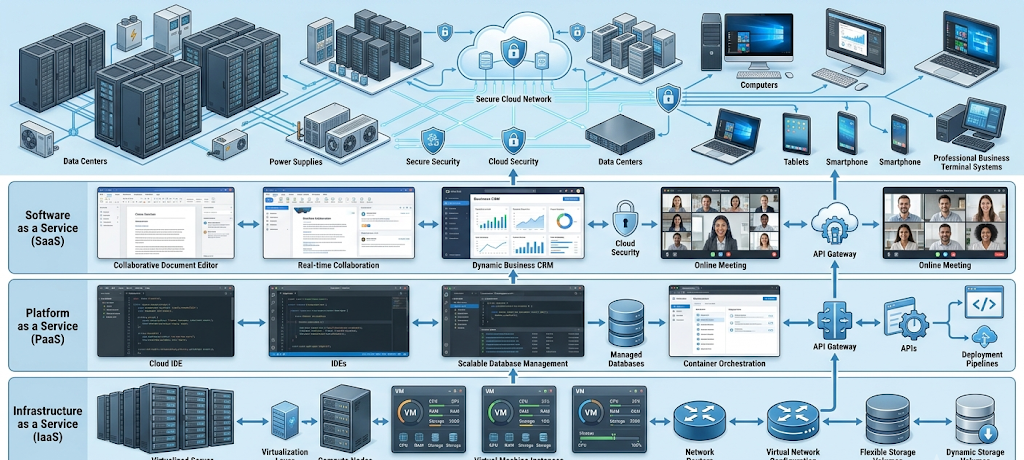
One out of the primary concepts which beginners have to learn is the distinction between Infrastructure as a Service (IaaS), Platform as a Service (PaaS) and Software as a Service (SaaS). These three models present different degrees of cloud service management. In IaaS we have virtualized computing resources like servers, storage and networks which gives the user great degree of control over his environment while the cloud provider takes care of the physical infrastructure. PaaS is where we see developers given turn key environments to develop, test and deploy apps, they do not have to worry about the operating systems or the hardware. SaaS on the other hand is full application delivery via the internet that allows users to access software which they can use without the need to download and maintain it. That which also includes knowing what model to pick for each business requirement is very important for cloud professionals.
Learning the Major Cloud Platforms: Amazon, Azure, and Google Cloud
Amazon Web Services (AWS), Microsoft Azure, and Google Cloud Platform (GCP) are the players. Each of these platforms has a wide range of services related to computing, storage, databases, artificial intelligence, networking, security, and application development. While the concepts are similar between the platforms’ they also present different names, tools, and approaches.
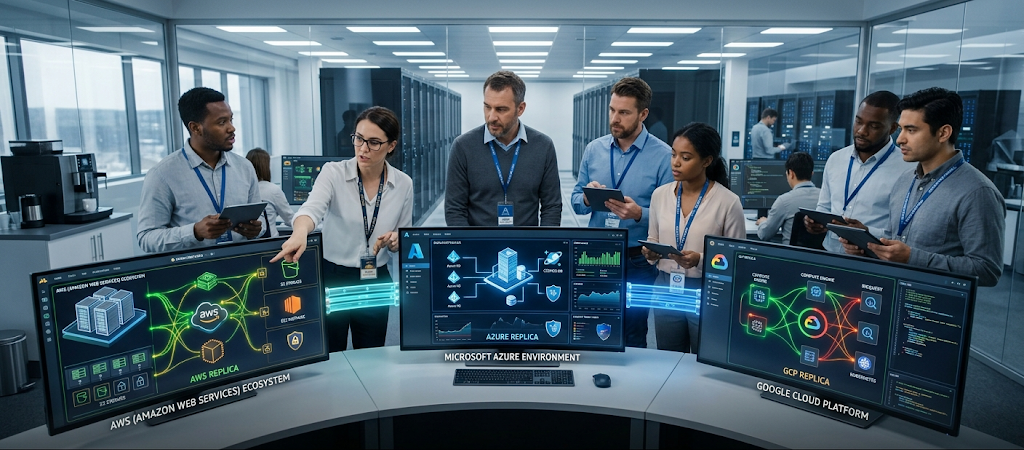
To do well in the cloud space a professional should know the broad principles that apply across the platforms as well as become an expert in at least one of the large players. Also it is a benefit for professionals to learn multiple platforms as many organizations use a hybrid or multi-cloud approach which breaks dependence on a single provider and at the same time increases flexibility.
Amazon Web Services (AWS)
Amazon’s biggest cloud platform which is what a great many people use for their cloud needs we see that they have a large collection of services which we see from startups to large scale enterprises and government agencies using. What we notice is that new to this space individuals start out by getting into the basic AWS services like virtual machines, cloud storage, identity management, networking and managed databases. It is into the fundamentals of what we see play out which is launching cloud servers, setting up permissions, design of secure networks and application monitoring that we see people put their energy into that is what we find.
Also we see that many companies are looking for people who bring to the table AWS knowledge which they combine with automation skills, security practices, and programming which we note is a shift from the past where it was enough to just run single services in a complex modern cloud environment.
Microsoft Azure
Microsoft Azure. In the case of individuals that are interested in enterprise cloud systems, which is a great many, Microsoft has a lot to offer. Knowledge of Azure administration, networking, identity management and cloud security is what many large organizations are looking for which in turn helps professionals to put themselves forward for roles like Azure admin, cloud engineer, and cloud architect.
Google Cloud Platform (GCP)
Google Cloud Platform also is a key option for cloud professionals which includes data analytics, machine learning, and artificial intelligence fields. We see that Google Cloud provides great tools for large scale data processing, containerized apps, and advanced analytics.
For professionals that are into Google Cloud we recommend to study up on its key services which are computing, storage, networking, Kubernetes and data engineering. Also since many companies are going into artificial intelligence and data driven solutions Google Cloud skills may be very useful for professionals that wish to put together cloud know-how with machine learning, analytics or software engineering.
Developing Essential Cloud Computing Skills
A cloud career success story is made up of a mix of tech know how and practical problem solving. Of all the skills out there the most important is networking which we see as the backbone of the cloud which supports secure communication between servers, apps and users. Also professionals in this field should have a good grasp of IP addresses, DNS, firewalls, virtual networks, load balancing, and that which has to do with the connection between different environments. Without that base in networking it is hard to put together a solid cloud architecture or to do issue troubleshooting. Also in the security front which is very key as companies put in the bulk of their info and run critical apps in the cloud. That is why it is very important for cloud pros to know about identity management, encryption, access controls, security monitoring, and compliance issues which in turn help them build better secured systems.
Programming and in fact script writing is a must for those that are into cloud engineering. Although cloud platforms do present graphical interfaces, what we see is that in a professional setting, a cloud environment requires code for automation. To get in there we see that learning languages like Python, JavaScript among others is very helpful for professionals which in turn they use to write automation scripts, manage resources, and put cloud services to work in applications. As for Infrastructure as Code (IaC) tools like Terraform which are also cloud specific automation solutions, what we have is that engineers use them to create repeatable environments with config files instead of going in and setting up resources which is a manual process. Also these skills in turn what they do is improve efficiency and also reduce human error in large scale cloud deployments.
Database as a field of study is also a key area for cloud professionals in which we see that applications’ performance is greatly affected by the quality of data storage and management. In terms of tech skill set, cloud engineers must have in them both relational databases and NoSQL systems. Also they should be well versed in the creation, security, backup, tuning, and application level integration of databases. Also it is very much so that they should have into them the monitoring and troubleshooting which is key for the identification of performance issues, security breaches and system failures. That combination of skills which together with the right tools forms the base for working with today’s complex cloud environments.
Understanding Cloud Architecture and Design Principles
Cloud architects design systems that are scalable, secure, reliable, and which also in terms of cost efficiency. To advance from an entry level cloud role into architecture roles professionals have to study how cloud components play well together. In cloud architecture it is about putting together networks, choosing right services, planning storage, implementing security features, and at the same also see that the applications will scale with variable workloads. Also what they do is take into account issues of availability, disaster recovery, performance, and budget when they present solutions to organizations.
A basic rule of cloud architecture is that of scalability. In the past we have seen traditional systems have issues when user demand grew beyond what was planned for which made them unstable, but cloud environments are designed to grow or shrink resource use based on what is needed at the time. As a cloud professional you must know auto scaling, load balancing, distributed systems, and high availability. Also in the area of reliability in cloud architecture we design systems to not go down when one component fails. This is achieved through knowledge of backup strategies, redundancy, disaster recovery plans, and fault tolerant designs.
Security has to be in from the start of cloud architecture planning. In today’s environment we see a shift toward security focused practices which include protection at each stage of the system development. This includes managing user access, securing sensitive info, tracking out of the ordinary activity, and adherence to industry security standards. A great cloud architect does not just put together systems which do what they are told to; they design systems that are secure, efficient, and which scale into the future.
Learning DevOps Fundamentals for Cloud Success
DevOps is at the core of cloud computing which is what enterprises want for quicker, better software release. Also included in the fabric of what is being developed today, is the integration of development and operations practices by which we see better, continuous software delivery. In today’s modern enterprises which are moving towards automation, cloud engineers that live and breathe the principles of DevOps have a definite edge as this is what the market demands, which is less manual processes and more automated solutions.
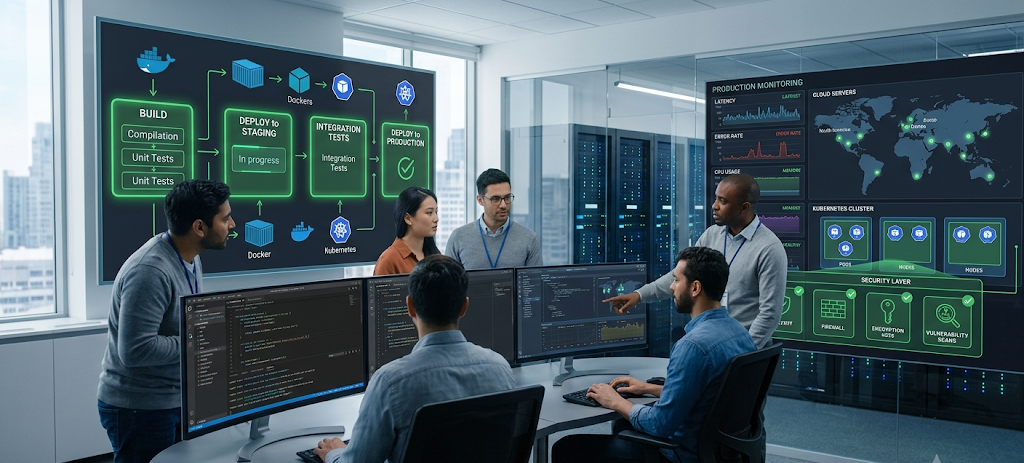
In the DevOps space we see key concepts of continuous integration and continuous deployment (CI/CD) which enable teams to perform automatic testing and release of software updates. In the cloud professionals it is also very important to learn the tools used in source control, automated testing, container management, and deployment pipelines. We put special focus on containers and orchestration tech such as Docker and Kubernetes which do well to get applications to run the same way across many environments. Also by familiarizing themselves with these techs cloud engineers do better at managing today’s applications that require flex and fast deployment.
Monitoring and log collection is also a large part of DevOps. Teams must have access to info on app performance, system health, and also early warning signs of issues. In terms of technical skills, we see that professionals should know how to gather system info, analyze performance data, and get in there to resolve issues. By combining cloud knowledge with DevOps practices professionals grow to be able to develop full scale solutions which take a project from dev to full scale deployment and maintenance.
Choosing the Right Cloud Certifications
Certifications are a way to show off your cloud knowledge and also improve your career chances which is great for beginners that are just getting into the field. At the same time though certifications which also serve to be very useful when you pair them with practical experience. We see that companies do better by candidates which are able to apply what they know to real world issues instead of those which are only memorized for a test.
For starters we see that foundational certifications are a great way to get into it. They cover basic cloud concepts, security issues, and key services. Once that base is covered professionals may then go after associate level certs which are focused in the areas of cloud admin, development, or architecture. For those that have some practical experience and are looking to really dive into a specialty area we have advanced certifications which include cloud security, solutions architecture, or DevOps engineering.
Which certification path is best depends on what you are aiming for in your career. For instance some that want to manage cloud systems may go after admin certifications and those that are into design of large scale solutions may go after architecture certifications. It is also up to the professional to do research on what is required for the certifications they wish to achieve and to pair that with practical projects to get the most out of their study.
Building Hands-On Cloud Projects
Practical experience is what really sets apart those who have successful cloud careers. As for study which of great value is to do personal projects that apply what is learned in the classroom and at home which in turn develops confidence with cloud platforms. At the start for beginners we see projects like hosting a site on the cloud, creating secure virtual networks, deploying applications, or putting in place automatic backup systems.
More in depth projects may include the design of highly available apps, implementation of CI/CD pipelines, creation of containerized apps, or the development of cloud based data solutions. These projects display problem solving skills which also double as great examples to bring up in interviews. Also put together a portfolio which you may host on GitHub which in turn will help you to present your tech skills to future employers.
Hands-on experience also plays a key role in what professionals learn in the cloud. We see issues of security access, network set up, performance tuning, and cost control come to light through practice. Also it is in the doings of continuous research and project development that we see the true growth in cloud computing.
Career Growth and the Job Market in Cloud Computing
Cloud computing presents a large set of career options which include cloud engineer, cloud architect, DevOps engineer, cloud security specialist, solutions architect, and site reliability engineer. As companies push forward with migration of their systems to the cloud we see the demand for skilled personnel grow. Also in this field it is required that you continuously improve your skills because cloud tech is always changing.
Professionals that wish for long term success should put in effort into developing adaptable skills as opposed to just learning specific tools. What we see is that cloud platforms are in a constant state of change, but at the same time basic principles in the areas of networking, security, architecture, automation, and problem solving do not go out of date. By which I mean that what really helps professionals is that they stay updated with courses, certifications, communities, and practical projects.
Building out a successful cloud computing career is a path which requires dedication, curiosity, and consistent practice. Through study of cloud basics, to developing in AWS, Microsoft Azure, and Google Cloud, to getting a handle on architecture principles, mastering DevOps practices, obtaining relevant certs, and completing real world projects, aspirant cloud engineers and architects may put together strong foundations for a rewarding tech career.