Basic Plumbing Repairs are valuable skills that every homeowner should learn to maintain a home’s plumbing system without always hiring a professional. There are many ways to maintain a plumbing system in a home without having to hire a professional. There are a few problems that require the help of a licensed plumber, but there are some common plumbing problems that can be easily solved with a few simple tools and knowledge. Knowing these repair skills can save homeowners money, water and time, which is truly important when it comes to making it through the season without costly repairs. Taking the time to learn the fundamentals of plumbing maintenance can make home ownership more affordable and less stressful.
Often, plumbing issues start out as minor annoyances. A running toilet or a running faucet may not seem like a big deal, but they are using thousands of gallons of water annually and add to your monthly utility costs. Learning basic plumbing maintenance can help homeowners identify and repair plumbing issues that could lead to major water damage. Many simple plumbing repairs can be safely done without a lot of experience and the proper tools and preparation.
Why Every Homeowner Should Know About Basic Plumbing Repairs
As a homeowner, you are responsible for keeping up with the upkeep of home essentials, including plumbing. Little plumbing problems don’t just resolve themselves. Rather, they slowly get worse over time which results in increased repair bills, water damage, and needless aggravation. Knowing some basic repairs can make all the difference when dealing with a leak, worn parts, or broken plumbing fixtures before they escalate into major issues that need professional help.
When things go wrong, you’ll feel more confident in your basic plumbing skills too. Homeowners who have the basic knowledge of the subject can deal with a plumbing problem like a dripping faucet or a clogged toilet with cool heads and quick action. While professional help may be needed in the end, taking immediate steps and actions can greatly minimize the damage to the property and save flooring, walls and cabinets from excess moisture.
Turn Off the Water Before Repairs Are Made
Before attempting any plumbing repair, the first step is to find and turn off the correct valve to the water. All homeowners should familiarize themselves with the location of the main shut-off valve in case of an emergency such as a broken pipe or burst pipe, which can cause water to flow out in large quantities within minutes. If the water supply can be quickly secured, then far less structural damage can occur and repairs can be kept at lower costs.
In addition to the main shut-off, most sinks, toilets, and appliances have a shut-off valve nearby. These localized valves can then be closed so that no one in the house is affected by the repair work. These valves should be tested occasionally to make sure they will work if they are needed in an emergency situation, since valves that are not used can become difficult to operate.
Fixing a Leaking Faucet
The most frequently occurring plumbing problems in homes are leaking faucets. The trickle of water may seem fairly insignificant, but it’s wasting water all the time and driving up water costs over time. The issue is often caused by damaged internal components like washers, O-rings, or cartridges, which are regular wear-and-tear items that deteriorate after years of regular use. Before the repair, it is important to determine the type of faucet so that the right replacement parts can be purchased.
After turning off the water supply, gently take out the faucet handle and carefully sort each component where appropriate as you remove it. Frequently, replacing faulty parts and removing mineral buildup will get the faucet working again. Once it is put back together, turn the water back on gradually and carefully inspect it for leaks to ensure that the repair has been successful.
Replacing Worn Washers
Rubber washers are normally used to form a seal to prevent any water loss when a compression faucet is shut. When these washers start to deteriorate, the valve starts to leak, resulting in the annoying dripping sound that many homeowners hear. Fortunately, replacing a worn washer is relatively inexpensive and only requires a few common hand tools.
It’s also a great time to check other parts around the washer for signs of wear or corrosion when replacing the washer. Installing worn seals or O-rings at the same time can help prevent future leaks and enhance the overall performance of the faucet. Repairing the fixture takes just a few more minutes but can significantly extend its lifespan and reduce future maintenance.
Fixing a Running Toilet
Another typical plumbing issue is having a running toilet that consumes a tremendous amount of water every day. The most common culprit for most running toilets is a leaking flapper, an incorrect float height setting, or a faulty fill valve inside the tank. Luckily, these components can usually be replaced without advanced plumbing knowledge and without spending too much money.
Start by taking the lid off the tank and watch how all the components work during a flush. If the flapper is not sealing properly, replacing it is typically a simple solution. If the water level becomes too high before shutting off, adjusting the float or replacing the fill valve may correct the issue. To make sure that the toilet fills properly without continuing to run, flush it several times after the repair.
Essential Plumbing Tools Every Homeowner Should Own
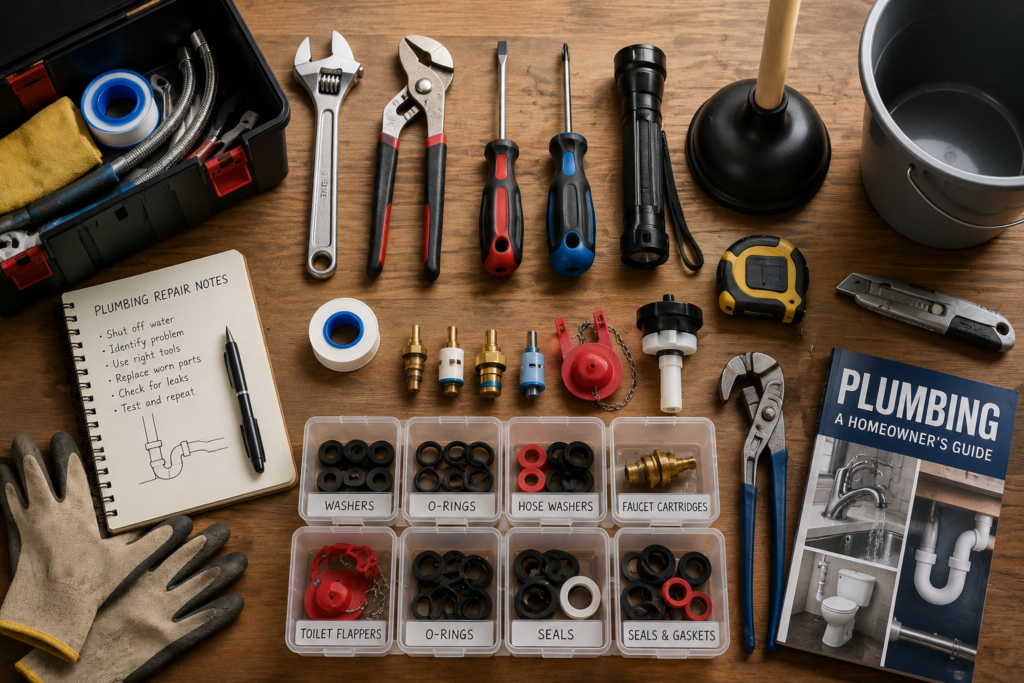
It’s important for every homeowner to have a few plumbing tools on hand. Many common household plumbing issues can be fixed with basic tools like an adjustable wrench, tongue-and-groove pliers, screwdrivers, a plunger, plumber’s tape, a utility knife, a bucket, and a flashlight. These tools help avoid an unplanned trip to the hardware store if something goes wrong with the plumbing.
Whenever possible, homeowners should keep a few spare washers, toilet flappers, O-rings, hose washers, and faucet cartridges on hand in addition to basic hand tools. Often, these tiny parts are responsible for leaks in your home and are inexpensive to replace. When trouble strikes, having spare parts stored with the plumbing tools allows repairs to begin immediately.
Knowing How to Use Plumbing Tools Properly
It’s important to get the right tool for the job, just as important as owning the tool. Adjustable wrenches must fit snugly on fittings to avoid slipping, and plumber’s tape must always be wrapped clockwise around threaded connections to create an effective seal. Never use excessive force, since many plumbing components are constructed from softer metals or plastic and may crack if overtightened.
Proper tool care also helps improve safety and extend equipment longevity. Cleaning tools after each repair and storing them in a dry area helps prevent rust and keeps them ready for future repairs. Clean, well-maintained tools make plumbing work easier and reduce the chance of damaging plumbing fixtures.
Preventing Common Plumbing Problems
One of the simplest and least expensive ways to avoid costly plumbing repairs is through preventive maintenance. Homeowners should regularly inspect exposed pipes, under-sink cabinets, faucets, and supply lines for signs of moisture, corrosion, or leaks. Detecting these problems early helps minimize water damage while keeping repair costs low. Replacing old rubber seals and flexible supply hoses before they fail is another effective way to prevent leaks.
Daily habits also play an important role in maintaining a healthy plumbing system. Never pour grease, cooking oils, coffee grounds, or food scraps down the kitchen sink because they build up inside pipes over time. Likewise, toilets should only be used for flushing human waste and toilet paper. Avoiding improper disposal habits greatly reduces the risk of clogs and other plumbing problems.
When to Call a Professional Plumber
While there are many home plumbing repair tasks that homeowners can handle themselves, there are situations where professional expertise is necessary. Burst pipes, sewer line backups, hidden leaks behind walls, water heater failures, and major pipe replacements require specialized equipment and technical knowledge. Attempting these repairs without experience may lead to further damage and increased repair costs.
A professional plumber can also identify problems that homeowners might overlook, such as weakened pipes, unusual water pressure, or hidden leaks inside walls and foundations. Knowing when to call a professional is an important part of responsible home maintenance. Combining simple do-it-yourself repairs with expert assistance when needed helps keep the plumbing system reliable for many years.
Conclusion
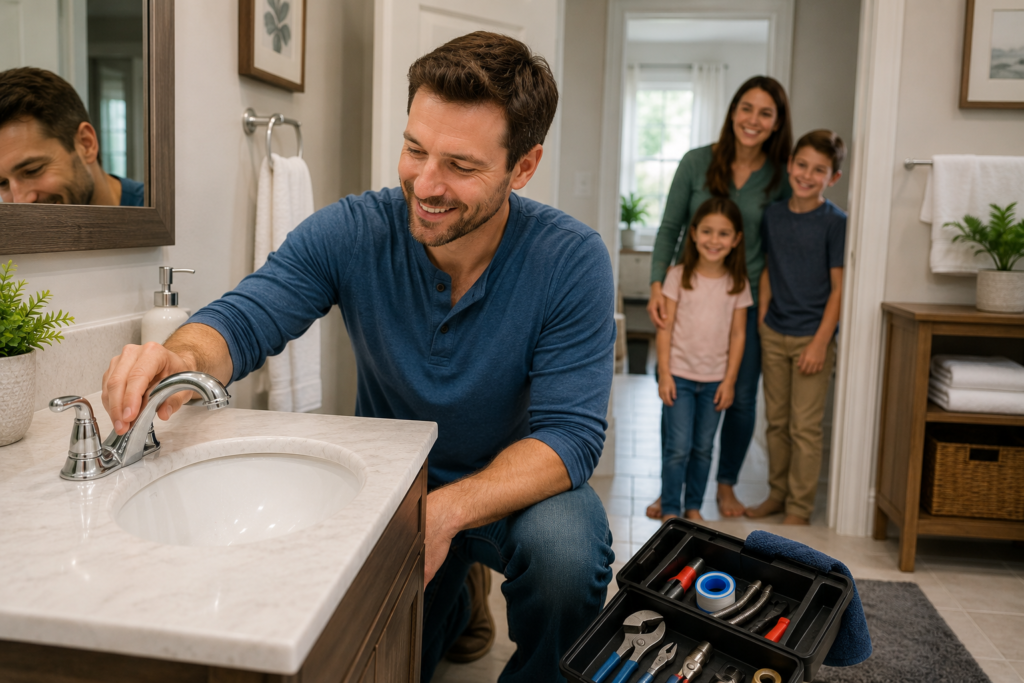
One of the most useful investments any homeowner can make is learning basic plumbing repairs. Many minor issues, such as replacing worn washers, repairing leaking faucets, fixing running toilets, and shutting off the water during emergencies, can be resolved before they turn into expensive repairs. These skills not only save money but also help reduce water waste while protecting the home from unnecessary damage.
Having the necessary tools, performing routine maintenance, and knowing when to call a professional creates the right balance for successful homeownership. Promptly addressing plumbing problems and practicing preventive maintenance can help homeowners extend the life of their plumbing systems, avoid costly emergencies, and gain greater confidence in handling everyday plumbing issues.