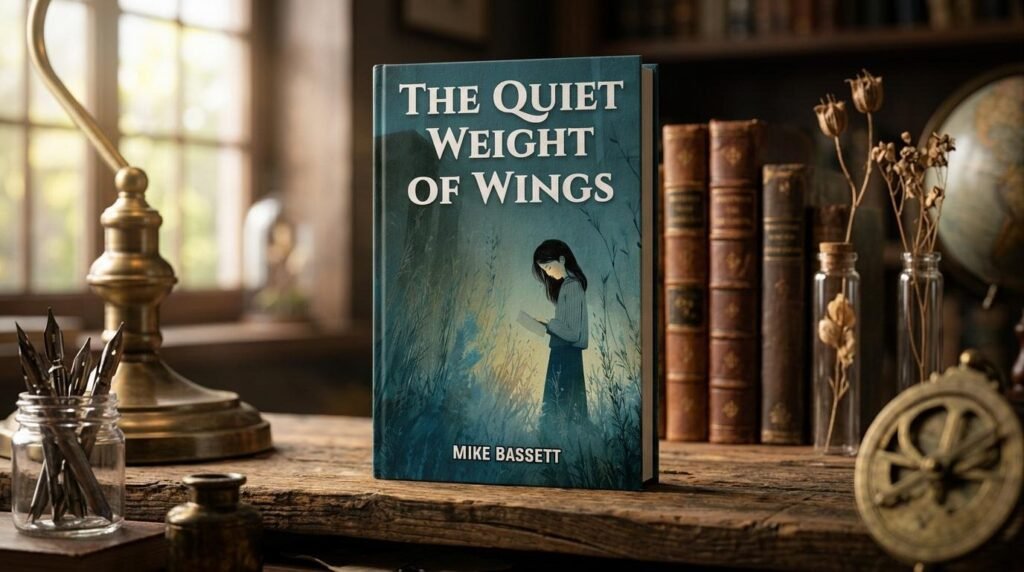
A private letter can make a novel feel less like a performance and more like a door left open. In Mike Bassett’s The Quiet Weight of Wings, letters are not decorative inserts or occasional emotional flourishes; they help shape how readers come to know Grace Harper.
Grace is seventeen when her mother dies, and ordinary speech no longer seems large enough for what she is carrying. She writes to loneliness, to the wind, to herself, to strangers, and to the dead, creating a reading experience built around what people admit only when they believe no one is listening.
How the Letters Open Grace’s Inner World
Grace’s letters give the novel an intimate structure because they let her speak outside the usual rules of conversation. She does not have to reassure anyone, defend what she feels, or make grief easier for other people to understand.
That freedom matters to the emotional shape of the story. The letters allow Grace to move between ache, confusion, memory, and sharp observation without needing to turn those feelings into neat explanations.
Each addressee gives her a different way to speak. A letter to loneliness carries a different emotional charge from a letter to her mother, and a letter to herself opens a different kind of honesty from a message meant for a stranger.
The Distance Between Speech and Writing
After her mother’s death, Grace lives in a house where grief has made everyone quieter. Her father works longer hours, her brother disappears into music, and the family’s silence leaves Grace with feelings that have nowhere obvious to go.
The letters become one of the main places where that silence takes form. Instead of forcing Grace into direct confrontation before she is ready, the novel lets writing become the space where the unsaid can gather.
This gives the book a distinct emotional rhythm. Readers are not simply told that Grace is grieving; they watch her reach for language, test what can be said, and leave certain truths on the page before she can bring them into the world around her.
When Written Words Begin to Shift the Story
The letter-writing thread also connects Grace’s private grief to the novel’s mystery elements. A notebook appears, a record carries her mother’s voice, a carved stone raises questions in the garden, and a sentence in a library book seems to speak directly into Grace’s life.
These details give the story movement without pulling it away from its quiet emotional center. The novel does not need to become a conventional thriller for the reader to feel that something has begun answering Grace’s search.
That is where the letter structure becomes especially important. Grace sends words into silence, and the story answers with objects, fragments, and signs she has to understand piece by piece.
Why the Letter Form Fits the Book’s Themes
The Quiet Weight of Wings is built around grief, identity, and the fragile work of connection after loss. Letters fit that emotional territory because they hold absence inside their very form: someone writes because someone else is distant, unreachable, unknown, or gone.
For Grace, writing becomes a way to speak across that distance. Her letters do not erase grief, but they give it shape, texture, and direction within the story.
This makes the novel especially suited to readers who are drawn to interiority and voice. The strongest pull is not only what happens next, but how Grace learns to name what has happened to her.
Readers Drawn to Letter-Driven Fiction
Readers who enjoy letter-driven fiction often look for closeness rather than speed. They want to feel the pressure of a character’s private thoughts, the pauses between what is said and unsaid, and the emotional risk of putting words somewhere they might not be answered.
That kind of reader is likely to understand what Bassett is doing with Grace’s letters. The form gives the novel room to be reflective without becoming static, because each letter reveals another angle of Grace’s grief, memory, and desire for connection.
The book may also appeal to readers who like literary coming-of-age fiction with a lyrical register. Its letter-writing thread gives the story a concentrated emotional voice, while the surrounding mystery elements keep Grace’s private writing tied to discovery.
Choose the Format That Fits How You Read
The Quiet Weight of Wings is available now on Amazon in paperback and ebook formats. Readers who like to underline passages, keep a physical copy, or share books with a group may prefer the paperback edition.
The ebook format may suit readers who want immediate access or prefer reading across devices. Either format gives readers a way into a novel where letters carry grief, mystery, and the quiet hope that words can still reach someone.
Frequently Asked Questions
How are letters used in The Quiet Weight of Wings?
Letters are one of the central ways Grace Harper processes grief and silence after her mother’s death. She writes to loneliness, the wind, herself, strangers, and the dead, giving readers close access to thoughts she cannot easily speak aloud.
Does Mike Bassett’s novel use an epistolary style?
The Quiet Weight of Wings uses strong epistolary elements, but it should not be described as a traditional novel made entirely of letters unless that structure is confirmed. The letters are central to the book’s emotional logic and help shape how readers understand Grace’s inner life.
Who might enjoy the letter-writing element of the book?
Readers who enjoy intimate, reflective fiction may connect with the letter-writing element of The Quiet Weight of Wings. The book is especially suited to those drawn to lyrical coming-of-age stories, grief-centered literary fiction, and character-driven novels where voice carries much of the emotional weight.