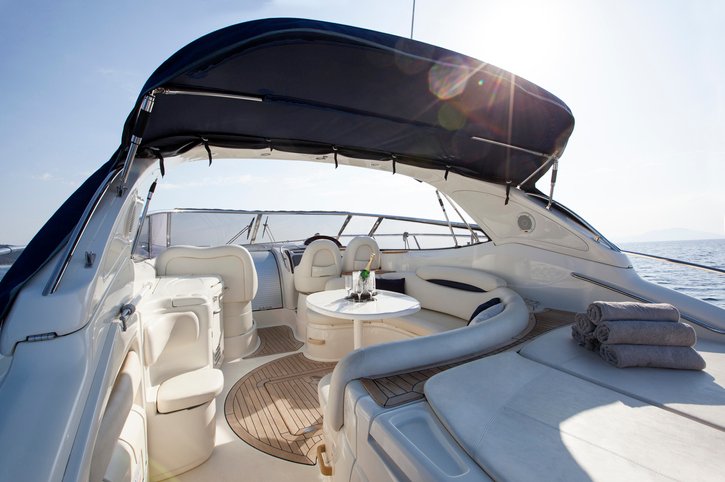
Boat seat upholstery wears out from UV exposure, moisture, and regular use. When the vinyl starts cracking, the foam goes flat, or the color fades beyond what cleaning can fix, replacing the upholstery restores both the comfort and the look of the interior.
This job is a realistic DIY project, with materials costing $300 to $800, compared to $1,500 to $5,000 for professional work. Following the steps in order with marine-grade materials is what separates a job that lasts from one that peels before the next season.
- Gather the Right Tools and Materials First
Having everything ready before starting prevents trips to the store mid-project. The materials need to be marine-grade because household alternatives break down within one season on a boat.
Materials:
- Marine-grade vinyl or Sunbrella fabric for the covering
- Closed-cell marine foam if the existing foam needs replacing
- Marine plywood, if any backing boards have water damage
- UV-resistant polyester thread for sewing seams
- Stainless steel staples
Tools:
- Staple puller or flat-head screwdriver
- Heavy-duty staple gun
- Sharp fabric shears or a rotary cutter
- Electric carving knife for cutting foam
- Fabric marker for tracing patterns
- Sewing machine with a walking foot attachment if seams are involved
- Remove the Old Upholstery Carefully
The old vinyl serves as the cutting template for the new material, so removing it in one piece saves hours of measuring later. Pull each staple individually with a staple puller and work the material off the base slowly and evenly. As each piece comes off, label it with a marker, noting which seat and which side it came from, then lay it flat on a clean surface so the shape stays intact for tracing.
- Assess the Foam and Base Underneath
With the old vinyl removed, the foam and backing board are exposed for inspection. Press into the foam with your palm to check whether it still has enough density to support weight comfortably. If it holds the impression instead of bouncing back, the foam needs replacing along with the vinyl.
The plywood backing board underneath needs the same attention. Soft spots, dark discoloration from water absorption, warping, or mold growth on the underside all indicate that the board has taken on moisture and will not support new material properly. Any board showing those signs needs to come out before the next step.
- Replace Damaged Foam and Backing Boards
Regular furniture foam absorbs water and compresses permanently after one season on a boat. Closed-cell marine foam resists water, dries quickly, and holds its shape through heat and humidity.
Choosing the right foam density:
- 1.0 to 1.4 lb per cubic foot: Backrest padding only, too soft for seat cushions
- 1.5 to 2.0 lb per cubic foot: Seat cushions, the right balance of comfort and support
- Above 2.0 lb per cubic foot: Non-seating surfaces, too firm for extended sitting
Match the thickness to the original and cut with an electric carving knife for clean edges. If the plywood backing board failed the inspection in the previous step, replace it with marine-grade plywood cut to the same dimensions as the original before moving on.
- Cut the New Vinyl Using the Old Pieces
Lay each old vinyl piece flat on the new material and trace the outline with a fabric marker. Add half an inch on every edge for wrapping and stapling, then cut with sharp fabric shears or a rotary cutter. Dull blades drag the vinyl and leave ragged edges that show on the finished seat.
Once all pieces are cut, any seat design that requires seams needs sewing before installation. Use a heavy-duty machine with a walking foot attachment and UV-resistant polyester thread. Standard home machines struggle with marine vinyl thickness, and regular thread degrades in sunlight, causing seams to fail before the vinyl does. Test fit each piece on the foam and base before stapling, because vinyl that looks right on the cutting table can pull differently once it wraps around the contoured foam.
- Staple the New Material to the Base
Position the vinyl over the foam and base, centering it evenly on all sides. Staple the center of one side first, then the center of the opposite side, pulling firmly and evenly before each staple. Work outward toward the corners, alternating sides to keep tension balanced across the surface.
For corners, pull the material at a 45-degree angle toward the corner point, fold the excess underneath into a clean tuck, and staple flat rather than bunching, which creates visible lumps that catch the eye from across the boat. Use stainless steel staples only because regular steel rusts within weeks on a boat. Trim excess vinyl to about a quarter inch past each staple and finish the underside with a dust cover.
- Reinstall and Protect the Finished Seats
Clean all mounting hardware and replace any corroded fasteners before bolting the seats back in. A rusted bolt underneath new vinyl stains through the material within a season.
After installation:
- Confirm each seat sits level without rocking
- Verify snap fasteners and zippers function properly
- Apply marine-grade vinyl protectant to every surface
- Reapply protectant every four to six weeks during the season
- Cover seats with a fitted canvas cover when the boat is not in use
Common DIY Mistakes That Cause Early Failure
These errors show up repeatedly, and each one shortens the life of the finished job.
- Covering old compressed foam with new vinyl instead of replacing it
- Using household staples that rust instead of stainless steel
- Cutting without the half-inch wrapping allowance on each edge
- Sewing with standard thread that degrades in sunlight within months
- Starting staples at the corners instead of the center, creating uneven tension
- Leaving a water-damaged plywood base in place under new material
When to Call a Professional Instead
Some upholstery jobs are too complex for a reliable DIY result.
- Contoured bucket seats with multiple sewn seams and compound curves
- Full interior replacements involving side panels, headliners, and door panels
- Custom designs requiring pattern drafting from scratch without old templates
- Boats with electronics integrated under seat panels need careful disassembly
- Fiberglass seat bases need structural repair before upholstery work
A professional shop also makes sense when the boat has high resale value, and the finish needs to match factory quality throughout the vessel.
Maintaining New Upholstery for Maximum Life
Replacing the upholstery is the expensive part. Maintaining it afterward costs very little and adds years to the material.
After every trip:
- Rinse seats with fresh water to remove salt, dirt, and sunscreen residue
- Wipe down and let surfaces air dry fully before covering
Seasonal care:
- Apply UV protectant every four to six weeks
- Inspect stitching for early thread degradation
- Check staple points for rust bleed-through
- Clean with mild soap and water, and avoid harsh chemicals
Off-season storage:
- Cover with fitted canvas or store removable cushions indoors
- Leave ventilation under covers to prevent moisture buildup
- Check mid-winter for mold or mildew
FAQs
How often does boat interior upholstery need replacing?
Most marine vinyl lasts five to eight years with regular UV protection. Boats stored outdoors without covers wear faster.
Can boat seats be reupholstered without a sewing machine?
Flat cushions and bench seats can be wrapped and stapled without sewing. Contoured seats and anything with piping need a heavy-duty machine.
What is the difference between marine vinyl and regular vinyl?
Marine vinyl includes UV stabilizers, mildew inhibitors, and water-resistant backing. Regular vinyl cracks and fades within one season on a boat.
Final Thoughts
Replacing boat interior upholstery follows a clear sequence: gather materials, remove old vinyl, assess the foam and base, replace what is damaged, cut new material, staple it down, and reinstall. Each step depends on the one before it, and skipping any of them is how jobs fail early.
Charley’s Marine Canvas and Upholstery LLC specializes in marine upholstery and interior restoration for boats across Michigan. Their team works with marine-grade materials and builds every project for the conditions boats face on the Great Lakes. For boat owners who want professional results without the trial and error, they can be reached at their facility in Gibraltar, MI.