
In today’s technologically connected business world, technology plays an important role in the daily running of businesses, business communication with stakeholders and in the development of innovation. The central pillar of this technological ecosystem is software: a collection of applications that control all aspects of communication and production. But if the IT software is not managed in a structured manner, they can turn into a source of inefficiency and downtime. Managing software is not simply putting it on, it is a strategic approach to maintaining, updating and optimizing software throughout the organization. However, businesses can minimize downtime, streamline workflows, and optimise employee productivity by adopting comprehensive IT software management strategies, ultimately improving their operational success and cost-effectiveness.
Understanding Software Management
IT software management, also referred to as software administration, is the organized management of an organization’s software resources throughout their life cycle. This includes deployment, planning, maintenance, updates, licensing, and (at the end of the day) retirement. By implementing proper software management practices, organizations can achieve greater visibility into their software environment, enabling them to optimize software resource usage, avoid conflicts, and ensure compliance with software licensing policies. In addition to compliance, software management provides the right tools at the right time to promote an environment where productivity can flourish without unnecessary interruptions. It also can offer leadership with valuable insights into software usage patterns that can help inform future technology investments and streamline operational workflows.
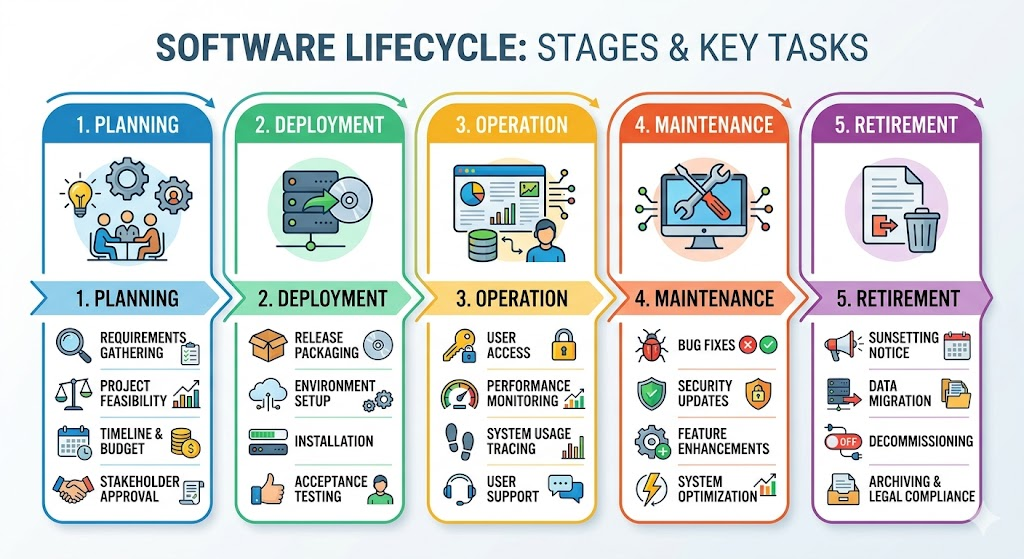
All software has a life cycle from development / acquisition to decommissioning. A well-managed software lifecycle guarantees that each phase of software’s life—from planning and deployment through operation, maintenance and retirement—is managed strategically. In the planning process, the organizations evaluate their business requirements, budget limitations, and security needs to determine which software solutions will meet their needs. The deployment process should include the installation and configuration of applications to minimize disruption and maximize integration with existing systems. The activities of operation and maintenance involve constant monitoring, troubleshooting and installation of software updates or patches to maintain optimal software performance. Lastly, when software is no longer useful, it is phased out or updated systematically, avoiding the problems associated with legacy software that might hamper productivity. Following a lifecycle structure helps companies prevent common issues like unexpected downtime, compatibility problems, and workflow inefficiency.
Minimizing Downtimes by Organized Software Management

When software and/or systems go down, they can cause major business productivity losses. A short outage can cause lost time, upset staff and lost revenue. The risks can be reduced with effective software management through preventive maintenance and monitoring. Regular updates and patches fix bugs and vulnerabilities which might otherwise cause the system to crash. Tools for monitoring can help to identify issues before they become significant problems. Further, effective documentation and standardized processes guarantee uniformity in software installations, configurations, and troubleshooting throughout the organization. These measures ensure that companies can run almost without any stops, allowing workers to concentrate on their main operations and tasks instead of dealing with technical interruptions.
Improving Workflow Efficiency using Software Management Tools
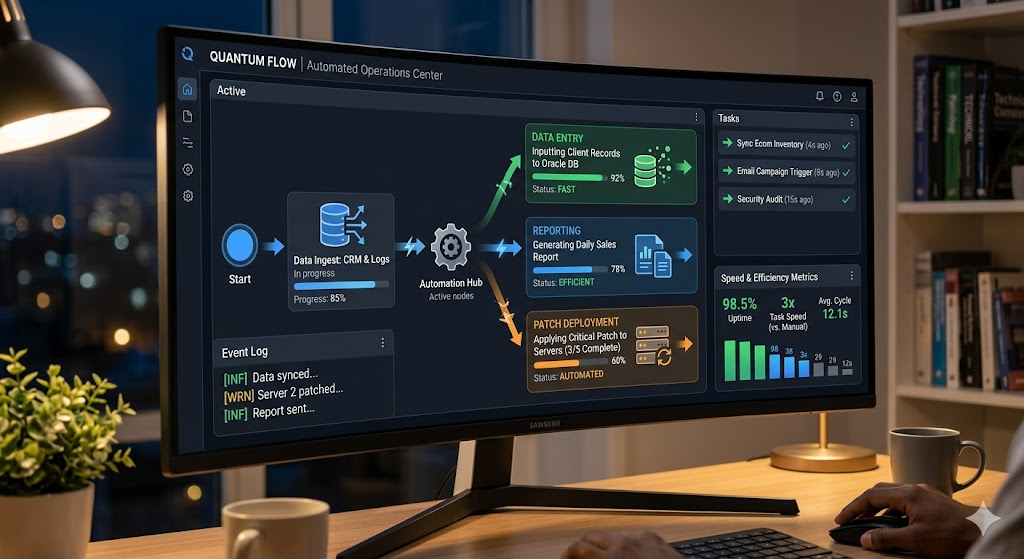
The smooth transition between different software and applications in an organization is critical for workflow efficiency. Without central management, staff might waste time in transferring between incompatible applications, or undertake repetitive tasks, manually. However, strategic IT software management addresses this issue by leveraging automation tools to streamline repetitive tasks like data entry, report generation, and system monitoring. Automation not only minimises human error and human resource availability but also enables employees to focus on higher value activities, improving overall productivity. Furthermore, structured software management promotes uniformity amongst departments, allowing for best practices in software processes and the ability to work more cohesively as a team. When software supports the business goals, organizations can get more out of their technology investments, while boosting operational efficiency.
System updates are one of the key points of software administration. Updates may also contain bug fixes, security patches, and performance improvements that are vital for having a smooth running environment. Regular software updates are essential for keeping organizations secure against cyber threats, safe from system crashes, and efficient. In addition, new software functions added with updates can further improve workflow, data analysis capabilities, and user experience. IT teams are essential for handling these updates, testing them, scheduling for deployment, and ensuring they don’t disrupt business operations. Systematic updates streamline the software environment, ensuring sustained employee productivity and a robust and secure IT infrastructure.
Optimizing Licensing Management and Costs
It’s also important to have good software management, which involves handling software licensing correctly. It is crucial for organizations to have the appropriate software licenses to avoid legal issues and avoid wasting money. Unlicensed software can cause a legal and security problem, and over-licensed or underutilized software can cause financial inefficiencies. This centralization of license tracking and renewal procedures allows IT teams to streamline software expenditures, rid themselves of duplications, and make sure that they follow vendor licensing agreements. Furthermore, precise licensing management facilitates planning for future software demands, allowing businesses to allocate their budgets more effectively and avoid over-purchasing licenses. The bottom line is, if the licensing requirements are clear, it will help protect your finances and your business.
Harnessing automation tools for more intelligent software management
Today, automation has become an integral part of IT software management, empowering enterprises to handle intricate software landscapes with less manual effort. Tasks like software deployment, patching, performance monitoring, security compliance, etc can be automated. These tools not only accelerate routine processes but also reduce the risk of human error, ensuring consistency and reliability across the organization. Additionally, automation can help IT teams quickly address new concerns, reducing downtime and disruption even more. This means that the technology that employees depend on runs smoothly and efficiently, resulting in a smoother work experience. The adoption of automation in software management strategies helps companies improve operational efficiency and employee satisfaction, resulting in a competitive edge in the market.
IT Software Management and its impact on business success
Properly managing IT software brings real benefits to organizations beyond the usual efficiency gains. With less downtime, businesses can ensure processes run smoothly, and optimized workflows can boost employee productivity and collaboration. Preventing the security threats and additional costs associated with software updates and licensing. Together, these benefits are amplified by automation tools which help to automate repetitive tasks and free up employees to work on strategic projects. When combined together, these practices enable a setting where technology is used to enhance and not obstruct business goals. With the software management tools available, businesses that get the best value are more likely to be competitive in today’s world, be able to scale up and remain profitable in the long term.
Conclusion
For businesses looking to succeed in today’s tech-driven economy, IT software management is no longer a choice, it’s a necessity. From installation to updates, monitoring, licensing, and automating tasks, businesses can streamline their workflow, reduce downtime, and increase employee productivity. These enhancements directly impact the success of the technology’s operations, cost savings, and overall resilience. In this way, businesses that prioritize software management can ensure the uninterrupted continuity of their activities while laying the groundwork for future growth and innovation. At its core, strategic software management is a critical component of business productivity and competitive edge in today’s working world.