Nobody who watched English football in 1993 could have predicted what it would look like in 2024. The game has been taken apart and rebuilt so many times in thirty years that calling it an evolution almost undersells the whole thing. It’s been closer to a complete rewiring.
The Premier League launched in August 1992 as English football’s effort to modernize, clean up its image, and chase television money. What it couldn’t have anticipated, not fully, anyway, was that those same commercial pressures would eventually make it the most watched domestic league on earth and that in chasing that status, it would attract managers, players, and ideas from every corner of the globe until the tactical landscape bore almost no resemblance to what the founding clubs had intended.
If you track the game closely, and fans of valio liiga across Finland and beyond who follow every result and table movement know this feeling well, there’s a peculiar joy in watching tactical ideas ripple outward from the top of the game downward. Something Guardiola tries at the Etihad in October shows up in Championship football by January. An idea Klopp pioneered in the Bundesliga becomes standard practice in the Premier League within three seasons. The trickle-down is real, and it happens faster than it ever used to.
But let’s start at the beginning. Because where English football began, tactically speaking, was a very different place.
The Muddy, Muscular Early Years
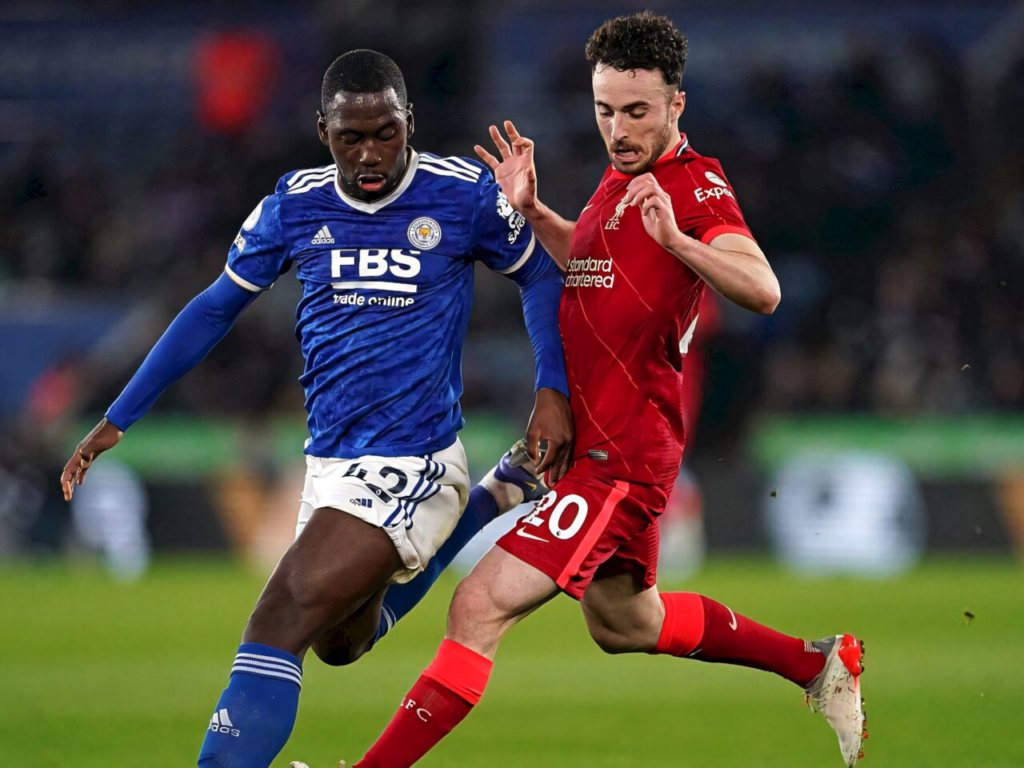
The phrase “kick and rush” gets used as a pejorative now, but in the early years of the Premier League, it was essentially a tactical philosophy, and not an embarrassing one. The English game had been built around physicality, set pieces, and direct vertical passes into the channels for a quick striker to chase. Wingers hugged the touchline. Center-forwards were big, aggressive, and good in the air. Midfielders tracked runners and put themselves about. Simple. Effective. Not beautiful, but functional.
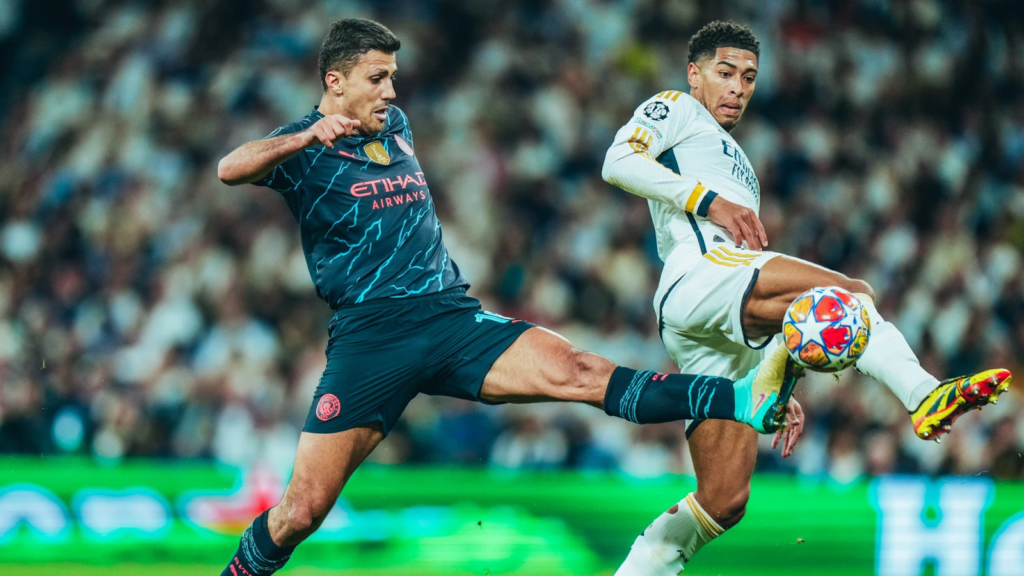
The 4-4-2 was the default formation, practically universal. You had your two central midfielders, one a ball-winner, one marginally more creative, flanked by two wide players whose primary job was to get to the byline and put the ball in the box. The full-backs stayed back. The wingers crossed. The strikers attacked the cross. That was the cycle.
Even the most admired clubs of that early era played within this framework. Manchester United under Ferguson in the mid-1990s had Keane and Ince terrorising opponents in midfield, Beckham delivering from the right, Giggs tormenting people from the left, and Cantona operating in a pocket just behind two forwards. They were excellent. They were also, by 2024 standards, fairly predictable in their structure.
The thing is, everybody was predictable. When everyone plays a version of the same system, the variables that decide matches are pace, power, set pieces, and individual moments of quality. Which is why that era produced so many tight, scrappy games where one moment from one player changed everything. Not a criticism; some of that football was genuinely exciting. But it wasn’t complex.
Worth Knowing
In the 1992/93 Premier League season, the average number of passes per team per game was somewhere in the low-to-mid 300s. By the mid-2020s, the league average had climbed past 450 in most seasons, with possession-focused sides regularly exceeding 600. That number, more than any other, tells you how much the game changed.
The Foreign Influx Changes Everything
The Bosman ruling in 1995 was the legal earthquake that cracked open the door. Suddenly, clubs could sign European players without transfer fees at the end of their contracts. The barriers came down slowly but irreversibly, and the Premier League, flush with Sky money and increasingly glamorous, became the destination of choice for players who’d previously stayed closer to home.
Arsène Wenger is the name that comes up most often in this conversation, and for good reason. When he arrived at Arsenal in September 1996, he genuinely did things nobody else in England was doing. Diet. Sports science. Stretching routines. Pre-season preparation. He treated the human body as an instrument that needed careful maintenance rather than just fuel. His players recovered faster, stayed fitter later in the season, and sustained fewer injuries than almost anyone else in the division.
But beyond the physical revolution, Wenger brought a different way of thinking about space and movement. Arsenal under Wenger, the late 1990s version especially, played football that moved the ball quickly through midfield, sought combinations on the edge of the penalty area, and trusted technical players to beat opponents with football rather than physicality. Bergkamp. Pires. Henry. These were not players who’d thrive in a kick-and-rush system. Wenger built a system that made the most of what they could do.
Wenger didn’t just change Arsenal. He gave the entire Premier League a credibility problem: either the rest adapted, or they fell further behind. Most of them adapted.
The José Mourinho Interruption
Not every tactical development in the Premier League has been about possession and creativity. José Mourinho’s arrival at Chelsea in 2004 was a reminder that defensive organization, collective shape, and game management are tactical arts in themselves.
Chelsea under Mourinho in 2004/05 and 2005/06 were the most defensively efficient side English football had seen in years. They won back-to-back titles by being extraordinarily difficult to beat. Claude Makélélé sat in front of the defense. and destroyed attacks before they developed. The system was structured, disciplined, and almost impossible to break down. Mourinho didn’t value possession for its own sake. He valued control, and he often achieved control without the ball.
This matters tactically because it complicated the possession-equals-success narrative that Wenger had suggested. The debate between “have the ball and use it well” versus “be compact and hit on the counter” has been running through the Premier League ever since. Every major tactical development of the last two decades has in some sense been a response to that tension.
How Guardiola and Klopp Finished the Argument (Sort Of)
When Pep Guardiola arrived at Manchester City in 2016, he didn’t do what a lot of people expected. He didn’t immediately recreate Barcelona’s tiki-taka in Manchester. He spent his first season working out what English football actually required, more physicality, faster transitions, and a different kind of directness, and then started building a system that married Spanish positional principles with the physical demands of the Premier League.
The result, by 2017/18, was something close to perfect: a team that reached 100 points with football that mixed patient build-up play with lethal vertical passes the moment space opened up. City didn’t just keep the ball. They kept the ball until exactly the right moment to release it, and then they did so at a speed most opponents couldn’t handle.

Jürgen Klopp’s contribution was different but equally significant. His gegenpressing system at Liverpool, winning the ball back within seconds of losing it, pressing in coordinated waves rather than individually, and using the intensity of regaining possession to launch attacks while the opposition is disorganized, was not new. Klopp had been doing it at Dortmund. What was new was seeing it succeed at the very top of English football, against the wealthiest squads on the planet.
The combined effect of Guardiola and Klopp was to make a certain standard of tactical complexity essentially obligatory for clubs that wanted to compete seriously in the Premier League. You couldn’t just organize defensively and hope to frustrate them for ninety minutes. You needed a countermeasure, a genuine idea of your own. The managers who thrived were the ones with an answer. The ones who didn’t have an answer got left behind quickly.
Data, Video, and the Analyst in the Back Room
At some point in the last fifteen years, every Premier League club hired a team of analysts. Some hired entire departments. The role of data in modern football coaching is one of those subjects that gets talked about in slightly breathless terms, like football has become Moneyball overnight, but the reality is more nuanced and more interesting.
Data doesn’t make tactical decisions. Coaches make tactical decisions. What data does is give coaches better questions to ask. Instead of watching a game and thinking “we struggled to progress through midfield in the second half,” an analyst can now tell you precisely where your press was being bypassed, which passing lanes the opposition exploited most consistently, and which of your players deviated furthest from their positional assignments. That’s not replacing football intelligence. It’s sharpening it.
Expected goals (xG), pressing intensity metrics, PPDA (passes allowed per defensive action), and spatial occupancy data have all found their way into pre-match preparation at top clubs. The language has changed. The questions coaches ask have changed. And slowly, gradually, the recruitment process has changed too: clubs now scout for players who fit positional profiles and press efficiently, not just players who are talented in a general sense.
The Modern Premier League: Where Does Tactical Thinking Stand Now?
The pressing game, now the settled baseline of what any ambitious Premier League club attempts, has created its own counter-movement. Because if everyone presses, the teams that survive best are the ones who can play through a press: goalkeepers who can distribute accurately under pressure, center-backs who are comfortable stepping into midfield, and midfielders who can receive in tight areas and make quick decisions with the ball at their feet.
Full-backs have arguably undergone the most dramatic positional reinvention. At Liverpool, Trent Alexander-Arnold spent entire matches functioning as an extra central midfielder in possession phases. At City, full-backs inverted inward to create numerical advantages centrally while wingers pushed wide. The position has become a tactical Swiss Army knife: defenders when the team doesn’t have the ball, creative distributors when they do.
Formations have become less rigid and more fluid. A team might set up in a 4-3-3 on paper but functionally operate as a 3-2-5 in possession and a 4-4-2 out of it. The numbers in pre-match lineup graphics are almost misleading at this point; they represent starting positions rather than actual shapes. Understanding what a team really looks like requires watching them, not reading their formation card.
Where Does It Go From Here?
Predicting tactical futures in football is a fool’s game, the last decade proved that comprehensively. Nobody predicted that fullbacks would become playmakers, or that goalkeepers would be judged by their pass completion rates, or that a team could win the league with 100 points and still feel like they could have done better.
What seems reasonably certain is that the tactical arms race will continue. Artificial intelligence tools are beginning to be used in video analysis. Biomechanical data is being incorporated into how coaches design training sessions around tactical shape. The gap between what coaches understand and what players can execute is being compressed by better communication tools and more systematic analysis of individual decision-making.
The Premier League has always been the competition that absorbs the world’s best ideas, from Italy, Spain, Germany, and South America, and then stress-tests them at pace. It was true in 1996 when Wenger arrived. It was true in 2004 when Mourinho arrived. It was true in 2016 when Guardiola arrived. The next great tactical disruption is probably already in someone’s notebook. Within a few seasons, it’ll be on a pitch somewhere in England, making everyone else scramble to catch up.
That, ultimately, is what makes the Premier League what it is: not just a competition for trophies, but a perpetual, restless, brilliant argument about what football should look like. It hasn’t settled the argument. It probably never will. And that’s exactly why it’s worth watching.