Ube tends to catch the eye before it reaches the plate. Its purple shade feels almost theatrical, though the real reason many people keep talking about it is much simpler: it tastes good, it works in many recipes, and it brings something different to familiar meals. For someone hearing about it for the first time, the question is rarely limited to color. People want to know what it is, whether it is actually good for them, how it compares with sweet potato or taro, and whether it deserves a place in an everyday routine rather than a one-off dessert trend. That is where the subject becomes interesting. Ube, also known as purple yam, has deep roots in Filipino cuisine and belongs to the yam species Dioscorea alata. Its mild sweetness, creamy texture when cooked, and naturally occurring pigments explain why it has become more visible in the United States. It is not magic food, not a miracle powder, not a passing gimmick either. Think of it more like a purple doorway into a broader way of eating: flavorful, practical, visually appealing, and easy to adapt to different habits in the kitchen.
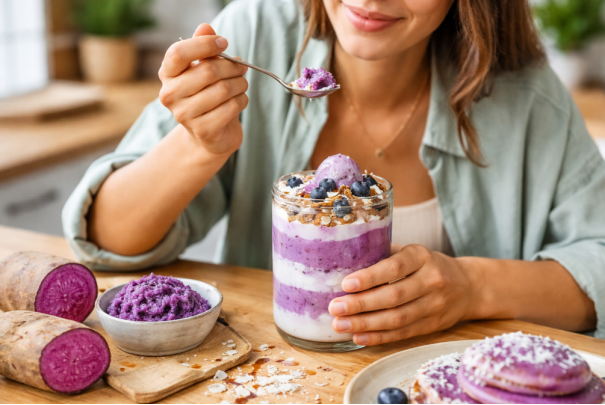
What ube actually is and why people keep confusing it with other purple foods
Ube is a purple yam, not a purple sweet potato, not taro, not simply a colorful dessert flavor. That distinction matters because many people first discover it through ice cream, cakes, lattes, or powders, then assume the word refers to a synthetic taste or a trendy blend. In reality, ube comes from Dioscorea alata, a yam species grown in tropical regions and strongly associated with Filipino cooking traditions. Its flavor is usually described as mildly sweet, earthy, slightly nutty, sometimes with soft vanilla-like notes. Its texture, once cooked, can become smooth and creamy, which explains why it is widely used in jams, pastries, and fillings. The purple color comes from natural plant pigments, notably anthocyanins, the same broad family of compounds found in other purple or blue foods. Reliable nutrition and food sources also note that ube is different from taro, which tends to be paler with purple flecks and a more neutral, starchy taste, while purple sweet potatoes belong to a different plant family entirely.
That basic clarification helps explain why people recommend it. They are not only praising a color. They are recommending a root vegetable with a recognizable identity, one that carries cultural depth, culinary flexibility, and a taste profile that can fit sweet recipes without feeling flat or overly sugary. In the United States, interest in ube has grown as more people discover Filipino desserts, frozen products, and pantry ingredients sold online or in Asian grocery stores. People who start with a dessert often move toward powder, jam, or puree because they want to bring that flavor home. That is one reason the mention of organic ube can feel natural in the conversation: once curiosity turns into action, shoppers look for simple ways to try it in drinks, baking, or breakfast recipes. Fresh ube can still be harder to find in many American stores, though powdered, frozen, and prepared forms are much easier to access. Seen from that angle, its rise makes sense. Ube stands out like a neon sign in a street full of gray storefronts, yet it keeps people interested because the ingredient behind the color has substance.
Why its nutritional profile makes people talk about it
When people recommend eating ube, nutrition is usually part of the argument, though it should be framed honestly. Ube is a starchy root vegetable, which means it mainly provides carbohydrates for energy. That is not a flaw. It is precisely why it can feel satisfying in a meal or snack. Sources describing cooked ube regularly point to nutrients such as potassium and vitamin C, along with fiber and naturally occurring antioxidant pigments. This does not make ube a cure-all. It does make it a useful ingredient for people who want more variety from whole or minimally processed foods. The fiber content can support fullness and fit well in a balanced eating pattern. Potassium matters for normal body functions including fluid balance and muscle activity. Vitamin C plays a recognized role in immune function and collagen formation. Anthocyanins are often highlighted because they are associated with the deep purple shade and are widely studied as antioxidant compounds in plant foods.
A practical reason people keep recommending it is that nutrition and pleasure meet in the same ingredient. Many foods get praised because they are “good for you” while tasting dull. Ube escapes that trap. Its sweetness is gentle enough to work in desserts, though it can also be used more thoughtfully in porridges, smoothies, pancakes, breads, or baked snacks where the final result feels comforting rather than heavy. That makes it easier to include in real life. People stick with foods they enjoy. They rarely stay loyal to ingredients that feel like punishment. Ube gives a little of both worlds: visual pleasure and everyday usefulness. It can also replace part of the refined ingredients in certain recipes, depending on how it is prepared. Someone who usually reaches for heavily sweetened treats may find that ube-based options deliver flavor with a more grounded ingredient list. That shift, by itself, explains a big share of the enthusiasm around it. The recommendation is not only “eat this because it contains something valuable.” It is often “eat this because it makes healthier or more balanced choices easier to enjoy.” That is a far stronger reason, especially for people who want sustainable habits instead of short bursts of motivation.
What makes ube different from a sugar-heavy food trend
A fair question appears quickly: if ube is so often seen in ice cream, pastries, or milk drinks, why treat it as something worth consuming on purpose rather than as a social media decoration? The answer depends on the form you choose. Ube itself is a root vegetable. Many products made with ube can still be very sweet, very rich, or heavily processed. That does not cancel the value of the original ingredient. It only means people should separate ube as a food from ube-flavored products. The same logic applies to cocoa, oats, matcha, yogurt, or fruit. A food can have genuine culinary and nutritional interest while some commercial versions become dessert-first products. Recommending ube makes sense when the advice is precise: choose forms that let the ingredient stay recognizable, such as puree, powder with a short ingredient list, cooked yam, or recipes where the purple yam remains central.
Why ingredient quality changes the experience
The quality of the product shapes both taste and usefulness. A powder that contains mostly ube is not the same as a blend built around added sugars, flavorings, or artificial color. That may sound obvious, though many people discover ube through branded products and never check what they are actually buying. A clean ingredient list helps the flavor stay more authentic: earthy, sweet, soft, rounded. It also gives you more control over how you use it. In oatmeal, yogurt bowls, homemade lattes, waffles, muffins, or energy bites, that control matters. You decide how much sugar, dairy, or fat enters the recipe. That is often the hidden reason some nutrition-minded shoppers recommend ube powder over bakery items. They are not rejecting pleasure. They are moving it upstream, into the kitchen, where the ingredient becomes a tool rather than a finished indulgence.
Why moderation still matters
Calling ube nutritious does not mean unlimited portions suddenly become sensible. It is still a carbohydrate-rich tuber, still part of an overall diet, still best enjoyed with context. The strongest recommendation is not “eat ube constantly.” It is “consider ube as a flavorful, colorful option within a varied pattern of eating.” Pair it with protein, yogurt, nuts, seeds, fruit, or balanced meals, and it can fit naturally. Turn every use into a syrupy dessert, and the reason for eating it shifts. That nuance is important because honest nutrition advice should leave room for pleasure without pretending every purple dessert is a wellness shortcut. Ube deserves better than that. Its value is real enough without exaggeration.
Why many people find it easier to enjoy than other “healthy” ingredients
Some foods earn respect from nutrition experts though never become part of daily life because they feel awkward to cook, too bitter, too expensive, or too easy to waste. Ube avoids several of those barriers. Its flavor is approachable. It appeals to people who like sweet potato, vanilla notes, creamy textures, mild earthy flavors, or soft dessert-style breakfasts. It also delivers a strong visual reward. That may sound superficial, though it matters more than people admit. Color changes expectation. A bright purple bowl, pancake, or filling makes a meal feel special without necessarily demanding complex technique. That simple visual satisfaction can encourage home cooking, recipe experimentation, and repeat use.
That list explains why recommendations spread easily. One person loves it in a latte, another in overnight oats, another in baked goods, another in traditional Filipino desserts. Ube adapts. It can lean indulgent or restrained, festive or practical. For people trying to make their meals more varied, that flexibility is gold. A food does not need to solve every problem. It only needs to remove friction. Ube often does that because it gives home cooks a fresh sensory experience without asking them to learn an entirely new cuisine from scratch. In a market saturated with ingredients that promise transformation, ube feels refreshingly straightforward. It offers flavor, texture, color, and enough nutritional interest to justify keeping it around.
How to add ube to your routine without overcomplicating it
The best reason to recommend ube may be the easiest one: it can slide into an ordinary routine with minimal effort. That matters for anyone who likes the idea of new ingredients though rarely has time for elaborate preparation. If you buy fresh ube, it usually needs cooking before use. In the United States, many people start with ube powder, frozen grated ube, or ube jam because those forms are simpler. Powder works well in drinks, baking, pancake batter, oatmeal, and yogurt-based recipes. Frozen or mashed forms can become fillings, spreads, cakes, or swirls in other foods. The flavor tends to pair well with coconut, dairy, vanilla, cinnamon, and mild nut flavors, which makes recipe building fairly intuitive.
For someone curious about practical use, a balanced starting point could be a breakfast bowl, a lightly sweetened smoothie, or pancakes where ube brings color and taste without turning the meal into candy. Another good option is a weekend bake where the yam replaces part of a less interesting starch base. The point is not to chase the brightest purple result possible. The point is to choose formats that let you appreciate the ingredient itself. That shift changes the entire recommendation from abstract praise to usable advice.
There is also a cultural dimension worth respecting. Ube is not merely an American trend item. It has longstanding roots in Filipino cuisine, especially in desserts and celebratory foods. Trying it with curiosity is great. Treating it only as an Instagram color would miss half of its value. When people recommend consuming ube, many are also encouraging a broader appreciation of a food tradition that deserves attention on its own terms. That makes the recommendation richer. It is about taste, yes. It is also about context, memory, and the way food can carry identity across borders.
Who may benefit most from giving ube a real chance
Ube tends to make sense for several kinds of people. One group includes anyone bored with the same rotating breakfast or snack ingredients. Another includes people who enjoy sweet flavors though want choices built from more recognizable foods. It also suits home bakers looking for natural color and a more distinctive flavor base than plain vanilla or chocolate. Families may appreciate it because children often respond well to bright color and soft sweetness, while adults value the versatility and the fact that ube does not need to be overly sugary to feel enjoyable. People interested in plant diversity may like it for an even simpler reason: eating a broader range of plant foods can make meals more interesting and more sustainable over time.
The strongest recommendation is probably this one: consume ube if you want a food that is visually appealing, culturally meaningful, pleasant to eat, and easy to use in more than one way. That is a practical standard, not a trendy one. Ube will not replace every staple. It does not need to. It earns its place by doing several things well at once. It is recognizable, flexible, and memorable. In the kitchen, that combination often matters more than any dramatic promise.
A purple ingredient worth trying
People recommend ube because it offers more than a striking color. It is a real food with culinary roots, a naturally sweet and creamy character, useful nutrients, and enough flexibility to work in desserts, breakfasts, and simple homemade recipes. If you have been curious about it, trying a good-quality form of ube is a sensible move. Not because it is fashionable, though because it gives you a different way to eat something enjoyable while staying close to an ingredient with substance. That alone makes it worth a place in the conversation, and possibly in your pantry.