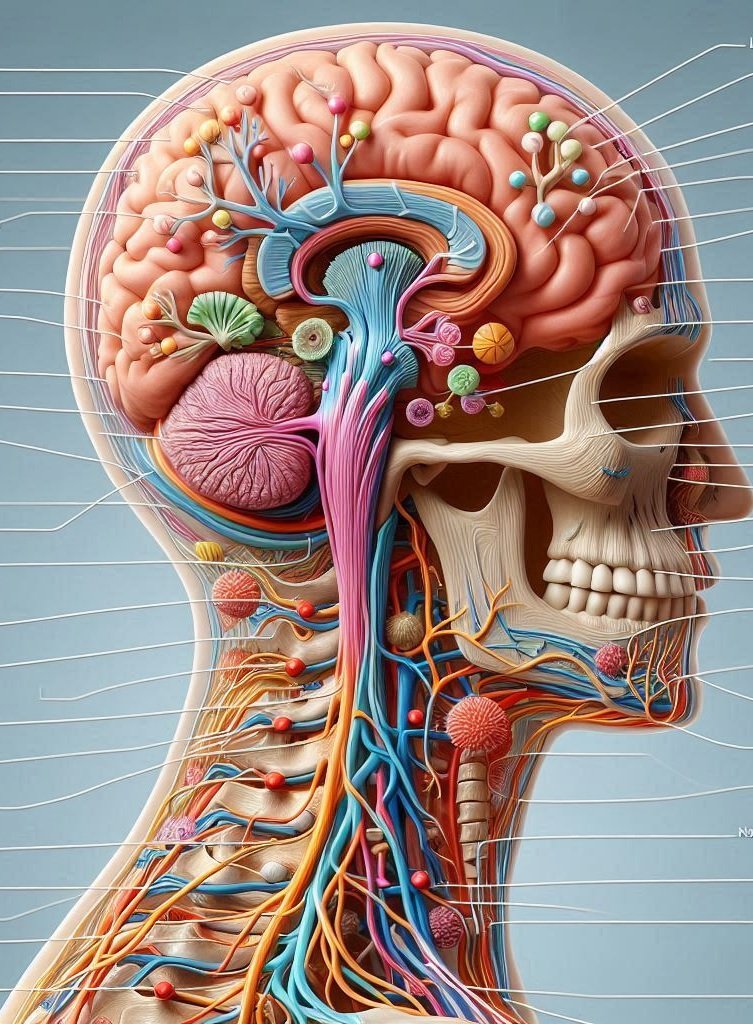
Human body works under the communication network that is highly organized and effective called the nervous system. This system handles the reception of information in the environment, processing of the same information and producing relevant responses. The nervous system is involved in the control and coordination of all the body functions whether it is a simple reflex action such as removing the hand off a hot surface or a complex activity such as solving a problem.
The central nervous system is essentially an integrated control system, which joins up the brain, the spinal cord, and the peripheral nerve fibers. All these elements combine together so that the body can react to both internal and external stimuli in a correct and efficient way. Through the study of the interplay of these parts, people may be able to create a better mental picture of how the body balances, adapts, and controls behavior.
This paper presents a background discussion of the structure and function of the nervous system and highlights major concepts that are related to the process of signal transmission, coordination of voluntary and involuntary behavior, and the importance of the neurons in ensuring communication within the body.
The Organization of the Nervous System
The nervous system is subdivided into two parts, one central nervous system, and the other peripheral nervous system. The roles of each part are different, although, these parts work in collaboration to create a complete system of control and communication
Central Nervous System
The core nervous system (CNS) is formed of the brain and the spinal cord. The brain is the main control center and it processes information and makes decisions. It does functions like higher level thinking, memory and emotion and controls vital processes like breathing and heart rate.
The spine occurs as a channel of communication between the brain and the rest of the body. It carries messages to and out of the brain thereby enabling coordinating movements and responses. Moreover, the spinal cord also performs some reflex actions which do not involve the brain itself.
Peripheral Nervous System
Peripheral nervous system (PNS) refers to a collection of nerves that transports to the rest of body with their origin in the brain and the spinal cord. These nerves also transmit sensory data to the central nervous system and relay the motor instructions back to the muscles and organs.
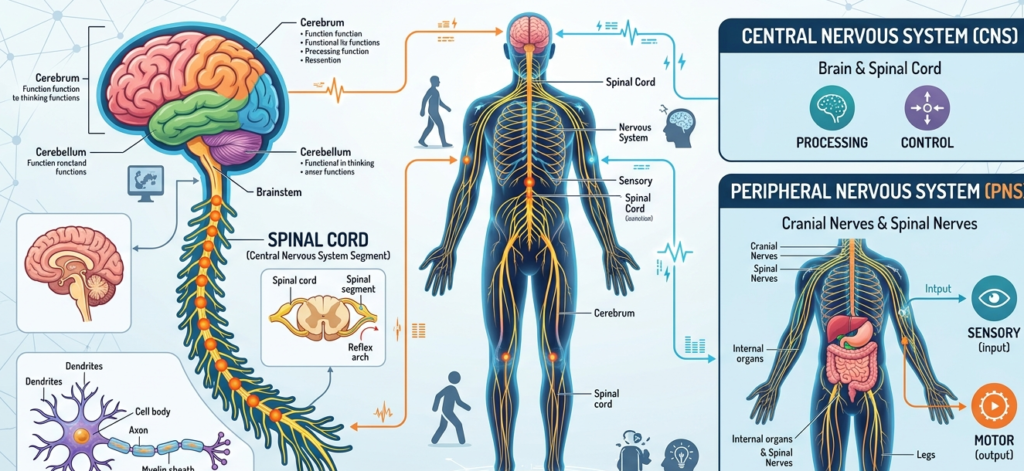
The PNS is further subdivided into the somatic system and the autonomic system. The voluntary movements, which include walking or picking objects are regulated by the somatic system. The autonomic system controls the automatic processes, such as digestive, heartbeat, and breath.
Neurons: Communication Particles
The basic component of the nervous system is neurons. These are specialized cells that transport information in the whole body. A given neuron has a cell body, dendrites, and an axon all of which are involved in communication.
The incoming signals are received by the dendrites and the outgoing signals are passed to other cells by the axon. The signal is sent to the next neuron at the terminal end of the axon and the junction is referred to as a synapse.
Neurons interact by electrical and chemical processes. Signals are also conducted along the axon and neurotransmitters are chemical messengers to pass signals across synapses. This is what enables the information to travel at a high and effective rate within the nervous system.
Neuronal communication is needed to keep coordination and react to environmental changes and this process requires the efficiency of neuronal communication. The body would not be able to process the information or perform actions without the proper functioning of the neurons.
Signal Transmission and Communication
The nervous system performs a major role in the body, namely, signal transmission, which allows the body to react to stimuli and ensure internal stability. The process starts with the sensory receptors responding to the environmental changes, i.e. light, sound, and temperature.
When a stimulus is received, the central nervous system receives the signals transmitted by the sensory neurons. This information is passed to the brain where it forms a response. Signals are then transmitted through the brain to the motor neurons which then transmit to muscles or glands to cause action.
This flow of information is continuously active enabling the body to evolve to adapt to changing conditions. In a case in point, when one touches a hot object, the signal to the spinal cord is very fast and the reflex action is initiated by the sensory neurons leading to the withdrawal of the hand. This is fast in response to prevent injury.
More complicated processes, including decision-making and problem-solving, are also partially dependent on signal transmission. The fact that the nervous system is able to process and combine information is fundamental to both the survival of a person as a being and higher cognitive abilities.
Organization of Voluntary Activities
Voluntary activities are those activities that are consciously regulated through voluntary effort like walking, writing, or talking. The nervous system coordinates these activities by a set of signals that are initiated in the brain.
The spinal cord and peripheral nerves transmit the motor commands of the brain to the muscles. These signals trigger certain muscles and it is also possible to move with precision and coordination. The presence of feedback through the senses allows the brain to modify movements during real-time to make them accurate and stabilized.
As an illustration, when one picks an object, the brain calculates the distance and direction and transmits signals to arm and hand muscles. Sensory feedback also makes the movement communicated to be adjusted when necessary to grasp the object successfully.
This degree of coordination emphasizes the complexity of the nervous system and how it is able to bring together various sources of information in order to generate smooth and controlled behavior.
Control of Automatic Processes
Along with the regulation of voluntary actions the nervous system takes control over those processes that are not voluntary but are necessary to survive. These are heart rate, breathing, digestive and temperature functions.
These processes are handled by the autonomic nervous system. It is unconsciously active and enables the body to be in homeostasis. The autonomic system further subdivides into the sympathetic and the parasympathetic divisions
The sympathetic system gets the body ready to act, and commonly known as the fight or flight reaction. It raises the heart rate, airways, and redistribution of blood to the muscles. The parasympathetic system, on the one hand, creates relaxation and rest, the rate of heartbeat decelerates, in favor of digestion.
Such a balance between the two systems will make sure that the body is able to deal with the stress, as well as, keep the normal functioning at rest.
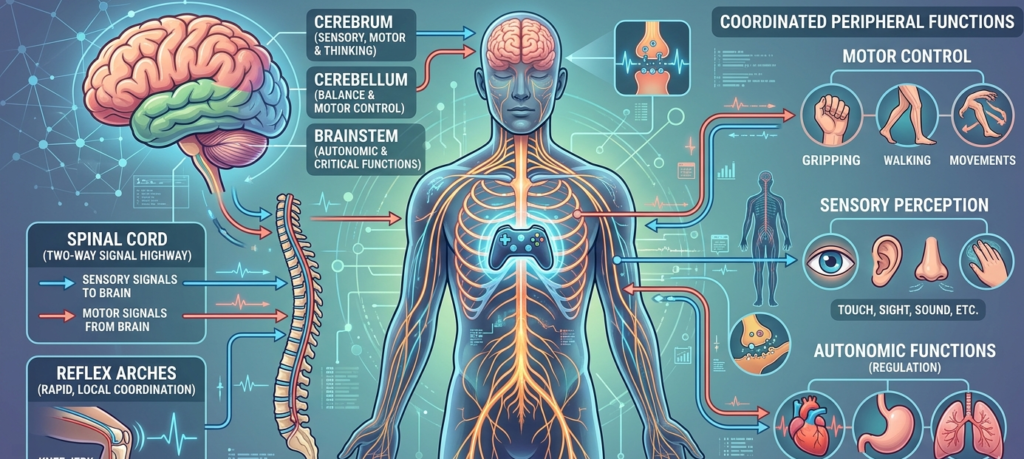
The Nervous System is integrated into the eye movements.<|human|>The Nervous System is incorporated into the movements of eyes.
The real power of nervous system is that it is able to combine information of different sources and give integrated responses. The brain, spinal cord and peripheral nerves interrelate with each other in a well coordinated manner that makes the body to be an integrated whole.
Processing, decision making and giving out the right motor output is the process of integration. This is a process in which the body is able to respond positively to external stimuli as well as internal needs.
As an example, walking involves the eyes, inner ear and muscles working in constant balance. This information is combined by the brain and the muscle activity is changed to ensure the stability of the body.
Such a degree of integration is necessary to complete more complicated tasks and adjust to new environments. It is also involved in learning and memory because the brain memorizes and recalls information to inform later behaviours.
Nervous System Health: Importance
The well-being of the nervous system is an important aspect that should be maintained. The appropriate functionality of this system so that the body is able to respond to stimuli, stay in balance, and carry out the necessary functions.
Nutrition, physical exercises, and proper sleep are some of the factors that lead to the health of the nervous system. Balanced diet will supply the nutrients required in the functioning of the neurons, and regular exercise will help in blood circulation, and transportation of oxygen to the brain.
The prevention of the nervous system is also associated with the reduction of contact with dangerous substances and stress management. The balance of the autonomic nervous system may be influenced by chronic stress, which may result in different health problems.
Conclusion
The human nervous system is a complex and well-structured system thereby acting as the control center of the body. It features the ability of communication, coordination and regulation of all processes in the body because it combines the activities of the brain, spinal cord and peripheral nerves.
The nervous system is essential in balancing as well as responding to environmental fluctuations; this is made possible by transmitting signals between neurons to the coordination of voluntary and involuntary actions. The knowledge of its structure and its role is an important step to an understanding of how the body works and how it responds to change.
When they create a clear mental picture of the nervous system, people will be able to value more its significance and engage in measures to promote its wellness. This is a basic knowledge that can be used in the exploration of more advanced issues regarding the functionality of the neurology and the overall welfare.