
A highly coordinated network of muscles makes a human move and without relaxes the muscles can generate force, sustain posture, and conduct physical activity. Muscles may seem homogenous, but they consist of specialized tissue in form of muscle fibers. These fibers differ in their makeup and purpose, thus enabling the body to be very versatile in carrying out diverse tasks, be it endurance-based functions or explosive ones. The study of the various forms of muscle fibers gives substantial knowledge of performance and physiological training in sports.
The main types of muscle fibers are usually divided into two, namely, slow-twitch (Type I) and fast-twitch (Type II). The roles of each type in the body are different and in the way the body produces energy and responds to physical requirements. Others are inherently endurance athletes, whereas others are strength or power-based sportsmen. To a large extent, these differences are determined by the structure of the muscle fibers in the body.
Examinations of how these fibers work and with training, can be developed can ensure that athletes and other fitness enthusiasts can customize their exercise to achieve optimum performance. The correlation between types of muscle fibers, genetics, and the training plan is relevant to attaining particular fitness development and enhancing physical efficiency in general.
Learning the Different Growths of Muscles
Muscle fibers are specialized cells which are involved in contracting to generate movement. Even though there is basically the same structure of all muscle fibers, they vary in the output of energy, contraction and fatigue resistance. The various categories of the muscle fibers are generally categorized as slow-twitch and fast-twitch fibers.
Type I fibers are also called the slow-twitch fibers and they are specialized in endurance and long-term activity. These are slow and very fatigue resistant fibers. They are mainly dependent on aerobic (use of oxygen) metabolism to generate energy. Due to this reason, slow-twitches are good in activities that need long time and constant effort.
Type II or fast-twitch fibers are power and speedbuilt. These fibres contract fast and produce more force as compared to slow-twitch fibres. They however become fatigued faster since they are dependent on anaerobic metabolism that generates energy without oxygen although when long lasting it is not as efficient.
The proportion of these types of fibre is different in different individuals. There are those born with a greater percentage of slow twitch fibers and those born with a great percentage of fast twitch fibers. This difference is very essential in defining the capacity of athletic ability and performance.
Endurance Performance and Slow-Twitch Fibers
Slow-twitch fibers are the ones necessary in activities where the energy output is required all the time. These fibers are very effective in the use of oxygen to generate ATP, the body energy currency. Consequently, they are able to remain active even when their time is long without getting tired.
Slow-twitch fibers are important among endurance athletes including long-distance runners, bicycle riders and swimmers. Such players need muscles that are capable of undertaking repeating contractions over a long period without performing greatly in respect of performance. Type I fibers tend to dominate the various muscle fibers of their bodies hence they are excellent in sports that require endurance.

The number of mitochondria in the slow-twitch fibers is also large and they are involved in the generation of energy via aerobic metabolism. They have a high amount of myoglobin which is a protein which stores oxygen in the muscle cells and this makes them appear darker than fast-twitch fibers.
Slow-twitch fibers are efficient and resistant to fatigue, thus making them the best suited to endure low-intensity yet constant activity. They cannot, however, walk at the same pace as the explosive sports, and give powerful strokes.
Lightning Quickness and Fighter Strength
The fast-twitch fibers are intended to be used in short spurts of high intensity. These fibres are fast-contracting and they produce excessive amounts of force and therefore, they are vital during activities like sprinting, jumping, and weightlifting.
Fast-twitch fibers have two principal subtypes namely Type IIa and Type IIx. Type IIa fibers are partly slow-twitch and partly fast-twitch fibers which gives them the ability to moderately perform during both endurance and power activities. Type IIx fibers on the other hand are very specific in explosive movements and produce the most force but tire very easily.
Fast-twitch fibers are important in power athletes such as sprinters, weightlifters and football players. Type II fibers usually predominate in the bodies of the different kinds of muscles and allow them to generate fast and strong movements.
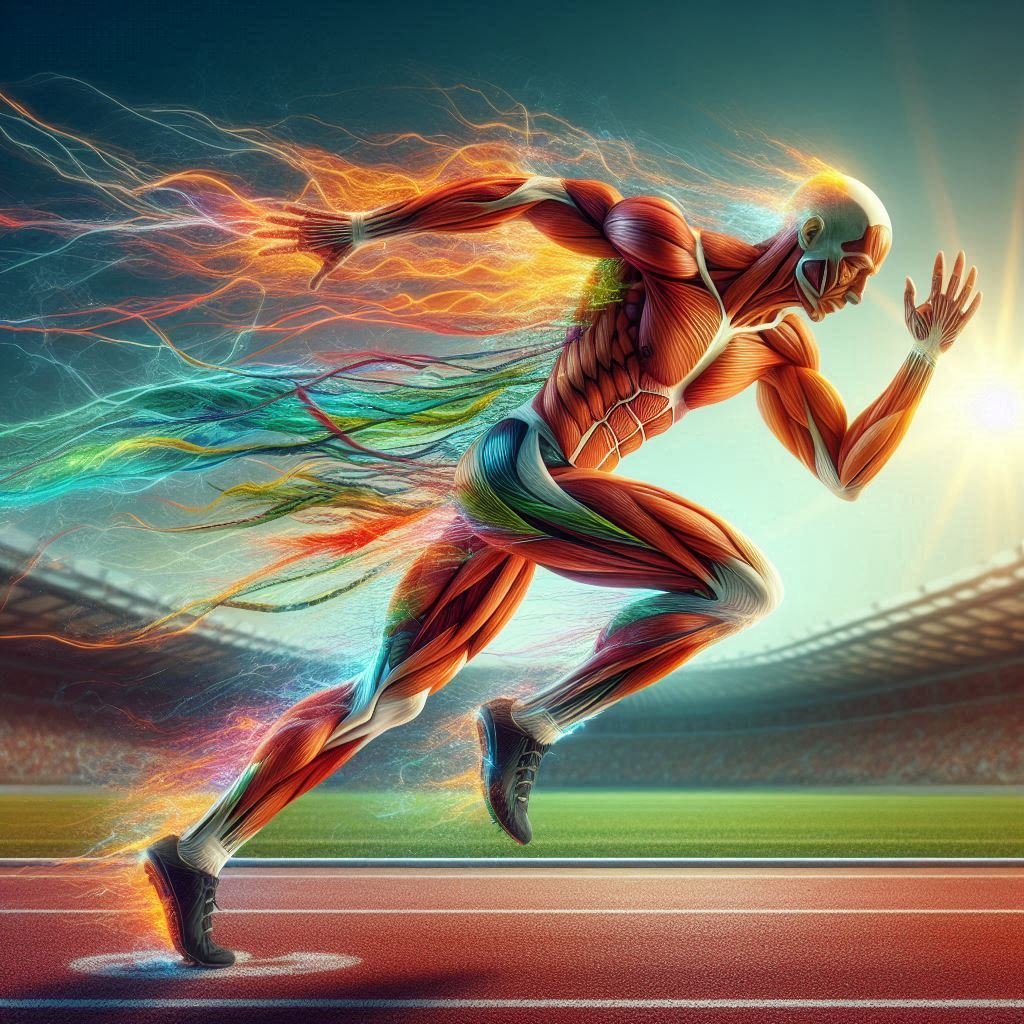
Fast-twitch fibers despite being strong and fast do not last long due to their dependence on anaerobic metabolism. This is the reason why explosive efforts are normally accompanied by fatigue unless they are accompanied with recovery.
The Genetic Influences in the Composition of Muscle Fiber
Genetics are very important in the determination of the percentage of various types of muscle fibers in the body of an individual. There are individuals who are naturally inclined to perform better in endurance sporting activities as others perform better in activities involving strength and power.
Considering the example of elite marathon runners and elite sprinters, a higher proportion of slow-twitch fibres is likely to be found in elite marathon runners whereas a higher proportion of fast-twitch fibres is likely to be found in elite sprinters. They are genetic variations that affect the way muscles react to exercise and the ability of individuals to respond to a particular form of physical exercise.
Despite the fact that genetics offers a starting point, they do not fully define athletic potential. The determinant of muscle fiber development and functionality can be trained and lifestyle aspects. This implies that people can be able to enhance their performance in different activities despite them not being naturally inclined to perform excellently in them.
The Effect of Training on the Muscle Fiber Development
The training has an important role in determining the functioning of the various forms of muscle fibers. Although the genetics mainly determine the total amount of each type of fiber, the characteristics of these types can be altered with the help of specific exercise.
Long distance running or cycling helps to increase the efficiency of slow-twitch fibers. It enhances the presence of more mitochondria and the capacity of the muscles to utilize oxygen in the generation of energy. With time, this kind of training increases stamina and decreases fatigue.
Weight lifting and sprint training- Strength and power training are activities that activate the creation of fast-twitch fibers. These exercises enlarge muscles and make them more efficient in producing force in a short period of time. The Type IIa fibres can also be trained to improve their performance and become more flexible to other forms of activity.
Training in other cases can affect the conversion of particular subtypes of fibers. As an example, Type IIx fibers can be trained to be more reminiscent of Type II a fibers. This plasticity enables the body to react to various physical requirements.
Optimizing Workouts to Your Muscle Fiber Type
Knowledge of these various muscle fibers types can assist people to come up with training programs that can match their strengths and aims. With the help of exercises aimed at a particular type of fiber, athletes can achieve maximum performance and become more efficient.
Those who engage in endurance events can boost their performance by including strength trainings in order to enhance the balance of the muscles as a whole and help avoid injury. In the same manner, naturally strong and explosive individuals can also use endurance training to increase stamina and recovery.
The problem of balanced training programs performing aerobic and anaerobic exercises may help to acquire a broad set of physical skills. This will guarantee the involvement of both slow-twitch and fast-twitch fibers which will guarantee general fitness and flexibility.
Applications in Practice in Athletic Performance
Muscle fiber composition has an impact on many areas of athletic performance. Slow-twitch fibers are dominant in sports that demand endurance such as in marathon running or cycling. Conversely, fast moving sports like sprinting or lifting heavy weights are dependent on the fast-twitch fibers.
The knowledge of the various muscle fibers made enables coaches and athletes to design training regimens that suit the requirements of a particular sport. As an example, a sprinter can concentrate on explosive exercises and resistance work, and a long-distance runner can spend his time on aerobic exercises and endurance training.
To learn more about the types of muscle fibers, go to: different types of muscle fibers
Training techniques will enhance performance and minimize the chances of trauma by matching the training techniques with the features of muscle fibers.
Conclusion
Human body is specially crafted to execute diverse type of physical activities and this is partly due to the fact that there are various kinds of muscle fibers. The type of fibers is slow-twitch that helps to maintain endurance and prolonged activity, and fast-twitch that helps to generate speed and power. These fibers combined enable one to be able to adjust to different physical needs.
As much as the composition of the muscle fiber is affected by genetics, training is also of great importance in the way the fibers operate. With the knowledge of the specific types of fibers and the use of specific training plans, people will be able to improve their performance, and reach their fitness objectives.
In the end, the understanding of the role played by the muscle fibers in movement can further enhance our knowledge of the human body. The interaction of the muscle fibers whether it is in running long distances, heavy lifting, or the daily activities makes the body to work efficiently and effectively.