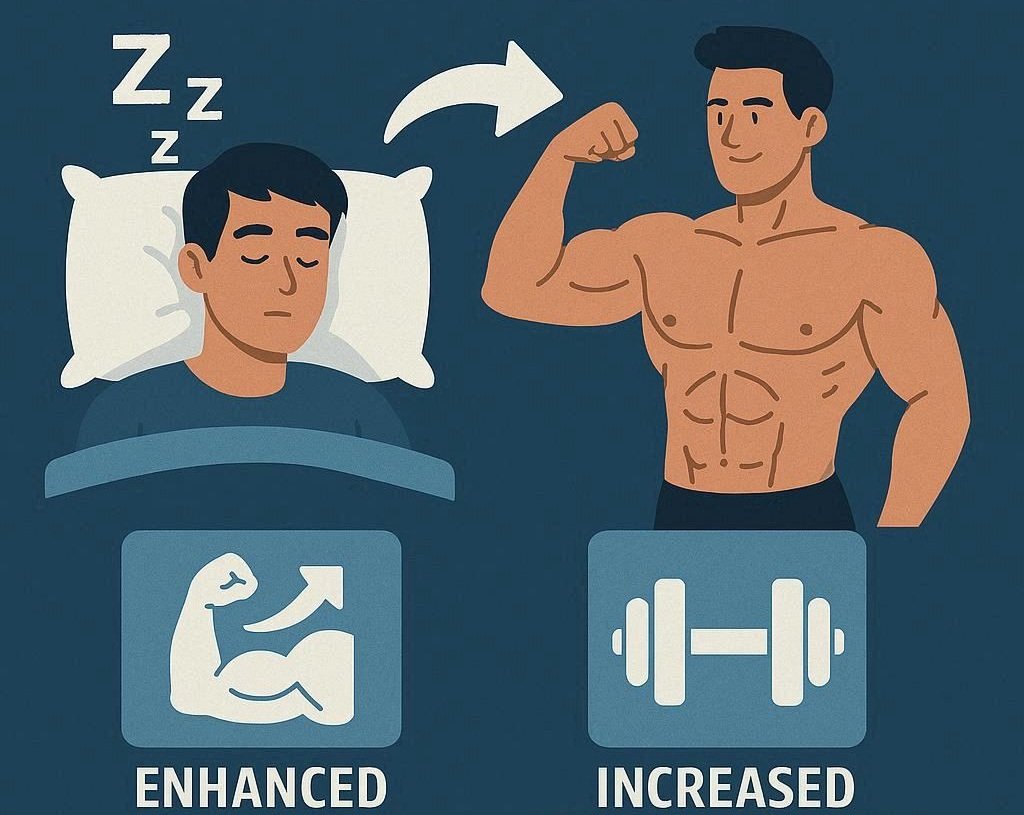
There has always been a tradition of defining sleep as a time of rest after mental and body activity. Current studies, however, reorganize the concept of sleep as something more than passive sleep restoration but as an active biological investment in optimal performance. Academic, professional, and athletic settings motivate people to focus on hard work, practice, and efficacy and underestimate the tactical significance of rest of high quality. There is scientific evidence to prove that sleep optimization is direct improvement of cognitive functioning, creativity, immune system, muscle recovery, and long-term productivity.
Performance outcomes are strongly correlated with sleep duration and sleep efficiency or the percentage of time a person spends asleep in bed. Loss or disruption of sleep leads to decreased reaction times, memory encoding, emotional regulation, and loss of physical recovery. On the other hand, regular, good sleep reinforces brain connections, promotes hormonal equilibrium and develops physiological stability. The conceptualization of sleep as a competitive edge and not a luxury changes the way it is a priority within the high-performance contexts.
Sharpening of the mind and intelligence
Attention, working memory, a speed of decision making and executive function affect cognitive performance. They are dependent on coordinated communication among networks in the brain, especially in the prefrontal cortex. In the state of wakefulness, there is build up of the metabolic byproducts, and neural networks are overburdened by the active cognitive demands. Sleep renews such networks and puts their efficiency back on track.

Slow-wave sleep facilitates the process of consolidating memory by moving information in the short-term storage of the hippocampus to the long-term cortical systems. The rapid eye movement (REM) sleep improves associative and emotional ingestion. People who get enough deep and REM sleep have a better problem solving ability and their attention span is more consistent. Conversely, even subjective alertness does not improve the reaction speed and error reduction with limited sleep.
The results of the studies connecting the length of sleep to academic and workplace performance demonstrate some regular patterns: when an average person sleeps 7-9 hours with a high level of efficiency, he or she will be more successful in all the tasks that require advanced thinking and can have a better level of concentration, as well as will be able to memorize the information much easier. Sleep optimization thus fortifies the instant mental acuity, and the accruing intellectual advancement.
Creativity and Innovation
It is not only through conscious effort that creativity is generated. It is a creation of the brain in terms of connecting some ideas that appear to be irrelevant. The central part of this process is the REM sleep. REM is characterized by the reorganization and integration of neural networks during the stages and less so by the logic of waking.
It has been proposed that when people can get repeated REM cycles, there is an increase in insight-based problem solving. In the process of integrating neural activity that takes place during sleep, creative breakthroughs frequently are achieved after sleep. Optimization of sleep has a quantifiable cognitive advantage in high-demand industries that are dependent on innovations. In case of broken sleep, REM cycles might be shorter, and this integrative ability is not as well as creative fluency.
By positioning sleep as an innovation tool and not as an element of downtime, it puts a new interpretation on its valuation in competitive arenas.
Athletic Recovery and Physical Performance
The repair of muscles, hormonal control, and neuromuscular coordination are required in physical performance. During deep sleep, growth hormone release is at its highest level, which helps to repair tissues and promote the synthesis of protein in the muscles. Sleep is also sufficient to regulate the cortisol levels avoiding excessive catabolic stress.
Sleep is a factor that makes athletes have a higher rate of recovery and fewer injuries when they have regular sleep habits. Speed of reaction, coordination and endurance are all correlated with the quality of sleep. The deprivation of sleep affects the metabolism of glucose and perceived exertion during the process of training, that is, the same exercise is more exhausting when the body is deprived of sleep.
When the efficiency of sleep reduces, neuromuscular exactness, which is essential in sporting activities, diminishes. On the contrary, motor memory consolidation is improved by sleep optimization, which strengthens technique and strategic awareness. Sleep does not passively make muscles stronger, but happens to increase the foundations of performance.
Immuno-Stability and Stasis
Optimal performance demands good health. The quality of sleep is key to immune resilience. Cytokines are released by the immune system when one is asleep and organize the body to respond to the defense. Prolonged sleep deprivation suppresses immunological performance and exposes one to vulnerability to infections.
Disease interferes with training programs and performance among both professionals and athletes. Sleep optimization is consequently preventative maintenance. Sleep ensures that inflammation is in check and minor illnesses are healed in fast time avoiding downtime and continuity in performance.
In the long term, regular sleeping patterns provide stability to the system, and people can maintain the production without exhaustion.
Affective Control and Decision Making
HP environments require a stable mind and s/he cannot be under strain without sound mind. Sleep has a direct effect on processing emotions by modulating the reactivity of the amygdala and prefrontal control. Lack of sleep increases the stress response, as well as diminishes impulse control.
It has been found that even a moderate sleep deprivation leads to emotional instability and aggressiveness. This can cripple interpersonal relationships and strategy planning in professional life. In sports, it can affect split second decisions in sports.
Sleep optimization enhances the stress reaction, leading to resilience and adaptive thinking. Sleep is a psychological performance tool by stabilizing mood and enhancing executive control.
Long-term Productivity and Sustainability
The short-term productivity gains made in the process of sleep loss tend to be accompanied by long-term losses. The cumulative effect of chronic sleep deprivation will be cognitive fatigue that will lower overall efficiency. There is increased time of tasks, high error rates, and decreased motivation.
On the contrary, regular sleeping routines maintain the regular circadian rhythms and predictable energy distributions. People who are concerned with optimizing sleep are more likely to report higher weeks and months of sustained productivity. They do not produce at high then low levels but produce in a steady manner.
This viewpoint of the long-term redefines sleep as a multiplier of effort. Instead of trading sleep in order to have more time, sleep optimization can improve the quality of wakefulness.
Duration of sleep versus Sleep efficacy
Restorative value is determined by sleep efficiency, whereas total hours are significant. It decreases the benefits when one spends hours in bed without deep or REM sleep. Recovery is compromised by stress fragmentation, irregular schedules or environment.
The people who perform highly have the advantage of having enough time as well as stable structure. Deep sleep is used to repair the body physically, whereas REM is used to integrate the cognition. By maximizing the two stages, performance returns are maximized relative to time.
Strategic Sleep in Academic situations
During the examinations, students often sleep less in the assumption that they study longer and get better results. Nevertheless, sleep aids in memory consolidation and accuracy in recalling. New information is weak and forgettable without a sufficient rest.
Regular sleep patterns increase retention of learning and performance of exams. Sleep optimization, by conserving cognitive resources, increases efficiency whereby less cumulative study time generates more weighty outcomes.
Strategic Sleep in the Workplace
Dedication is associated with long hours in the corporate environments. However, chronic fatigue decreases attentiveness and imaginative ability. Leaders that sleep well have better strategic thinking and interpersonal effectiveness.
Organizations are appreciating sleep as a productivity resource. Employees have regular sleep patterns and workloads that enable performance metrics to be improved.
Sleep Strategy in Sport Training
Sleep monitoring is currently combined with nutrition and exercise in athletic training programs. The results of performance indicate that the benefits when athletes increase sleep time and a steady training regimen are quantifiable.
Sports scientists and coaches hold sleep optimization as one of the primary training variables. The quality of recovery is becoming more of a determinant of competitive advantage than training intensity.
Re-packaging Sleep as Competitive Advantage
Sleep has been characterized as passive rest. The fact is that it is a dynamic biological investment, which increases neural efficiency, muscle recovery, immune strength, and mental stability.
The perception of sleep as a performance has an effect of promoting prioritization. Sleep schedules can be planned, just as training schedules are optimized, productivity schedules, and so on.
Quality sleep harmonizes hormonal cycles, regulates energy flow and enhances the cognitive processing. These cumulative effects become proportional gains over time.
Conclusion
One of the most high-power, but underutilized performance strategies is sleep optimization. High-quality sleep has a direct impact on quantifiable academic, professional, and athletic performance because it increases cognitive clarity, creative integration, athletic recovery, immune defense and emotional control.
Instead of looking at sleep as a luxury that is consumable, by redefining it as a competitive advantage, one begins to value sleep differently. Studies always associate adequate time and high productivity with effectiveness and endurance. Minimal performance also requires not just effort but restoration that reinforces the systems underpinning effort.
Sleeping may seem to be the opposite of what is desired in the culture that tends to favor busyness. The testimony is, however, unmistakable: the ability is multiplied by perfected sleep. Those who make a habit of taking their naps are setting themselves up to be more alert, more powerful, and more successful in the long term.