Sleep is not just a passive activity. The act is a very synchronized biological phenomenon that controls many hormonal mechanisms in the body. Endocrine system, which controls and produces hormones, is highly dependent on regular sleeping patterns to balance itself. Sleep disturbances in terms of time or duration may disrupt the hormonal secretion, with extensive physiological implications.
Scientific studies of the effects of how sleep influences endocrine function, proves the presence of major hormones, such as cortisol, melatonin, and growth hormone, whose circadian rhythms are strictly controlled. These hormones regulate stress reaction, metabolism, tissue repair as well as cell regeneration. Irregularities or lack of sleep alters the hormonal cycles, which have an impact on metabolism, stress-resilience, aging, and general energy levels.
Knowing the hormonal strength of sleep explains the importance of a regular sleep schedule to the health in the long-term.
The Endocrine System and Circadian Rhythms.
The endocrine system is able to communicate through chemical messengers, and they are released in the bloodstream. Hormones work in well-coordinated cycles conforming to the internal body clock, circadian rhythm.
This rhythm is coordinated by suprachiasmatic nucleus in the brain, which coordinates the release of hormones with the exposure to light and sleep-wake cycles. Hormonal patterns will be consistent when the sleep is regular. Irregular sleeping schedules or persistent sleep deprivation however interfere with this synchronization.
This alteration disturbs the production of hormones and receptor sensitivity causing imbalance in the system.
Cortisol: The Stress Hormone
Cortisol is said to be the main stress hormone to the body. It is produced by the adrenal glands and controls alertness, sugar in the blood and immunity.
Normal Cortisol Rhythm
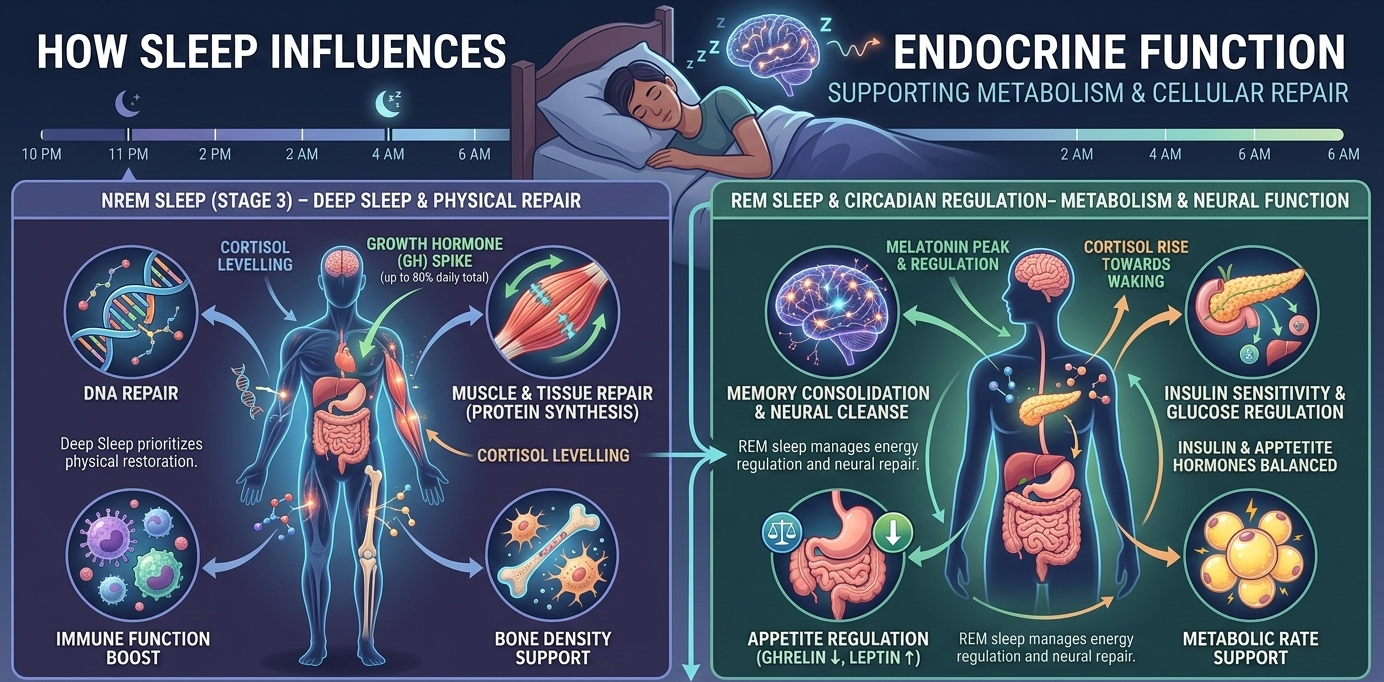
In a normal state, early morning the body increases the levels of cortisol, which helps one to wake up and start the daily activity. There is a gradual decrease in the levels during the day up to the evening, when it drops to the lowest point, to enable sleep to be initiated.
This is a predictable pattern that is needed in metabolic and psychological stability.
Disturbance in Sleep and High Cortisol
Sleep deprivation can alter the time of cortisol. Delayed sleep, decreased sleep, or lack of sleep can lead to high evening levels of cortisol. Night cortisol impairs the release of melatonin and retards sleep.
Persistent high levels of cortisol lead to perception of greater amounts of stress, undesirable glucose insensitivity, and attenuated immune response.
Continued cortisol behavior disorders can lead to inflammation and increase cardiovascular risk.
The Sleep-Wake Master
by Melatonin
The pineal gland secretes melatonin when it gets dark. It is an indicator to the body that time to sleep has come and it assists in keeping the circadian timing.
Exposure to light and Melatonin Suppression
Artificial lighting at night inhibits the production of melatonin. This latency interferes with the time of sleep and reduces overall sleep.
The abnormal secretion of melatonin may disrupt internal biological rhythms, which leads to the interaction of other hormones in the body, though they are not directly related to sleep control.
Melatonin and Antioxidant Effect
In addition to the ability to initiate the sleep, melatonin is an antioxidant compound that aids in the alleviation of oxidative stress. Melatonin rhythms in the body contribute to the aging resistance and cellular protection.
The time of sleep is thus an important factor that determines not only restfulness but also cellular defense.
Growth Hormone: Cellular Repair and Regeneration
Growth hormone is very important in repairing tissue, muscle recovery, and also in metabolism. It is mainly released when one is asleep.
Maximum Secretion in the Slower-Wave sleep
Most of the growth hormone secretion takes place soon after one falls asleep, especially in slow-wave sleep. This time will enable the body to focus on physical restoration.
Adequate deep sleep is essential to muscle repair, protein synthesis, as well as cellular regeneration
Effects of Sleep Deprivation on Growth Hormone
Slow-wave sleep can be decreased in case of shortened or interrupted sleep. The reduced deep sleep restricts the release of growth hormone.
The decreased secretion of the growth hormone may hamper the process of muscle restoration, slow down the healing of tissues, and increase the speed of biological aging.
Poor secretion in the long run can lead to diminishing vitality and imbalance of vitality.
Hormonal Abnormality and Metabolism
Hormones control the energy consumption, hunger, and glucose. This balance is interrupted by sleep disruption.
High levels of cortisol elevate glucose levels in the blood and can cause insulin resistance. Weakened growth hormone influences the body mass and fat metabolism. There is also a possibility that the altered timing of melatonin can disrupt the appetite-regulating hormone like leptin and ghrelin.
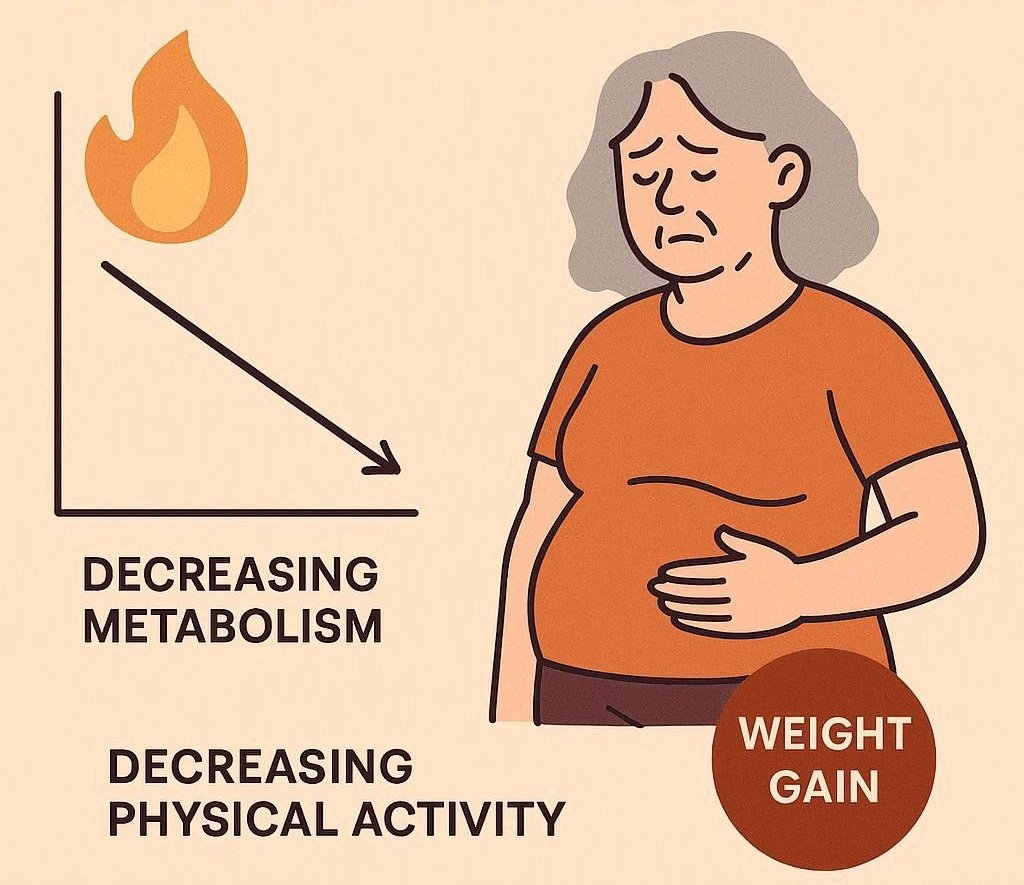
All of these effects make people vulnerable to weight gain and metabolic disorders.
Regularity of sleep aids in maintenance of metabolic stability.
Stress and Emotional Well-being
Dysregulation of cortisol has an impact on emotional health. High nighttime cortisol could increase anxiety and dysfunctional stress recovery.
Sleep is sufficient to reduce the cortisol level at the natural level which contributes to relaxation and psychological stability.
Melatonin is also engaged in the emotional regulation systems which support mood.
Sleep helps people to stay resilient to stressors of everyday life through a well-coordinated hormone regulation.
Aging and Cellular Health
Hormonal equilibrium has an effect on aging. Growth hormone helps to maintain tissues and synthesize collagen. Melatonin suppresses oxidative stress.
Persistent sleep deprivation increases hormone loss in old age. Constant elevation of cortisol facilitates inflammation and can be a cause of age-related disease.
Stable sleeping time is important in preserving endocrinal coordination and cellular integrity.
The Significance of a regular Sleep Schedule
Circadian alignment is enhanced by consistency. Going to bed and waking up at the same times help to predict hormones.
Abnormal schedules include shift work, late nights, etc., which disrupt the endocrine rhythms. Hormone release patterns can be disrupted by misaligning the time of total sleep even though it seems to be sufficient.
Regular time assists in coordinating the decreasing of cortisol, melatonin release and the secretion of growth hormone.
This synchronization will guarantee maximum metabolic efficiency and regulation of stress.
Long-term and Chronic Sleep Disruption and Consequences
In the long term, disruption of endocrines can lead to health risks of the whole system. Continuous disequilibrium of cortisol may increase blood pressure and weaken the immune system. Lower growth hormone can decrease muscle mass and metabolic strength.
The broken melatonin circadians could disrupt antioxidant protective mechanisms and circadian stability.
The acknowledgement of these implications reposition sleep as one of the preventive healthcare measures.
Hormonal Health using Sleep Hygiene
A better sleep hygiene will help to establish endocrine balance. Minimizing exposure to light in the evening prevents melatonin synthesis. Cortisol reduction is achieved by establishing a relaxing pre-sleep habit.
Exercise improves deep sleep that leads to the release of the growth hormone.
The most powerful factor is consistency. Regular sleep schedule helps to stabilize hormones and to enhance physiological stability.
Conclusion
There is far-reaching effect of sleep upon the endocrine function. The cortisol controls stress and alertness, melatonin controls the circadian timing, and growth hormone controls cell repair. All of the hormones have a rhythm, which is closely associated with the patterns of sleep.
Impaired sleep distorts these rhythms, which influence the metabolism, stress levels, aging, and vitality. Persistent disequilibrium can be a contributor to health-related problems in the long run.
Biological basis of timing of sleep can explain why timing of sleep is relevant in an individual. In contrast to an inactive position, sleep coordinates hormonal balance that maintains energy, vigor, and prolonged health.
Consistent, restful sleep is more important in supporting endocrine co-ordination and the basis of preventive health.