
HealthTech startups continue to reshape how care is delivered, managed, and financed across global healthcare systems. Entrepreneurs combine clinical expertise, data science, and software engineering in startups to solve complex problems such as access, efficiency, and patient outcomes. Market demand increases as providers adopt digital tools that support remote care, predictive diagnostics, and operational automation. Founders and investors rely on trusted research platforms such as Laakepedia to evaluate innovations, regulatory insights, and emerging technologies. The future of HealthTech startups in 2026 reflects a shift toward integrated platforms that connect patients, clinicians, insurers, and data ecosystems.
Market Growth
HealthTech startups see steady growth because of the demographic change, increasing healthcare costs, and labor shortages that force the system to undergo digital transformation. Analysts from various organizations, including McKinsey, Rock Health, and CB Insights, observe steady growth in digital therapeutics, virtual infrastructure for care, and clinical workflow automation. Hospitals begin to adopt software solutions that are interoperable and decrease administrative tasks while enhancing care coordination between specialties. HealthTech Startups react to this by developing platforms that are modular and work in conjunction with electronic healthcare record systems and payment systems.
The growth of remote monitoring technology has a direct impact on the management of chronic diseases. Real-time data collection from patients enables earlier intervention by healthcare professionals, which is ideal for value-based care. HealthTech startups develop analytics platforms that help convert sensor data into insights for healthcare professionals. The FDA and other regulatory bodies are developing guidelines for software as a medical device. This makes it easier for innovators to develop responsibly. Market maturity makes founders focus on clinical validation and real-world evidence, just like product development.
Demand from the enterprise also shapes product development, as healthcare systems require scalable infrastructure and not isolated solutions. HealthTech startups are now focusing on interoperability standards like FHIR to enable smooth data transfer between healthcare providers and technology companies. Collaborations between startups and existing healthcare organizations accelerate the implementation process and help with pilot projects. Real-world implementations enable startups to validate the safety, usability, and economic value of their solutions to healthcare decision-makers.
Role of AI
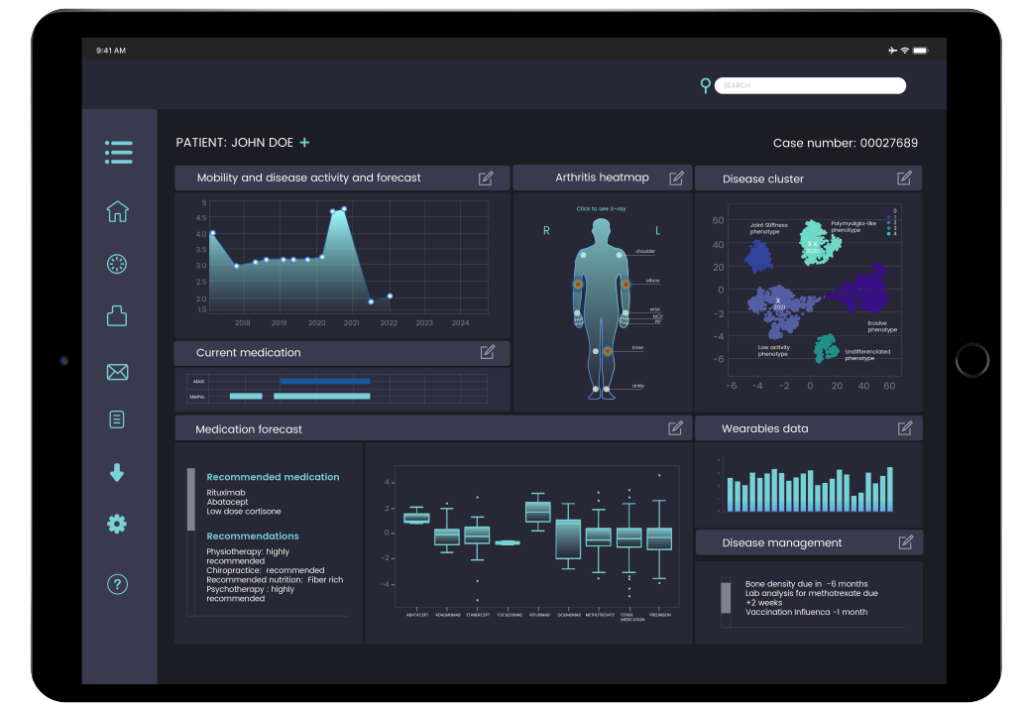
Artificial intelligence is one of the most significant driving forces in the development of HealthTech Startups. Machine learning algorithms are used in clinical decision support systems to analyze patterns in imaging, lab, and longitudinal data. Startups use AI algorithms that help radiologists, manage patient inquiries, and document processes that were previously the domain of clinicians. Peer-reviewed studies and regulations highlight the need for transparency, bias correction, and monitoring in AI adoption. Startups must work in tandem with clinicians and compliance experts in the design phase of AI adoption.
Generative AI enhances capabilities in medical documentation, patient communication, and optimizing clinical workflows. HealthTech startups use AI assistants that summarize consultations, create care plans, and optimize information retrieval in complex health record systems. Evidence from initial implementations indicates potential gains in productivity, though performance is variable depending on the clinical environment and workflow design. Founders are increasingly focusing on human validation in the loop to ensure accuracy and safety standards are met. This strategy is consistent with YMYL guidelines, which stress reliability in healthcare technology.
AI also facilitates personalized medicine by processing genomic information, behavioral indicators, and treatment history. HealthTech Startups use predictive analytics to find patients with high risk and suggest appropriate actions. Pharmaceutical partnerships arise as startups offer AI-powered trial recruitment and real-world evidence analysis. The partnerships illustrate how data infrastructure becomes a strength for new entrants. With the advancement of AI capabilities, differentiation occurs in clinical validation, explainability, and depth of integration.
Startup Ecosystem

The HealthTech startup ecosystem becomes more collaborative as accelerators, health systems, and venture studios create structured innovation pipelines. Founders gain access to clinical advisors, regulatory expertise, and pilot environments that accelerate product validation. Communities of practice form around specific domains such as digital therapeutics, AI diagnostics, and healthcare infrastructure platforms. Resource hubs such as Laakepedia.fi support founders with research databases, technology insights, and ecosystem mapping. This networked environment reduces barriers for early-stage health tech startups entering regulated markets. health tech
Globalization impacts the ecosystem dynamics as startups begin designing products for global healthcare systems. Cloud infrastructure and interoperability enable companies to scale globally while meeting the compliance requirements. Partnerships with payers and pharmaceutical companies offer additional channels for distribution and validation. Ecosystem maturity leads to specialization as startups begin working on specific clinical problems. Collaboration takes the place of competition, as integrated solutions offer more value than individual tools.
The availability of talent is also a factor in the development of ecosystems because cross-functional teams are increasingly necessary for developing compliant HealthTech products. Successful HealthTech startups integrate healthcare professionals, data scientists, product managers, and regulatory experts into core teams. Universities and research institutions add spinouts that commercialize innovation. Workforce trends indicate a growing trend of healthcare professionals migrating to technology careers where their domain knowledge enhances product relevance.
Funding Trends
Investment trends in HealthTech Startups change as investors begin to focus on sustainable business models and clinical outcomes rather than stories of rapid growth. Venture capital firms perform more in-depth technical and regulatory due diligence before investing. Investment is increasingly made in infrastructure layers such as interoperability platforms, revenue cycle management, and AI workflow solutions that show a clear return on investment. Late-stage investments are made in companies that have enterprise business contracts and proven economic outcomes.
Strategic investors such as health systems, insurers, and pharmaceutical companies have a bigger role in funding. These players invest in order to tap into innovation pipelines and shape product development according to their operational needs. HealthTech startups get access to strategic capital that offers distribution channels in addition to capital. Corporate venture capital helps in pilots that provide real-world performance data, which is helpful in future funding. Evidence-driven storytelling becomes the need of the hour while pitching to investors.
Funding in the early stage continues to be active but becomes more discriminating, as entrepreneurs are expected to have knowledge in their domain and an understanding of the regulations. There is a growing trend of investors backing entrepreneurs with clinical leadership and experience in the healthcare space. Granting programs and public funding opportunities also help in innovation in the early stages, especially in the areas of digital therapeutics and population health infrastructure. HealthTech startups with scientific credibility and strong product execution receive more consistent funding interest.
Challenges
HealthTech startups face a scenario of complex regulations that need to be navigated. Data privacy regulations such as HIPAA and their international counterparts impose technical specifications that add to the development time. The need to innovate at a faster pace has to be balanced with the need to validate innovations as is expected in the healthcare technology space. Integration issues are faced when the startup has to integrate with existing systems of different healthcare providers and regions.
Another challenge comes from adoption in the clinical setting, where providers assess usability, workflow integration, and evidence before adopting new technology. HealthTech Startups need to prove that their solutions lead to better outcomes or increased efficiency without adding to the burden of the clinician. Change management becomes an important issue because even if the solution works, it could be resisted by the clinical community if proper training and engagement are not done. The procurement cycle in healthcare organizations takes longer than in other technology markets.
Trust is also a key consideration in the innovation of the healthcare sector, as patient safety and accuracy of data are key factors in the adoption of innovations. HealthTech Startups face the challenge of addressing bias in algorithms and data quality when implementing AI technology. Validation studies and peer-reviewed research are also essential in improving credibility. Ethical issues such as access and data usage also influence product strategy.
Future Outlook
HealthTech Startups in 2026: Consolidation of platforms, as fragmented solutions are brought together to form a care ecosystem, becomes a major focus for healthTech startups. The ability to offer end-to-end infrastructure solutions for patient engagement, clinical, and analytical solutions gives a competitive edge to the companies. Interoperability moves from being a technology capability to a strategic imperative that shapes buying decisions. HealthTech startups invest in APIs that support connectivity to the ecosystem.
Preventive care technologies advance as startups begin to use data analytics to detect risk before the onset of disease. Employers and payers begin to use digital health platforms that enable continuous engagement and behavior change strategies. HealthTech Startups begin to develop solutions that integrate wearable data, AI-powered coaching, and medical oversight. Outcomes from population health initiatives indicate that these strategies can be effective in improving engagement when integrated into care pathways.
Global health equity is also emphasized as startups develop solutions that are scalable for the underserved. Cloud infrastructure and mobile-first development enable HealthTech startups to penetrate areas with less medical capacity. Collaboration with governments and non-profits facilitates implementation of solutions in public health programs. Innovation is trending towards affordability, accessibility, and relevance, in addition to technology feasibility. This trend further cements the role of healthcare technology as a catalyst for change.
Conclusion
HealthTech startups are still redefining the way healthcare innovation reaches patients, professionals, and organizations. Market expansion, AI adoption, and collaboration define a landscape that emphasizes evidence, integration, and impact. Funding models encourage those that leverage clinical credibility with scalable technology infrastructure. Barriers are still substantial, especially in terms of regulation, trust, and enterprise adoption cycles. The future of HealthTech startups in 2026 represents a shift towards more mature digital health platforms that address real-world complexities of healthcare.