Business travel used to mean airports, taxis, hotel check-ins and early breakfast buffets. Efficiency was measured in flight times and loyalty points. But something is changing. Modern professionals are rethinking what travel looks like, and more importantly, what it should feel like.
With the rise of remote work, flexible schedules and electric mobility, the car is no longer just a means of transport. For many executives, consultants, founders and creatives, it is becoming a mobile office, a quiet focus space, and increasingly, a smart overnight solution. Welcome to the new era of business travel — from boardroom to backseat.
The shift toward flexible mobility
Electric vehicles have fundamentally changed long-distance driving. With advanced navigation, reliable charging networks and in-car climate control systems, overnight road travel is no longer inconvenient or uncomfortable.
For professionals driving between cities, client meetings or events, the ability to stay mobile — without being dependent on fixed hotel locations — offers a new level of autonomy.
Imagine finishing a late meeting in one city and deciding to drive halfway to the next. Instead of booking an expensive last-minute hotel or extending your stay unnecessarily, you stop at a scenic charging location, prepare your sleeping setup and wake up already closer to your destination. Time becomes more flexible. Planning becomes lighter. Travel becomes strategic.
Productivity does not stop when the engine does
One of the biggest misconceptions about sleeping in a car is that it signals compromise. In reality, it can be a performance decision. High performers understand that sleep is a strategic asset. Rested professionals think clearer, negotiate sharper and drive safer. Improvised solutions, such as blankets over folded seats, rarely provide the quality rest needed to perform at a high level the next day.
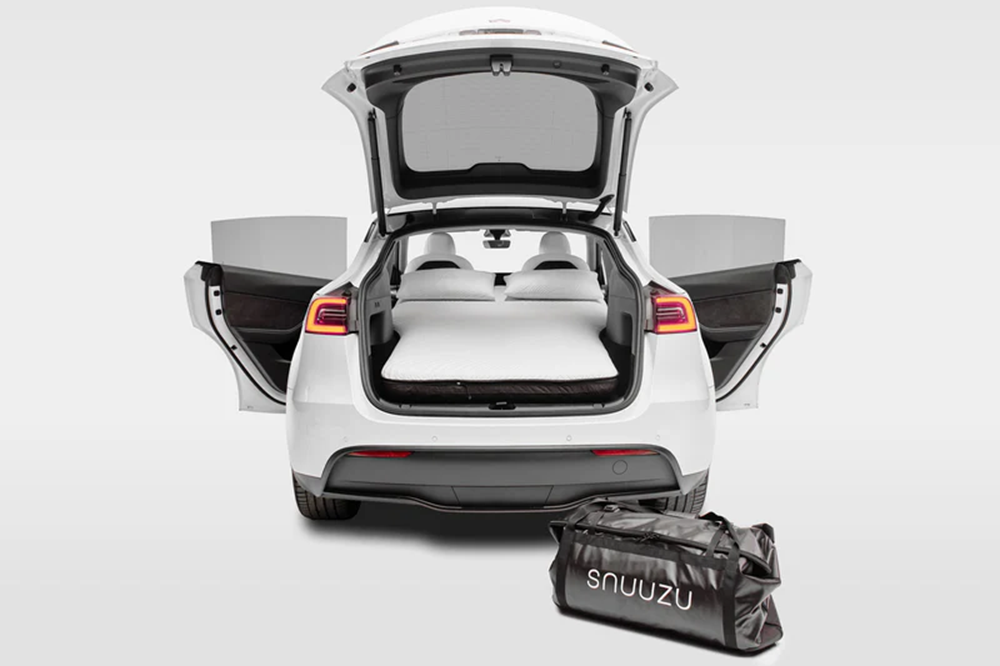
That is why more drivers are investing in purpose-built solutions like a dedicated tesla mattress. Designed specifically for the interior dimensions of Tesla vehicles, these systems create a flat, supportive sleeping surface that transforms the car into a legitimate rest environment.
For consultants covering multiple cities per week, sales professionals on regional tours or founders attending back-to-back conferences, this is not about camping. It is about optimizing recovery between commitments.
Charging time becomes recovery time
Electric mobility introduces a new rhythm to travel. Charging stops are no longer interruptions; they are built-in pauses.
Instead of scrolling through emails in a café while waiting for the battery to refill, drivers can use charging sessions for short power naps. A well-designed Tesla sleeping setup allows professionals to recline fully, rest effectively and continue their journey refreshed.
In a world where burnout is increasingly common, reclaiming rest during otherwise idle moments is a competitive advantage.
Beyond business: the rise of hybrid travel
The modern professional does not separate work and life as rigidly as before. A business trip can seamlessly extend into a weekend escape. A Friday meeting in another city can turn into a Saturday sunrise in nature.
This is where the concept of a tesla camping mattress becomes relevant, not as a rugged outdoor accessory, but as a flexible travel tool.
With a structured sleeping solution in the vehicle, drivers can:
- Stay overnight near national parks after a conference
- Park at coastal viewpoints instead of returning to urban hotels
- Extend a business route into a personal micro-adventure
- Avoid peak hotel pricing during high-demand seasons
The line between business travel and leisure becomes fluid and that fluidity is powerful.
Cost efficiency without sacrificing comfort
Corporate travel budgets are under increasing scrutiny. Flights, hotels and rental cars quickly add up, especially for regional professionals who travel frequently.
Sleeping in a vehicle may not replace every hotel stay, but it introduces optionality. One or two nights per trip spent in a well-prepared car can significantly reduce expenses while maintaining flexibility.
The key difference lies in preparation. A vehicle equipped with a properly engineered mattress system offers:
- A flat and supportive surface
- Climate-controlled comfort
- Compact storage when not in use
- Fast setup and breakdown
This is not improvised car sleeping. It is structured mobility.
The psychological advantage of independence
There is another dimension often overlooked: autonomy. Traditional travel schedules are constrained by hotel check-in times, cancellations and fixed bookings. Car-based overnight flexibility allows professionals to adjust routes in real time. Meetings can run longer. Weather can change. Opportunities can arise spontaneously.
Sleeping in your vehicle, comfortably and intentionally, provides decision freedom. For entrepreneurs especially, this independence aligns with the broader philosophy of ownership and control. The vehicle becomes more than transportation. It becomes infrastructure.
When does it make sense?
Not every trip requires an overnight car stay. But there are clear scenarios where it adds value:
- Multi-city road trips with tight schedules
- Late-night events far from major hotels
- Early-morning meetings in remote areas
- Charging stops during long-distance drives
- Weekend extensions of business travel
- High-season periods with inflated hotel prices
In these moments, having a sleeping system available changes the equation.
The future of business travel is modular
Mobility is evolving toward modularity. Workspaces are flexible. Schedules are adaptable. Technology is integrated. Travel is following the same path.
The professional of the future will not define travel by hotel reservations and airport lounges alone. Instead, they will build adaptable systems that allow them to move efficiently, rest effectively and operate independently.
From boardroom to backseat, the modern Tesla owner is redefining what it means to travel well. Because in the end, true productivity is not about constant motion.
It is about knowing when and where to rest.