Introduction
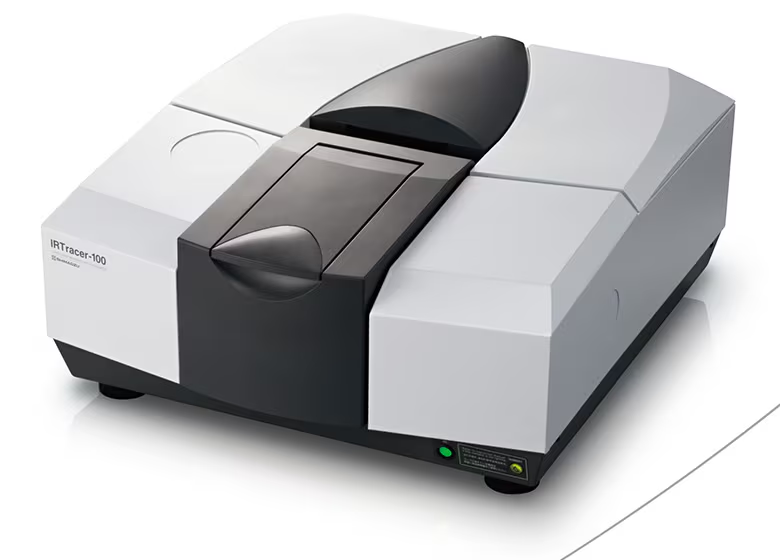
An FTIR machine (Fourier Transform Infrared Spectroscopy) is a powerful analytical instrument used to identify and characterize chemical compounds. By measuring the infrared absorption of a sample, it provides detailed information about molecular composition, functional groups, and chemical bonds.
FTIR machines are widely used in pharmaceuticals, environmental testing, polymers, food analysis, and research laboratories. They are valued for their accuracy, versatility, and non-destructive testing capabilities.
Key Features of FTIR Machines
High-Resolution Spectra
FTIR machines generate high-resolution spectra, allowing precise identification of chemical structures and functional groups in complex samples.
Non-Destructive Analysis
Samples can be analyzed without altering or consuming them, preserving valuable or limited materials for further testing.
User-Friendly Software
Modern FTIR machines come with intuitive software for data acquisition, analysis, and reporting, making them accessible for both experienced researchers and beginners.
Versatile Sampling Options
Supports various sampling techniques including ATR (Attenuated Total Reflectance), transmission, and reflection, allowing analysis of solids, liquids, and gases.
Rapid and Accurate Results
FTIR machines provide fast measurements with high accuracy, enabling efficient laboratory workflows.
Applications
Pharmaceutical Industry
Used to identify raw materials, verify drug composition, and ensure quality control of pharmaceutical products.
Environmental Analysis
Detects pollutants and contaminants in air, water, and soil, supporting environmental monitoring and compliance.
Polymer and Material Research
Analyzes polymer composition, functional groups, and degradation processes, assisting in material development and quality assurance.
Food and Beverage Testing
Determines composition, additives, and contaminants in food products, ensuring safety and quality.
Academic and Research Laboratories
Serves as a key instrument FHD IPS Monitor for chemical research, molecular analysis, and educational purposes.
Advantages
- Non-destructive: Preserves samples for further analysis.
- High accuracy: Provides detailed molecular information.
- Versatile applications: Suitable for solids, liquids, and gases.
- Fast analysis: Quick data acquisition supports efficient workflows.
- User-friendly: Intuitive software simplifies complex analysis.
Maintenance and Usage Tips
- Clean the sample compartment and optical components regularly.
- Use proper sample preparation methods to ensure accurate results.
- Calibrate the instrument periodically according to manufacturer guidelines.
- Store FTIR machines in dust-free, temperature-controlled environments.
- Keep software updated to access the latest features and improvements.
Future Trends
FTIR machines are evolving with enhanced sensitivity, portable designs, and integration with AI-based analysis software. These advancements improve speed, accuracy, and usability, enabling real-time monitoring and field analysis.
Conclusion
An FTIR machine is an essential tool for precise material characterization and chemical analysis. Its versatility, accuracy, and non-destructive capabilities make it indispensable in pharmaceuticals, environmental testing, polymer research, food safety, and academic laboratories.
Frequently Asked Questions
What is an FTIR machine used for?
It is used to identify chemical compounds, functional groups, and molecular structures in solids, liquids, and gases.
Can FTIR analysis be non-destructive?
Yes, samples remain intact and can be used for further testing.
Which industries benefit most from FTIR?
Pharmaceutical, environmental, polymer, food, and academic research laboratories.
How do I maintain an FTIR machine?
Regular cleaning, proper calibration, correct sample preparation, and software updates are essential.
Can FTIR machines analyze different types of samples?
Yes, they support solids, liquids, gases, and various sampling techniques like ATR, transmission, and reflection.