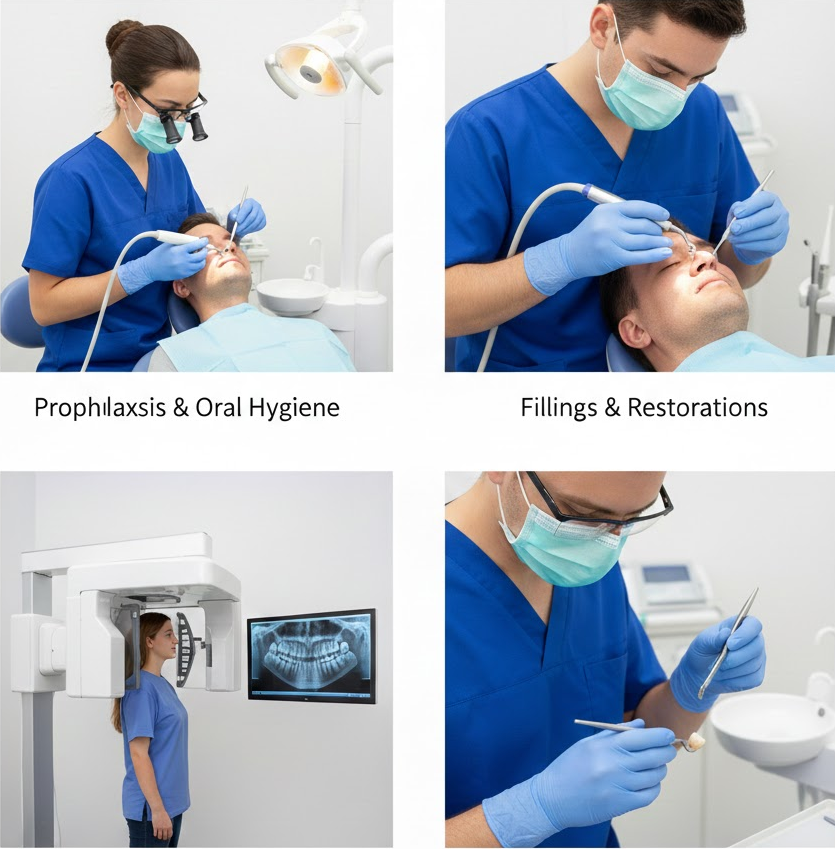
You want a healthy mouth that does not cause constant worry or pain. A general dentist helps you reach that goal with a few core procedures that keep your teeth strong and your gums steady. These treatments fix problems early, protect you from larger health issues, and save you time. Every family dentist in Jackson, OH uses four common procedures that form the base of your care. Cleanings remove hard buildup that brushing misses. Fillings stop decay from spreading. Crowns repair broken or worn teeth. Simple extractions remove teeth that no longer support your health. Each step is clear, direct, and focused on your comfort. You deserve to know what will happen before you sit in the chair. This guide walks you through these four procedures so you can ask sharper questions, plan your visits, and feel more in control of your dental health.
1. Professional Cleanings
Regular cleanings keep your mouth healthy and prevent painful problems. You clean your teeth at home. Yet plaque hardens into tartar that a toothbrush cannot remove.
During a cleaning, your dentist or hygienist:
- Checks your teeth and gums for early signs of trouble
- Removes plaque and tartar from teeth and along the gumline
- Polishes teeth to smooth rough spots where bacteria cling
- May apply fluoride to help protect against decay
The Centers for Disease Control and Prevention explains that untreated cavities and gum disease can lead to infection and tooth loss. Regular cleanings help stop that chain before it starts.
You usually need a cleaning every six months. Some people need them more often. You and your dentist decide the right schedule together.
2. Fillings for Cavities
Cavities are small holes in teeth. They come from bacteria that feed on sugar and create acid. The acid eats away the hard surface of your tooth.
Fillings do three things:
- Remove the decayed part of the tooth
- Seal the space so bacteria cannot get back in
- Restore the shape so you can chew without pain
Your dentist numbs the tooth. Then the decayed part comes out, and the space is cleaned. A filling material is placed and shaped so your bite feels natural.
Common filling materials include:
- Tooth colored resin
- Silver colored amalgam
Fillings work best when you treat cavities early. The National Institute of Dental and Craniofacial Research notes that tooth decay is common in children and adults. Early treatment prevents deeper pain and costly care later.
3. Crowns to Restore Weak Teeth
Sometimes a tooth has too much damage for a simple filling. A crown can protect it. A crown covers the whole visible part of the tooth, so you can keep the root and avoid removal.
You may need a crown if you have:
- A large cavity that weakens the tooth
- A cracked or broken tooth
- A tooth that had a root canal
- A tooth that is worn down from grinding
The process usually takes two visits.
During the first visit, your dentist:
- Numbs the tooth
- Shapes the tooth so the crown will fit over it
- Takes impressions or digital scans
- Places a temporary crown to protect the tooth
During the second visit, your dentist:
- Removes the temporary crown
- Checks the fit and bite of the new crown
- Cements the crown in place
Crowns can last many years when you brush, floss, and see your dentist on a regular schedule.
4. Simple Extractions
Sometimes a tooth cannot be saved. A simple extraction removes a tooth that is loose or visible in the mouth. The goal is to stop pain and prevent infection from spreading.
You may need an extraction if you have:
- A tooth with decay that reaches deep into the root
- A broken tooth that cannot hold a crown
- A loose tooth from advanced gum disease
Your dentist numbs the tooth and the surrounding gum. Then the tooth is gently loosened and removed. You receive clear instructions to care for the space so it heals.
Later, you can replace the missing tooth with a bridge, denture, or implant. That choice depends on your health, budget, and goals.
How These Procedures Compare
| Procedure | Main Purpose | When It Is Used | Typical Visit Count |
|---|---|---|---|
| Cleaning | Prevent disease | Routine care for healthy or mildly inflamed gums | One visit every 3 to 12 months |
| Filling | Repair small to medium cavities | Tooth has decay but still has a strong structure | One visit |
| Crown | Protect weak or broken teeth | Tooth is cracked, worn, or has large decay | Two visits in most cases |
| Extraction | Remove unsalvageable tooth | Tooth cannot be restored or causes infection | One visit plus follow-up if needed |
How You Can Prepare for Your Visit
You can take simple steps before you sit in the chair.
- Write down your questions about pain, time, and cost
- Bring a list of medicines and health conditions
- Tell your dentist about any fear of dental work
Clear talk helps your dentist plan your care and protect your safety. You stay in control when you understand your choices.
Protecting Your Mouth Between Visits
These procedures work best when you care for your mouth every day.
- Brush twice a day with fluoride toothpaste
- Floss once a day to clean between teeth
- Limit sugary snacks and drinks
- Drink water often
- See your dentist on a regular schedule
Routine care can feel simple. It also protects your comfort, your smile, and your ability to eat the foods you enjoy.
Take Your Next Step
General dentists use these four procedures to prevent pain, fix problems, and protect your health. When you know what to expect, you can face each visit with less fear and more control. Ask questions. Share your concerns. Stay involved in every choice. Your mouth deserves that level of respect.