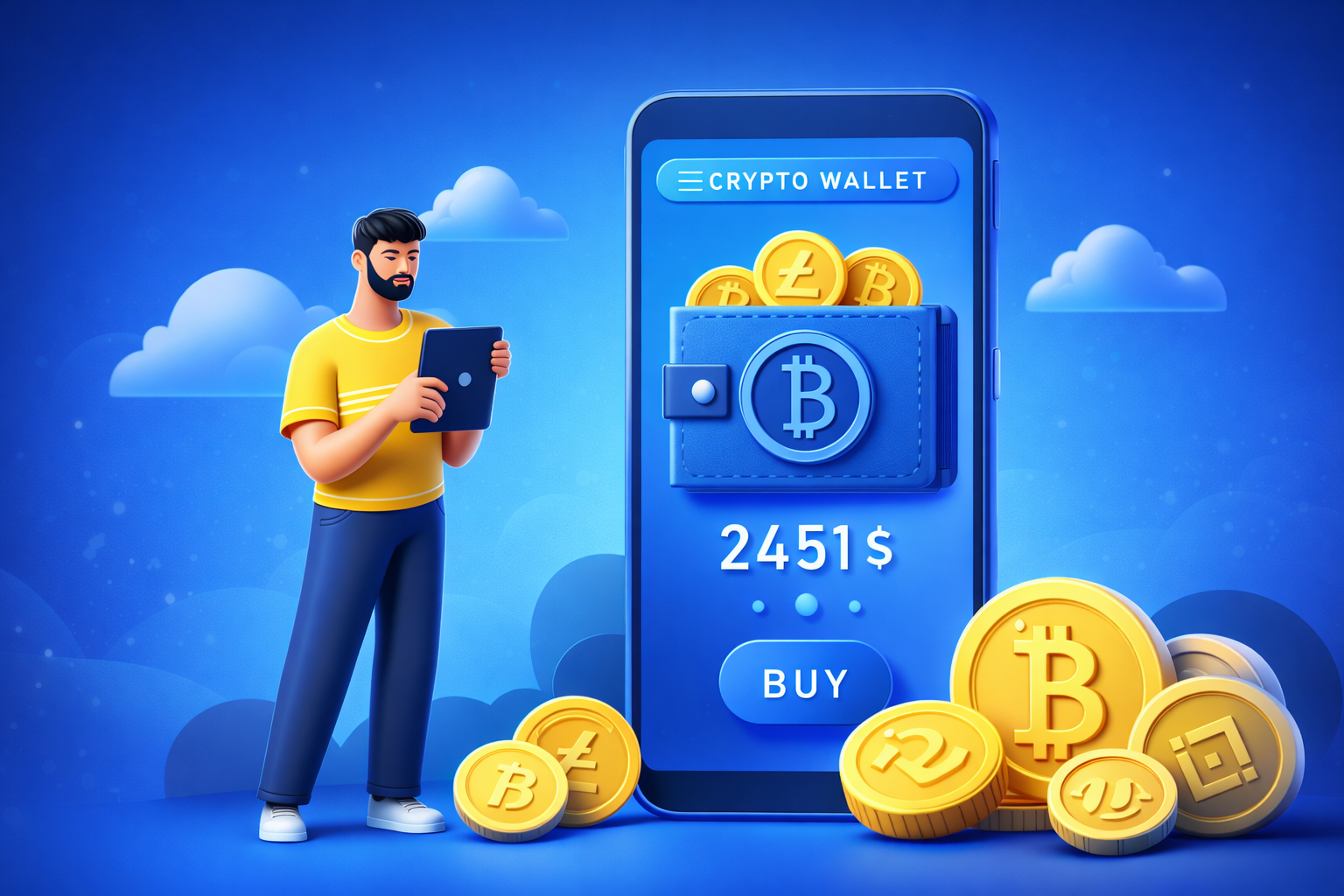
The cryptocurrency industry is entering a new phase of maturity in 2026. What began as a decentralized experiment has evolved into a multi-trillion-dollar digital economy powered by decentralized finance, tokenized assets, NFTs, Web3 applications, and cross-chain ecosystems. At the center of this transformation lies one of the most critical components of blockchain infrastructure: the crypto wallet.
Crypto wallets are no longer simple tools for storing digital coins. They have become gateways to decentralized ecosystems, financial dashboards, identity solutions, and secure transaction hubs. As blockchain adoption expands across industries, businesses are recognizing the need to develop customized wallet solutions that align with modern user expectations. This is why partnering with a reliable cryptocurrency wallet development company has become a strategic priority rather than a technical afterthought.
In this complete guide, we will explore what makes a crypto wallet future-ready in 2026, the architecture behind modern wallet systems, security requirements, emerging trends, and how businesses can successfully launch scalable wallet platforms.
The Evolution of Crypto Wallets in the Web3 Era
In the early days of cryptocurrency, wallets were basic tools designed primarily for sending and receiving Bitcoin. They lacked user-friendly interfaces, advanced security features, and interoperability. Over time, as Ethereum introduced smart contracts and token standards, wallets began supporting ERC-20 tokens and decentralized applications.
Today, the ecosystem has dramatically changed. Modern wallets support multiple blockchains, enable token swaps, integrate with DeFi protocols, manage NFTs, and even provide staking opportunities. Users expect seamless onboarding experiences comparable to traditional banking apps. This rapid evolution demands technical expertise and continuous innovation.
A professional cryptocurrency wallet development company understands that wallets must be designed not just for present requirements but also for future scalability. The wallet of 2026 must adapt to new token standards, regulatory frameworks, and blockchain advancements without requiring complete system overhauls.
Understanding the Core Architecture of a Crypto Wallet
To build a future-ready wallet, it is important to understand its core architecture. A crypto wallet operates by generating and managing cryptographic key pairs. The public key serves as the wallet address, while the private key authorizes transactions. Secure storage and management of private keys remain the most critical technical responsibility.
Modern wallets are built using layered architecture. The front-end layer handles user interaction and interface design. The application layer manages transaction logic, blockchain communication, and API integrations. The security layer ensures encryption, authentication, and private key protection. Finally, the blockchain layer connects the wallet to decentralized networks.
A reputable cryptocurrency wallet development company focuses on optimizing each layer to ensure performance, scalability, and security. By adopting modular architecture, developers make it easier to add new blockchain integrations or features without disrupting the existing ecosystem.
Security: The Backbone of Wallet Development
Security is not optional in wallet development. A single vulnerability can result in irreversible asset loss. As cyber threats grow more sophisticated, wallet solutions must incorporate advanced security mechanisms.
Encryption plays a central role in protecting user credentials and private keys. End-to-end encryption ensures that sensitive data cannot be intercepted during transmission. Multi-signature authentication adds an additional layer of security by requiring multiple approvals before executing transactions.
In 2026, advanced technologies such as Multi-Party Computation (MPC) are becoming industry standards. MPC divides private key control across multiple parties, reducing the risk of single-point compromise. Biometric authentication, including fingerprint and facial recognition, enhances user verification while maintaining convenience.
A professional cryptocurrency wallet development company continuously updates security protocols and conducts regular audits to identify vulnerabilities before they become threats.
Multi-Chain Compatibility and Cross-Chain Functionality
Blockchain fragmentation is one of the biggest challenges facing the crypto ecosystem. Users now interact with multiple networks including Ethereum, Binance Smart Chain, Polygon, Avalanche, Solana, and Layer-2 scaling solutions. A wallet that supports only one network limits user flexibility.
Future-ready wallets must support multi-chain functionality. This means enabling users to manage different blockchain assets within a single interface. Cross-chain bridges allow assets to move seamlessly between networks, increasing liquidity and usability.
Developing such interoperability requires deep technical understanding. A skilled cryptocurrency wallet development company designs flexible frameworks that can integrate new blockchain protocols without significant redevelopment.
User Experience as a Competitive Advantage
While technical strength is crucial, user experience determines adoption. Many blockchain platforms fail not because of poor security, but because of complicated interfaces. For mass adoption to occur, wallets must feel intuitive and accessible.
The onboarding process should be simple and educational. Users must understand seed phrases, private key management, and transaction fees without feeling overwhelmed. Clear dashboards, real-time balance updates, and transparent gas fee estimation improve trust.
A cryptocurrency wallet development company that prioritizes user-centric design conducts usability testing and refines interface elements to ensure accessibility for both beginners and experienced crypto users.
Integrating DeFi, NFTs, and Web3 Applications
The modern wallet is more than a storage solution. It acts as a gateway to decentralized finance and Web3 applications. Users expect direct access to staking platforms, yield farming opportunities, NFT marketplaces, and decentralized exchanges.
In-app token swapping reduces dependency on external platforms. NFT galleries allow users to showcase and manage digital collectibles. DAO voting integration enables community governance participation directly from the wallet interface.
Building such comprehensive ecosystems requires advanced smart contract integration and secure API development. A professional cryptocurrency wallet development company ensures seamless interaction with decentralized protocols while maintaining security standards.
Regulatory Compliance and Global Expansion
As governments introduce clearer regulations around digital assets, wallet providers must ensure compliance with regional laws. Depending on jurisdiction, wallets may require identity verification modules, anti-money laundering frameworks, and transaction monitoring systems.
Compliance does not necessarily contradict decentralization. It simply ensures responsible platform operations. A cryptocurrency wallet development company with global experience understands regional regulatory differences and integrates compliance features accordingly.
This regulatory readiness becomes especially important for enterprises planning international expansion.
Performance Optimization and Scalability
Blockchain networks experience fluctuations in traffic. High transaction volumes can impact wallet performance if not properly optimized. Scalability planning is essential to handle growing user bases.
Cloud-based infrastructure, load balancing, and microservices architecture enhance system performance. Real-time synchronization ensures users receive accurate transaction confirmations.
A forward-thinking cryptocurrency wallet development company designs wallet systems capable of handling millions of transactions without compromising speed or reliability.
The Role of AI and Automation in Wallet Development
Artificial intelligence is increasingly influencing blockchain applications. AI-powered analytics can detect suspicious transaction patterns, prevent fraud, and provide risk assessment insights.
Automated monitoring tools track system health and performance metrics. Predictive algorithms estimate transaction fees and optimize routing for faster confirmations.
By integrating AI technologies, a cryptocurrency wallet development company enhances both security and efficiency, positioning wallet platforms for future innovation.
Custodial vs Non-Custodial Wallet Models
Choosing between custodial and non-custodial wallet models significantly impacts user control and responsibility. Custodial wallets offer convenience by managing private keys on behalf of users. However, they introduce counterparty risks.
Non-custodial wallets empower users with full asset ownership but require careful key management. In 2026, hybrid models are gaining popularity, offering flexibility while maintaining enhanced security.
An experienced cryptocurrency wallet development company helps businesses evaluate which model aligns best with their target audience and regulatory environment.
Real-World Asset Tokenization and Wallet Integration
Tokenization of real-world assets such as real estate, commodities, and securities is gaining traction. Wallets must support these token standards and compliance requirements.
Future-ready wallets will manage not only cryptocurrencies but also tokenized shares, digital bonds, and fractional property ownership. Integration with asset registries and verification systems will become standard features.
A visionary cryptocurrency wallet development company prepares wallet architecture to accommodate tokenized asset ecosystems.
Maintenance, Updates, and Continuous Innovation
Launching a wallet is only the beginning. Continuous updates are necessary to address security vulnerabilities, introduce new features, and adapt to evolving blockchain standards.
Regular penetration testing, code audits, and performance reviews ensure system reliability. Maintenance plans must include feature upgrades aligned with industry trends.
Partnering with a cryptocurrency wallet development company that offers long-term support ensures your wallet remains competitive in a rapidly changing landscape.
Selecting the Right Development Partner
Choosing the right development partner is critical for project success. Businesses should evaluate technical expertise, previous blockchain projects, security protocols, and post-launch support capabilities.
Transparent communication, clear project timelines, and agile development methodologies contribute to successful collaboration. A reputable cryptocurrency wallet development company acts not only as a service provider but also as a strategic advisor.
The Future of Crypto Wallets in 2026 and Beyond
As Web3 adoption accelerates, wallets will become digital identity hubs. They will store verifiable credentials, enable decentralized voting, and manage access permissions across platforms.
Account abstraction technology will simplify transaction processes. Social recovery systems will replace complex seed phrase management. Integration with Internet of Things devices may introduce new payment possibilities.
The companies that adapt to these innovations will lead the next phase of digital transformation. Businesses that collaborate with a forward-looking cryptocurrency wallet development company will be well-positioned to capitalize on emerging opportunities.
Conclusion
Building a future-ready crypto wallet in 2026 requires more than basic blockchain integration. It demands advanced security architecture, multi-chain compatibility, user-centric design, regulatory awareness, scalability planning, and continuous innovation.
Crypto wallets have evolved into essential digital infrastructure powering decentralized finance and tokenized economies. By partnering with an experienced cryptocurrency wallet development company, businesses can launch secure, scalable, and feature-rich wallet platforms that inspire user trust and drive long-term growth.