Relationships rarely run in an exact line. Sometimes, tension can be shown by small miscommunications and at other times, a deeper emotion can be seen. At times, the structured assistance of couple counseling sessions or guided sessions with an expert can offer guidance and clarity. This guide explores the contrast between approaches commonly described as couples therapy and counselling for partners. You will notice how each path shapes emotional safety, communication skills, and overall relationship satisfaction. The sections also reflect current patterns in relationship care, where structured guidance increasingly supports healthier bonds and better conflict resolution.
Life’s responsibilities sometimes weigh on connection and dialogue. However, counseling supports relationship balance when conversations grow tense or predictable. An experienced couples therapy therapist helps build emotional safety and encourages more open communication.
At other times, structured support reaches deeper emotional layers. An experienced couples therapist guides therapy sessions that explore relationship dynamics and long-standing concerns. Because emotional insight matters, counseling complements broader mental health professional support for holistic understanding.
Partners often seek balance between practical tools and emotional clarity. Through conversations with each other, therapeutic sessions provide an environment of safety and develop the ability to communicate. This helps to build confidence, builds understanding, and aids in the development of an enduring relationship.
Couples Therapy and Marriage Counseling Explained Clearly
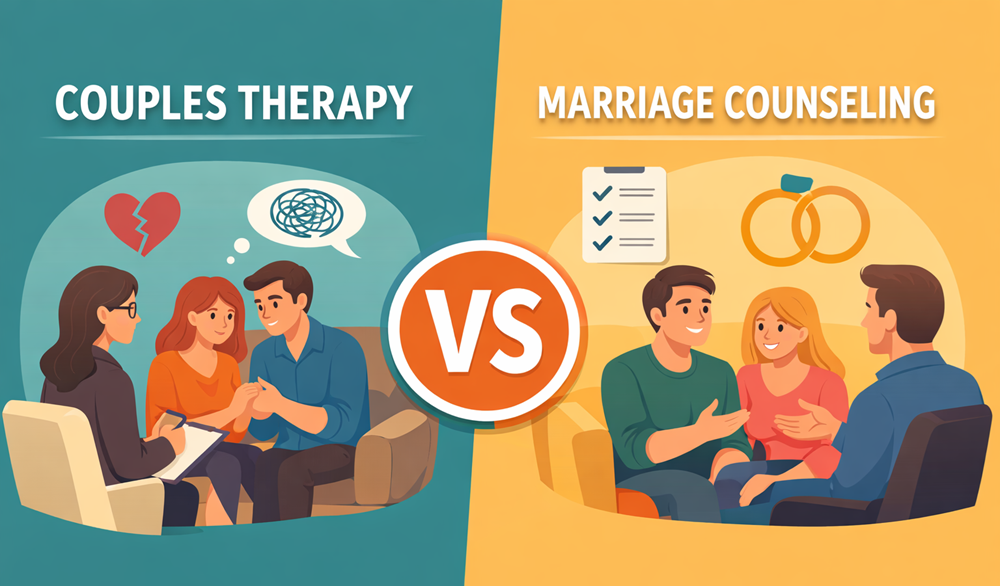
Through marriage and relationship counselling, the therapists’ focus on dealing with specific issues within the patients’ everyday lives. The counseling sessions emphasize communication techniques and structured tools, allowing partners to approach practical concerns and improve everyday interaction through guided conversations and short-term planning.
However, the couples therapy explores deep emotional and psychological aspects that influence connections. Therapy sessions address unresolved conflict or unsatisfied needs as well as fundamental triggers. The deeper exploration usually involves more time, fostering a lasting understanding of patterns in relationships and psychological growth.
Both methods support relationship satisfaction and communication skills. Still, therapy and marriage counseling differ in scope and intention, as one emphasizes emotional exploration while the other prioritizes solution focused guidance addressing present concerns.
Scope of Exploration and Emotional Depth
Sometimes relationship problems appear simple on the surface, yet emotional history shapes reactions and expectations. Through marriage and couples counseling, structured discussion highlights current concerns while maintaining focus on workable tools and practical understanding for everyday interaction.
However, deeper exploration unfolds under the guidance of a couples therapist trained in emotional mapping. The sessions focus on patterns of attachment as well as triggers and reactions which influence the dynamics of relationships. The reflective process often increases the awareness of emotions and empathy.
Consider how emotional safety influences communication. With insight from a therapist, partners observe behaviour patterns and interpret reactions with clarity. This process encourages conflict resolution and nurtures stability within a holistic framework.
Moreover, couples counseling frequently emphasizes immediate progress rather than emotional reconstruction. When practical tools address a specific issue, clarity arrives faster. Structured conversation helps strengthen listening habits and supports healthier communication patterns.
However, reflection on emotions can be a helpful tool. If accompanied by a couple therapist, even brief discussions are a great way to highlight individual accountability and improve relationships between the partners. Such awareness strengthens long term understanding.
Ultimately, depth marks the distinction. While counseling remains problem oriented, therapeutic exploration reshapes emotional interpretation. Both approaches encourage improved communication, yet emotional analysis broadens personal insight and strengthens lasting relationship satisfaction.
Focus on Skills Versus Long Term Insight
Marriage counsellingcommonly introduces practical tools for everyday partnership challenges. These sessions focus on negotiation and communication strategies that allow couples to build trust and solve issues that are clear with a structured and guided approach to interaction and reflective sessions.
Such an approach places emphasis on actionable improvement:
- Structured dialogue exercises develop communication skills.
- Joint planning addresses shared responsibilities.
- Practical methods strengthen conflict resolution habits.
However, couples therapy commonly focuses on emotional understanding and behavioral comprehension. The more comprehensive approach focuses on the underlying attitudes and behaviors that impact interactions and relationship satisfaction with time.
This reflective perspective highlights several dimensions:
- Emotional processing deepens awareness of motivations.
- Examination of history reveals recurring relationship dynamics.
- Understanding triggers supports lasting behavioural change.
Therefore, counselling builds functional communication foundations, whereas couples therapy nurtures psychological clarity. Both paths improve your relationship, yet their methods reflect distinct priorities within therapy and marriage counseling frameworks.
Duration and Structure of Support
Duration shapes expectations in relationship guidance. Often, couples counseling focuses on shorter engagement that addresses a specific issue such as communication strain or adjustment challenges within shared routines. Structured sessions deliver focused dialogue and achievable steps.
In contrast, broader engagement may unfold through these characteristics:
- Therapy sessions explore emotional patterns gradually.
- Reflection encourages awareness of personal reactions.
- Deeper examination strengthens relationship satisfaction.
Furthermore, counseling often adapts to defined timelines:
- Targeted sessions prioritize clarity around relationship problems.
- Skill building addresses communication gaps quickly.
- Guidance supports steady progress without extended commitment.
In spite of structural differences, the shared advantages are apparent. There is evidence that shows a lot of participants enjoy better communication and less conflict when they receive structured advice, which reinforces its importance across a variety of situations of relationships.
Thus, duration reflects purpose rather than superiority. Shorter guidance resolves immediate tension, while extended exploration shapes emotional understanding and long-term connection between partners.
Preventive Guidance Versus Emotional Repair
Marriage counselling frequently serves couples seeking preparation or adjustment within shared life transitions. Rather than addressing severe distress, this path helps partners anticipate challenges and develop communication skills before conflict intensifies.
Such preventive support highlights several elements:
- Planning strengthens shared expectations.
- Dialogue clarifies personal boundaries.
- Exercises enhance conflict resolution habits.
Meanwhile, couples therapy addresses emotional repair when unresolved tension shapes behaviour patterns. Exploration within therapy sessions uncovers unmet needs and psychological wounds influencing reactions and emotional safety.
This restorative perspective includes:
- Processing unresolved emotional experiences.
- Identifying behavioural triggers.
- Strengthening empathy and understanding.
Marriage counselling, in conjunction with couples therapy, demonstrates complementary goals. Prevention-based guidance helps to strengthen connections, and emotional healing builds confidence and helps restore balance in changing dynamics in relationships.
Guidance Style and Professional Engagement
Professional interaction style varies depending on the approach adopted. Couples counseling typically highlights structured guidance where suggestions and tools target communication breakdown and practical solutions related to relationship problems.
Within this environment, collaboration emerges through:
- Guided conversation promoting improved communication.
- Exercises encouraging reflection and listening.
- Strategy building to improve your relationship.
A couples therapist near you often applies a more exploratory framework. Sessions examine emotional history and behavioural patterns, allowing deeper psychological interpretation and holistic understanding of relationship dynamics.
This reflective engagement involves:
- Emotional mapping through dialogue.
- Insight development across therapy sessions.
- Recognition of behavioural patterns affecting connection.
Ultimately, professional interaction shapes outcomes. Counseling emphasizes structured skill building, whereas guidance from a therapist encourages introspection, self-awareness, and meaningful emotional connection that supports lasting relationship satisfaction.
Finding the Path That Feels Right
Every relationship evolves through seasons of clarity and confusion. During uncertain phases, marriage and couples counselling offers structured conversation and renewed perspective. Through emotional exploration or practical dialogue, guidance supports healthier interaction and stronger communication skills. Contact Town Psychological Services for couples therapy near me in Oakville and surrounding areas. Access online couple therapy across Ontario.
The initial spark of curiosity may be triggered by searching couples therapy near me, and remarking readiness to reflect and develop. Therapy sessions are a great way to build emotions, improve communication and enhance the awareness of relationships’ dynamics in the daily routine of a couple.
Whether exploring emotional depth or resolving specific concerns, therapy and marriage counseling both promote connection and understanding. Through patience and openness they can guide spouses towards greater communication, more rounded expectations as well as a more satisfying and fulfilling relationship.
Frequently Asked Questions
Why choose couples counseling early?
Couples counseling early on helps develop relationships and address small tensions prior to escalating. The structured conversation improves understanding and increases emotional security in everyday interactions.
How does marriage counselling help communication?
Marriage counselling introduces structured techniques that clarify listening and expression. These sessions strengthen communication skills and encourage conflict resolution through guided interaction.
When should couples therapy begin?
Couples therapy often begins when emotional patterns affect connection. Exploration with a couples therapist improves awareness and supports deeper relationship satisfaction.
How can a couples therapist help?
A couples therapist leads sessions of therapy that explore emotions, enhance the relationship, and deal with difficulties in a secure and safe area.
How to improve results from couples counseling?
Engagement in couples counseling enhances the results. Reflection, openness, and practicing communication skills promote better interaction as well as long-term relationships.