Relationships progress through the seasons of intimacy, tension, development, and reflection. Discussions about support usually focus on therapy options. However, people often pause to consider couples therapy with marriage therapy, and what each offers.
Framed within the discussion of couples therapy or marriage counselling, this guide explores both approaches with clarity and warmth. From defining therapy styles to unpacking distinctions, the content highlights meaningful differences without framing one choice as superior. It also touches on how searching for marriage counselling fits into contemporary family care and sound choosing process.
Couples Therapy vs. Marriage Counselling
People often look for support when tension lingers or communication feels strained. While searching, marriage and couples therapy appear as a common comparison, yet the distinction rarely feels clear at first glance. Partners may wonder if both approaches share the same purpose or follow separate paths. Questions arise during late evening conversations, during quiet reflection, or while browsing listings for marriage counselling.
Understanding these approaches builds clarity and confidence. Each option reflects different goals, relationship stages, and emotional needs, yet both encourage stronger connection and awareness through thoughtful and holistic engagement.
A closer look reveals how they operate, where they overlap, and how they support partners seeking meaningful change without judgment or pressure.
What Is Couples Therapy
Couples therapy helps partners seek clarification on communication issues, emotional distance, and ongoing disagreements that impact their relationships and provide mutual happiness.
A lot of sessions focus on the relationship dynamics and learning ways to improve interactions. Couples therapy is a time for conversations, reflection and exercises shared with others that build the relationship over time.
The therapy sessions tackle issues of recurring conflict, trust issues, intimate issues, and stress-driven tension. The discussions help the partners identify issues and develop healthier solutions in a safe and supportive setting.
In addition, the sessions introduce techniques for managing conflicts and methods of listening. The growth of emotions, the sharing of accountability and awareness of relationships influence outcomes and provide partners with an understanding that improves their personal well-being and the shared experience.
What Is Marriage Counselling
Marriage counselling builds a stronger bond between couples through structured reflection and guided conversations. It encourages spouses to consider the patterns that affect trust of communication, respect, and emotional connections while establishing the foundation of stability by collaborating continuously.
Couples often begin this process when they search for marriage and relationship counselling during moments of strain or transition. Sessions focus on understanding shared history and restoring connection rather than addressing surface disagreements alone.
The sessions explore the emotional impact of experiences, family influence, and expectations that have developed over the course of time. A deeper understanding of the relationship helps partners react with sensitivity to conflicts and become aware of behaviors that influence daily interactions and develop a better understanding of each other.
Marriage therapy often focuses on individual stories and situations that impact the way we react today. Therapists facilitate discussion to ensure emotional and lasting change while encouraging the growth of relationships that go over and above any immediate conflicts.
Open, honest communication and a willingness to navigate disagreements make these sessions really effective. Couples begin to share their feelings more freely, listen to each other with care, and gradually build a sense of teamwork when making decisions together.
Marriage Counselling Vs Couples Therapy – Which is Right Choice
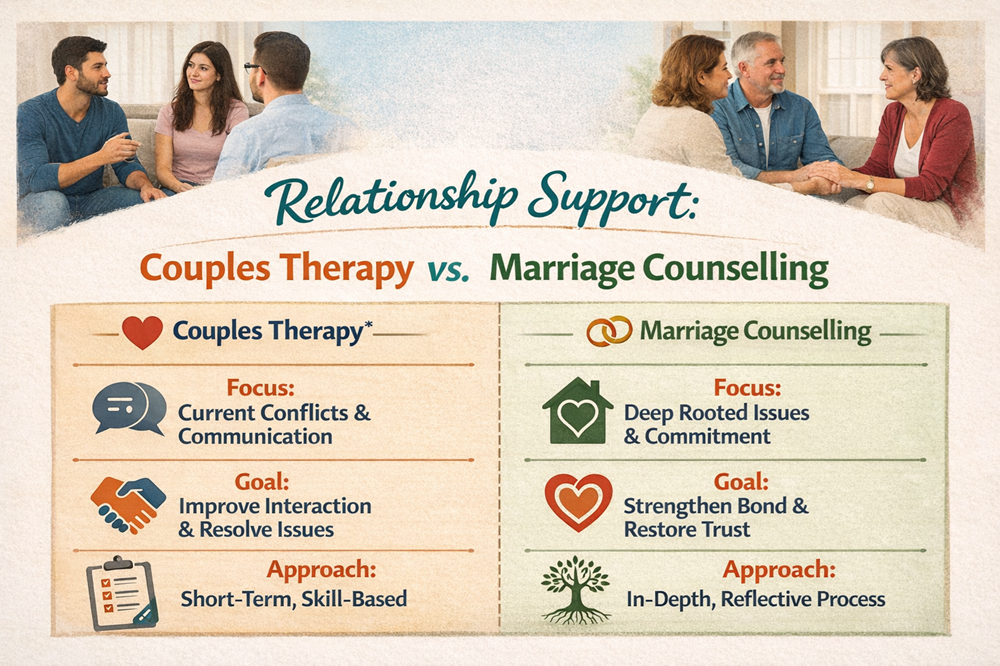
Understanding the difference between a marriage counselling and couples therapy involves stepping past superficial labelling. Both methods promote the bond between couples, however they are different in their intentions, depth, context, and dependent on the structure of relationships and expectations.
The process of marriage therapy often focuses on deeply established patterns that affect a marital relationship. It analyzes individual histories as well as the long-standing emotional dynamics that create lasting change within the relationship and joint obligation.
Couples therapy usually focuses on the present challenges partners are experiencing regardless of their marital status. It explores day to day interaction habits and encourages practical skill building to resolve immediate concerns constructively.
Below are practical distinctions that clarify marriage vs couples therapy.
Relationship context:
Marriage therapy focuses on emotional or legally binding relationships where shared experiences shape the identity of the couple and their expectations. Couples therapy can be a welcoming place for couples regardless of the stage in their relationship as well as facilitating dialogue between people in the process of establishing or maintaining connections.
Depth of exploration:
Marriage therapy examines deeper emotional influences including attachment styles or past experiences shaping reactions. Couples therapy concentrates more on present behaviors and communication strategies affecting relationship harmony.
Therapeutic duration:
The duration of marriage therapy can be extended because of intensive investigation of patterns that are ingrained. Couples therapy or counseling sessions typically address particular issues with a shorter time frame, aided through specific exercises.
Primary objectives:
The process of counseling often increases relationships, strengthens trust, and restores the intimacy of relationships over time. Couples therapy focuses on understanding emotional triggers as well as improving relationships.
Professional approach:
Marriage therapy frequently involves specialized practitioners trained in family systems or relational trauma work. Couples counseling can involve professionals offering practical tools and structured dialogue focused on communication skills.
Problem solving style:
Couples counseling often addresses specific problems such as conflict or infidelity with guided exercises as well as solution finding. The marriage therapy process reveals the emotions that are the root of recurrent relationship conflicts.
Emotional focus:
Couples therapy builds empathy and awareness around emotional triggers influencing present interaction. Marriage counseling may approach issues with attention toward shared commitment and future partnership resilience.
Outcome expectations:
Both approaches strengthen communication and connection, yet their pathways differ. Couples therapy encourages understanding of the relationship, while marriage therapy promotes stability and growth within an established marital relationship.
Personal clarity shapes this decision more than terminology. Marriage vs couples therapy offers supportive pathways grounded in communication, awareness, and emotional care.
The process of evaluating the stage of a relationship and the goal of emotional development often directs people to seek marriage counselling near me. A thoughtful exploration can lead to a more informed decision that is compatible with values and needs.
Understanding differences helps build confidence. However, openness and patience are the foundation for growth. When you are able to see and commit, the therapy process can become an opportunity to foster connection and grow through ways that are authentic and well balanced.
Which Therapy Is Right For Me
Choosing between marriage vs couples therapy typically begins with silence and reflection, followed by a dialogue between the partners. Relationship context, emotional maturity as well as personal objectives determine the direction of therapy more than labels or terms.
Many people begin by exploring marriage counselling near me when seeking structured guidance rooted in commitment. Others lean toward broader relational discussion through couples therapy while clarifying emotional expectations together.
Thoughtful consideration helps partners identify priorities such as communication growth, conflict resolution, or deeper exploration of shared history. A holistic outlook encourages alignment between emotional needs and therapy style rather than external pressure.
Patience and honest dialogue support meaningful choice. With understanding and openness, therapy becomes less about comparison and more about nurturing connection and wellbeing through intentional support.
Frequently Asked Questions
What defines marriage vs couples therapy?
Marriage vs couples therapy differs mostly in how they focus. Therapy for marriage focuses on deeper marriage patterns, whereas couples therapy can address issues in the relationship as well as improving communication for couples at any point.
How does marriage counselling help?
Marriage counselling brings couples together through targeted conversations and tools for conflict resolution, and emotional reflection, which strengthens trust, intimacy as well as long term stability of relationships.
Why choose couples therapy early?
Couples therapy can help you communicate and gain insight into emotions before conflicts get out of hand. It helps to build empathy, recognition and better interaction practices which help to build long lasting relationships.
When consider marriage vs couples therapy?
The issue of couples therapy versus marriage occurs during periods of transition conflicts, and emotional separation. The status of the relationship and objectives help decide which method is most appropriate for current needs.
How can I find marriage counseling near me?
You can book couples therapy or marriage counselling in Mississauga at CoHM.ca, or look in therapist directories or through referrals. Selecting a counsellor based on their approach, their comfort level and compatibility can lead to meaningful advancement.



Couples therapy can help you communicate and gain insight into emotions before conflicts get out of hand.