Digestion is a pillar of health and is usually neglected in the day-to-day dieting. Dietary fiber is one of the most crucial elements of a good digestive system. Fiber is an essential component that helps to keep the bowels regular, keeps the gut in good health, and avoids constipation. Lack of sufficient fiber causes inefficiency in the digestion process which results in discomfort, bloating and eventual digestive complications.
Dietary fiber is another form of carbohydrate that the body is unable to digest wholly. Fiber is not degraded and absorbed, but moves along the digestive tract, with necessary functions occurring in the process. It aids in the passage of food via the intestines, nourishes healthy intestinal microbes and assists in restoring the consistency of stool. These movements render fiber to be vital in digestive performance and ease.
This article discusses the reasons fiber is beneficial to digestion and bowel health. It describes the mechanisms of effect of soluble and insoluble fiber to help digestion, avoid constipation, and maintain a healthy gut. There are practical instances of the foods rich in fibers and the daily amount of these foods to help the reader make the right choices in terms of dietary consumption.
Learning about Dietary Fiber
Dietary fiber is defined as the unabsorbed components of vegetable foods. Fiber is not digested by the small intestine digestive enzymes unlike sugars and starches. Rather, it enters the digestive tract mostly unchanged, acting to affect the food processing and waste excretion.
There are two major categories of fiber namely soluble and insoluble. The two types have different functions in digestion, and they are required in the best digestive health. The intake of a balanced diet guarantees the bowel movement and maintains the gut environment.
To gain a better insight into the biological function of soluble and insoluble fiber, medical nutrition sources illuminate the action of these fibers in relation to water, gut bacteria and intestinal movement.
Young Techno-gastrosite Soluble Fiber, and its effect on digestion
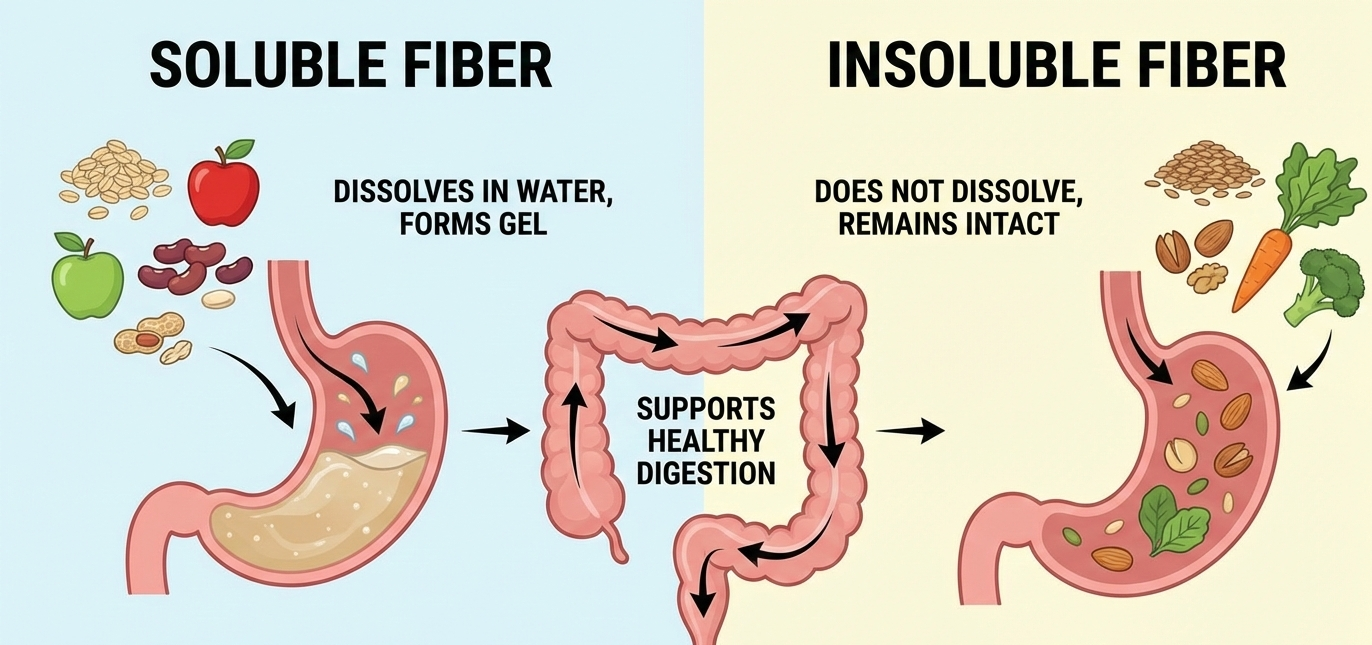
The soluble fiber is dissolved in water to create a gel like substance in the digestive tract. This gel slows down digestion and thus the absorption of nutrients is enhanced. The soluble fiber helps in softening stool by absorbing water thus passing easily through the intestines.
Among the advantages of soluble fiber, the fact that it supports gut bacteria deserves to be mentioned. Soluble fiber is fermented by healthy microorganisms, as it passes through the colon. The process results in substances which feed the intestinal lining and provide good health to the gut.
Soluble fiber is also important in control of the rate of digestion. It slows the transit of food, thereby preventing the acute flare-ups of discomforts of digestion, and maintaining a healthy bowel activity.
Fiber and Bowel Movement Support Insoluble
An insoluble fiber is not dissolved in water. Rather, it makes stool heavier and makes the waste more easily move through the digestive tract. This kind of fiber is specific with regard to prevention of constipation and regular bowel movements.
Increasing the bulk of stool helps the insoluble fiber to make the intestine muscles contract more efficiently. This facilitates frequent removal and minimization of chances of hard and hard stool.
The insoluble fiber is more specifically useful to the people who have slow digestive tracts or abnormal bowel movements. This is essential to the digestive system owing to its capability of accelerating intestinal velocity.
How fiber helps avoid constipation
Constipation is a condition that arises after stool is made hard, dry and not easy to pass. One of the most frequent causes of this condition is the lack of fiber. Lack of adequate fiber, as a result, causes a stool that passes slowly along the intestines and as such, it absorbs too much water resulting in hard stools.
The fiber is soluble and can assist in maintaining softer stool because the water remains in the stool, which is easy to pass. The insoluble fiber also helps with the bulk and intestinal movement. The combination of these fibers is synergistic in stimulating the normal bowel movements.
Regular consumption of fiber will allow developing a stable pattern of meals, minimizing the chances of constipation and the associated pain.
Fiber and Gut Health
Fiber is necessary to have a healthy gut environment. Healthy intestinal flora are dependent on fiber as a food source. Bacterial diversity and balance are maintained when fiber is fermented in the colon.
Healthy gut environment assists in digestion, helps in intestinal barrier and helps in immune functioning. Diets heavy in fiber have been linked to a higher level of digestive comfort and a decreased level of inflammation in the gut.
Fiber has a non-digestive effect by promoting many other health benefits by supporting beneficial bacteria, such as metabolism and immune resilience.
Fiber-Rich Foods that should be added to the Diet
Plant-based foods contain a great range of foods that are a source of dietary fiber. Good sources include whole grains, fruits, vegetables, legumes, nuts and seeds. Solvable and insoluble fiber is present in different ratios in different foods, and so it is significant that food variety is considered as well.
Whole grains ensure insoluble fiber that promotes bowel movement. Both forms of fiber are common to fruits and vegetables, which makes the stool soft and healthy to the gut. Legumes contain soluble fiber in large amounts especially to promote digestion and nutrient absorption.
A variety of foods containing a lot of fiber is a guarantee of proper digestive support and eliminates the chances of constipation.
Recommendations of Fiber Intake per day
The amount of fiber required on a daily basis differs based on age, sex, and general eating habits. Nonetheless, a vast number of people eat much less fiber than it is recommended. Raising the fiber consumption in a gradual manner will enable the body to accustom to it and avoid discomfort.
When boosting the fiber intake, sufficient hydration is necessary. It is better absorbed when water is present and it is known to help the formation and passage of stool. Consuming sufficient amount of fluids will add value to a diet rich in fibers.
The daily intake of fiber is a consistent means to promote gut health and regularity of the digestive tract.
Fiber and Digestive Efficiency
Digestive efficiency is the smooth passage of food to the digestive system and also the incorporation of nutrients. Fiber also helps in this effectiveness in that it controls the rate of digestion and aids the formation of stool.
A high-fiber diet results in avoiding constipation of the digestive system and encourages normalization. This will take the strain off the digestive tract and after eating it helps one feel comfortable.
With efficient digestion, the body is able to save the energy as used in other body processes such as immunity, repair and day-to-day activity.
Slowly build-up Fiber consumption
The gradual intake of fiber will semi avoid digestive distress like bloating or gas. Drastic changes in the amount of fiber consumed can overwhelm the digestive system particularly in the presence of lack of consumption of hydration.
Gradual modifications to small dietary measures and gradual dietary modification with complexing of the gut bacteria is in order. This method helps to maintain digestive comfort and consistency in the long-run.
A healthy digestive system is maintained by a balanced intake of fiber and not by temporary changes.
Fiber in Various Life stages
It is during all periods of life that fiber plays an essential role. During childhood, it helps in routine digestion and good bowel habits. Fiber in adulthood is useful in ensuring the digestive efficiency and avoiding constipation caused by sedentary lives.
With age, digestive movements can decelerate, which is why the consumption of fiber becomes even more significant. A sufficient fiber maintains the bowel regularity and digestive comfort during the lifespan.
Regular consumption of fiber also leads to the long-term digestive resilience and quality of life.
Conclusion
Fiber in the diet plays an important role in facilitation and prevention of constipation. The digestive system has regular bowel movements, the gut is healthy, and the overall digestive system is efficient through the combined activity of soluble and insoluble fiber.
Fiber makes the stool soft, facilitates movement of the intestines and feeds the good bacteria in the gut. The incorporation of foodstuffs that are based on fibers and the adherence to the daily intake standards may contribute substantially to the overall digestive comfort and long-term health.
Knowing about the importance of fiber gives people the ability to choose healthy food with the mindset that it helps in the digestion process, avoids constipation, and makes the gut healthier.



naturally like your web site however you need to take a look at the spelling on several of your posts. A number of them are rife with spelling problems and I find it very bothersome to tell the truth on the other hand I will surely come again again.