Introduction
Understanding dietary supplements is essential in today’s busy and fast world, achieving optimum health due to diet itself may be difficult. The hectic workload schedules, inadequacy to a variety of foods, as well as any dietary limitations and heightened physical activity tend to result in inability to cover all nutrition requirements through normal meals. Dietary supplements enter in at this point. These are meant to supplement normal food consumption and aid people in getting sufficient amounts of the vital nutrients.
With the ever-increasing interest in understanding the health, fitness, and wellness, an increasing number of individuals are resorting to the use of supplements. Nevertheless, misinformation, myths, and confusion persist on the matter. The article presents a simple explanation of dietary supplements, its types, advantages, the difference between it and traditional foods, and the misconceptions related to the topic in a clear and easy to understand manner. The strategy is to establish the background and credibility, and establish Powerbody.eu as a credible source of evidence-based supplement information.
Understanding Dietary Supplements
Dietary supplements are products that are meant to complement the diet, that is, they are meant to supplement the nutrient that might be lacking or inadequate in the normal food intake of a person. They are not to substitute meals but are to aid the general nutrition and health.
There are a great number of types of supplements such as:
- Tablets
- Capsules
- Powders
- Liquids
- Gummies
- Soft gels
Most of them usually include one or more of the following ingredients:
- Vitamins (e. g. Vitamin C, Vitamin D, Vitamin B12)
- Minerals (e.g., magnesium, calcium, zinc, iron, etc.)
- Proteins and amino acids
- Herbal extracts
- Enzymes
- Other bioactive compounds
To put it plainly, dietary supplements are used to supplement nutritional gaps that could occur in the dieting of an individual.
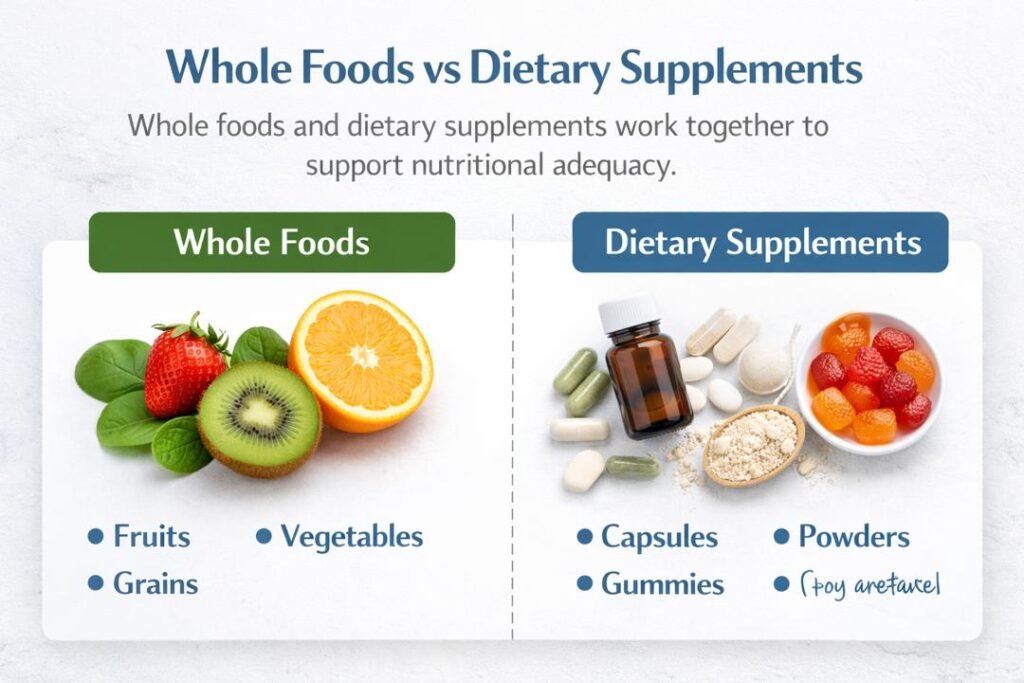
Supplements and Conventional Foods
One misconception that has been made is that supplements equate to food. Both are useful with respect to supplying nutrients, but they are used differently.
Conventional Foods
The traditional foods consist of fruits, vegetables, grains, meat, fish, dairy, and legumes. These foods provide:
- Macronutrients (proteins, fats, carbohydrates)
- Micronutrients (vitamins and minerals)
- Fibre
- Antioxidants and phytochemicals.
They are also selective to satiety, digestion and the balance of the diet.
Dietary Supplements
Supplements however, are as follows:
- Deliver concentrated nutrients.
- Are taken in measured doses
- Do not replace meals
- Deficient in all food elements such as fibre and water.
As an example, an orange has vitamin C, fibre, water and natural sugars. Vitamin C supplement does not contain the nutritional value of the entire fruit and only contains a vitamin. Thus supplements are meant to supplement, and not replace a healthy diet.
Why Supplements Are Necessary to the Body?
Preferably, nutrients must be in the form of food. This, however, is not common in reality. The following are cases when supplements come in handy:
Nutrient Deficiencies
Others are deficient because of bad dieting, disease or absorption issues. The deficiencies are common and they include:
- Iron (especially in women)
- Vitamin D (because of low exposure to the sun)
- Vitamin B 12 (in vegetarians and vegans)
- Calcium (in individuals who do not take dairy)
Supplements are used to replenish such nutrients and avert any related health issues.
Nutritional Needs increased.
Some groups demand more nutrients i.e.
- Breastfeeding and pregnant maternities.
- Sporty and physically active people.
- The Elderly
- Individuals who have gone through an illness or surgery.
An example is that athletes might require an extra amount of protein to help them to repair muscles and pregnant women will require folic acid to promote the growth of fetuses.
Lifestyle and Dietary Restrictions
Individuals who practice certain diets are likely to miss certain important nutrients. Examples include:
- Vegans who are deficient in vitamin B12 and Iron.
- Lactose intolerable patients without calcium.
- Individuals under weight-loss with deficiency in micronutrients.
In such situations, nutritional balance is maintained by help of supplements.
Types of Dietary Supplements
Dietary supplements may be divided into four primary categories: vitamin, minerals, protein supplements and performance enhancers.
Vitamins
Vitamins are organic substances that are required in the normal functioning of the body. They assist in the production of immunity, energy, vision, bone, etc.
An example of some of the common vitamins includes:
- Vitamin A – promotes vision and immune system.
- Vitamin C – helps in increasing immunity and is an antioxidant.
- Vitamin D – aids in the absorption of calcium and the well-being of bones.
- Vitamin E – prevents oxidative cell damage.
- Vitamin K – facilitates the blood coagulation.
- B-complex vitamins – help in metabolism and the functioning of the nervous system.
Since the body is unable to synthesize most of the vitamins in their right quantities, they should be supplied by the diet or the supplements.
Minerals
Minerals are inorganic components, which are essential in the body functions.
Key minerals include:
- Calcium: strength of bones and teeth
- Iron: This is the transport of iron-oxygen in the blood.
- Magnesium: nerve and muscle activity.
- Zinc: immune system support
- Potassium: fluid regulation and cardiac activity.
- Iodine: the production of thyroid hormones.
Deficiency of minerals may cause fatigue, weak bones, poor immunity among other health problems.
Protein Powders
Protein supplements are also one of the most used ones and it is particularly popular in the fitness industry.
Common types include:
- Whey protein
- Casein protein
- Soy protein
- Pea protein
- Rice protein
Protein is essential for:
- Muscle growth and repair
- Production of enzymes and hormones
- Immune function
- Tissue maintenance
Protein powders can be used by individuals who have a difficult time obtaining daily protein requirements by eating food.
Performance Enhancers
Physical or mental performance is enhanced by the use of performance enhancers which are supplements.
Examples include:
- Creatine: enhances muscle power and strength
- Caffeine: enhances vigor and stamina
- BCAAs: facilitate muscle recovery
- Pre-workout tablets: increase energy and concentration.
Athletes and other fitness enthusiasts are the main consumers of these supplements which must be used in moderation and on scientifically proven grounds.
Other Functional Supplements
In addition to the main categories above, some supplements focus on cellular protection and antioxidant support. One example is Nąć, a supplement formulated to support detoxification and promote antioxidant activity through NAC (N-acetyl-L-cysteine). This type of supplement isn’t a macronutrient or vitamin per se, but can be useful for individuals seeking targeted biochemical support.
The role of Supplements in Nutritional Adequacy
Nutritional adequacy refers to the intake of all the necessary nutrients in the appropriate quantities to facilitate health.
Supplements help by:
- Filling nutrient gaps
- Preventing deficiencies
- Supporting body systems
- Improving physiological functioning
- Promoting faster recovery
For example:
- When the sun is scarce, vitamin D supplements help the body to maintain bone health.
- Iron supplement averts the anaemia.
- The omega -3 supplements help the heart and brain.
Supplements can be used as safety nets to the contemporary diets when used properly.
Important Myths of Dietary Supplements
Supplements have numerous misconceptions even though they have their benefits.
Misconception 1: Supplements May Substitute Food.
This is false. The supplements lack all the nutrients and compounds present in whole foods. Balanced meals should not be substituted by them.
Misconception 2: The More the Better.
Excessive consumption of supplements is dangerous. As an illustration, excess vitamin A may lead to toxicity and excess iron may destroy organs.
Misconception 3: Supplements work instantly.
Dietary supplements are health-sustaining. They are not wizards and heighten-ups.
Misconception 4: It Is All Supplements that are Unsafe.
Not every kind of supplement is detrimental. When consumed based on the advised precautions and when obtained under reputable brands, they can be deemed to be safe.
Misconception 5: Athlete Supplementation is needed only by athletics.
Supplements are beneficial to all people, depending on age, lifestyle, and health conditions.
Safety and Responsible Non-Medical Supplement Consumption.
Although supplements are healthy, they should be taken in moderation.
Key safety tips include:
- Follow recommended dosages
- Look carefully at the labels of the products.
- Do not confuse various supplements with each other.
- Ask a medical expert in case of doubt.
- Select known brands that are quality assured.
Supplements are supposed to assist health rather than to undermine it.
Supplements and the Evidence-Based Approach
The most optimal supplements are the ones that are scientifically supported. Supplements that are evidence based are:
- Clinically tested
- Available with support of nutritional research.
- Clear in the makeup of ingredients.
- Produced on a quality basis.
That is why such sites as Powerbody.eu are significant as they offer trustworthy and research-based supplementary information and products to make the right decisions.
Who should consider taking supplements?
Whereas the needs of all people vary, supplements are helpful especially in the following:
- Students that have unusual eating habits.
- Office employees living sedentary lifestyles.
- Gym freaks and athletes.
- Elderly individuals
- Individuals having chronic diseases.
- Patients on low carbohydrate diets.
In both scenarios, the supplements would be used to ensure the best possible health and to avoid the nutritional imbalances.
The Role of Supplements in Contemporary Society
Contemporary living has tended to encompass:
- Processed foods
- Skipped meals
- Stress and fatigue
- Reduced physical activity
- Deficiency of nutrients by the environment.
This causes a high number of individuals to ingest insufficient nutrients. Supplements fill this vacuum and help in long term wellness.
They also play a role in:
- Preventive healthcare
- Fitness and performance optimization
- Healthy ageing
- Mental well-being
Building Belief in Supplements
The confidence in supplements is due to:
- Education
- Transparency
- Scientific evidence
- Professional guidance
Understanding dietary supplements like multivitamins, vitamin D, or protein should be the starting point of those who are new; then the number of supplements should be increased depending on the individual requirements.
Such credible sources as POWERBODY are useful to de-mystify the topic of supplements by providing reasonable information, straightforward product descriptions, and supported recommendations.
Conclusion
Dietary supplements are useful interventions that contribute to health and nutritional adequacy in the current world. They contain essential vitamins, minerals, proteins and performance enhancing compounds that supplement normal foods.
Nevertheless, the supplements are not alternatives to healthy nutrition. They are effective when used in combination with the balanced meals, frequent exercise, and use.
Understanding dietary supplements, their differences with food, and their contribution to body functioning can make people make healthy choices. Debunking myths and spreading evidence-based information, websites such as https://www.powerbody.eu/ can be crucial in the development of trust and lead novice users in the safe and effective use of supplements.
To sum up, Understanding dietary supplements is not something that brings immediate health benefits, but properly used, they can be efficient partners in maintaining a healthier lifestyle, higher performance, and quality of life.
Get more well researched information about Understanding dietary supplements here.