A natural biological reaction to challenges and threats, stress is created to enable the body to adapt to the situations. It focuses attention, activates energy and helps one to survive in short spurts. Nonetheless, in case the stress turns chronic, the very mechanisms that used to safeguard the body start to challenge the health of the body, mood stability and cognitions. The contemporary lifestyle presents human beings with chronic psychological stressors that the human stress response system had never intended to endure on a constant basis.
To balance the stress response, relaxation during a short period and some rest once in a while is not enough. It is the cognition of the impact of stress on the body at the physiological level, the introduction of long-term habits that facilitate hormonal balance, regulation of the nervous system, and psychological resilience. With the aid of these systems, the body can restore its capacity to react to stress and recover successfully when they are supported on a regular basis.
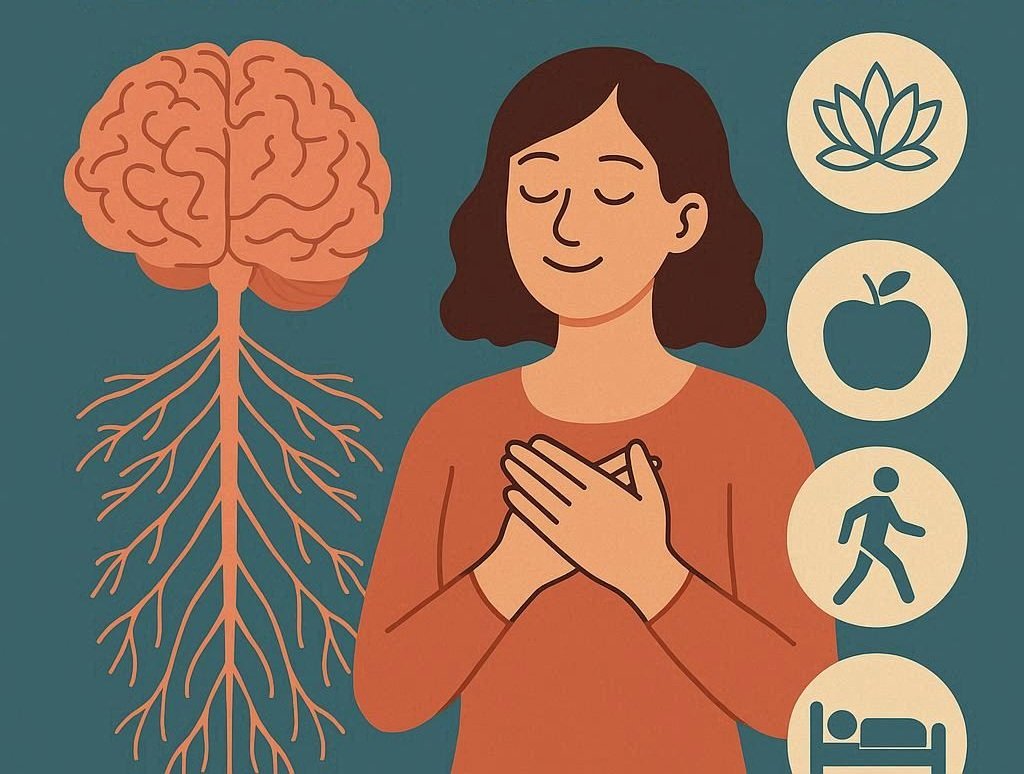
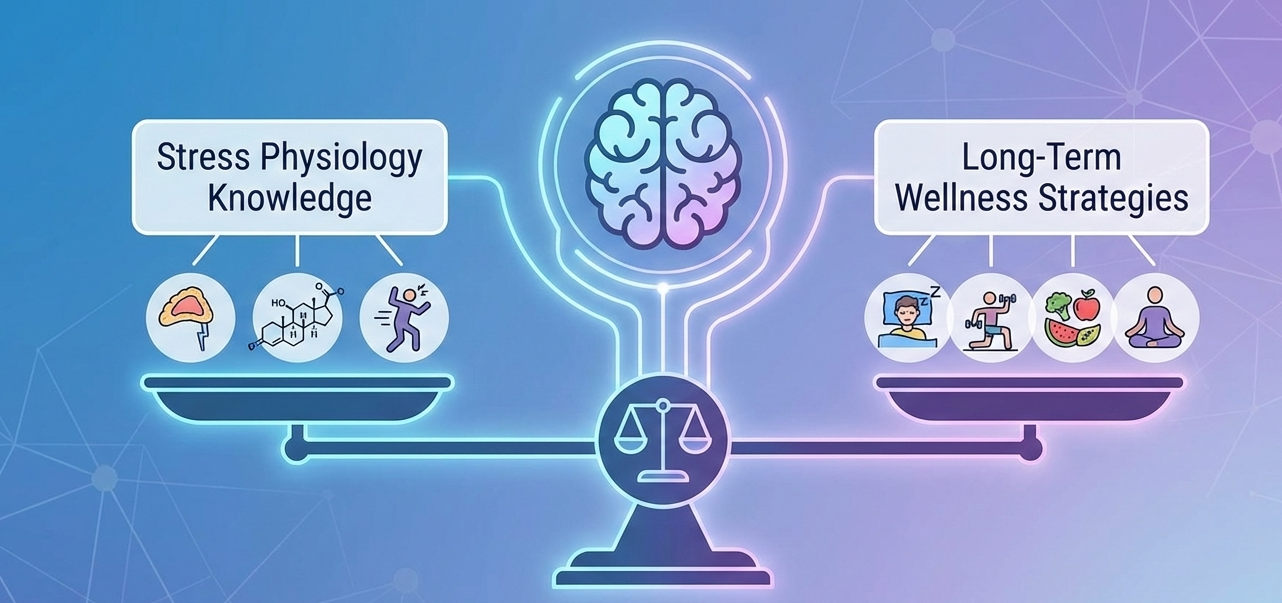
By combining the knowledge of stress physiology with long-term wellness strategies, this article can assist readers to pass the knowledge gap between awareness and action. With help of knowledge about the effects of everyday lifestyle decisions on stress management, people can maintain psychological and physical well-being in the long run and develop resilience in order to live sustainably.
The Physiology of the Stress Response
The process of stress response is controlled mostly by the interplay of the nervous system and the endocrine system. The hypothalamus stimulates the hypothalamic-pituitary-adrenal (HPA) axis when there is a perceived threat leading to the release of stress hormones like adrenaline and cortisol. Immediate action is ready with these hormones that elevate heart rate, raise the level of blood sugar, and heighten attention.
Under normal circumstances, such a reaction dies away quickly. As soon as the observed threat subsides, cortisol will be fed back to the brain to inhibit additional release of hormones and the body will resume normalcy. This equilibrium of the activation and recovery is what is vital to health.
Issues come up when there are continual stressor or perceived inability to control them. In these situations, HPA axis is active over long periods resulting in hormonal imbalance, dysregulation of nervous system and low recovery ability. The stress response needs to be rebalanced which can be achieved by restoring this natural rhythm.
In case of the Stress Response Dysregulation
The long-term stress affects the control of cortisol in the body. The level of cortisol can be sustained or can be erratic instead of adhering to a healthy routine that happens daily. In the long run, the tissues lose their sensitivity to the regulatory activity of cortisol which causes inflammation, fatigue, and immune imbalance.
The nervous system also lacks flexibility. The fight or flight sympathetic system predominates and the rest and repair parasympathetic system is inhibited. This imbalance makes the body always at the alert position, even when resting.
On the psychological level, this dysregulation is presented by irritability, anxiety, insomnia in focusing, and emotional burnout. Physically, it causes sleeping disorders, digestion problems, metabolic imbalance, and risk of diseases.
The importance of Long-Term Rebalancing
Temporary relief of stress can be achieved in the short term but that is not a permanent solution since chronic stress is a physiological imbalance. Rebalancing in the long term aims at reinstating the ability of the body to effectively react to stress and take a complete recovery.
The strategy understands that stress resilience is developed over time by habits and not short-term solutions. Long-term strategies conserve lifespan health by facilitating hormonal balance, regulation of the nervous system, and psychological flexibility.
To provide practical advice based on evidence, knowledge of stress physiology resources involving long-term wellness strategies highlight sustainable approaches that are consistent with the way that the body actually regulates stress.
Habits of Living That Promote Hormonal Balance
Balance of hormones is a key element of stress regulation. Cortisol is known to interact with other hormones such as insulin, melatonin and other reproductive hormones and this implies that when there is an imbalance in one system of hormones the effects are likely to be felt by the other system.
One of the strongest hormonal health controllers is sleep on a regular basis. Sleep helps in maintaining cortisol rhythm whereby levels peak in the morning and reduce in the evening. The irregularity of sleep patterns disrupts this cycle, making one more susceptible to stress.
Hormonal stabilization is also helped by balanced nutrition. Normal sugar levels will help avoid unnecessary steroid attacks, and sufficient intake of micronutrients will help in hormone production and nervous system operation. These practice habits establish a stable internal environment that facilitates the recovery of stress.
Regulation of the Nervous System with the help of day-to-day practice
Homeostasis of stress activation and recovery is controlled by the autonomic nervous system. To balance the stress response, it is necessary to get the parasympathetic system stronger which induces relaxation, digestion, and tissue repair.
Light exercise like walking, stretching, and a restricted movement enhances the flexibility of the autonomic system. These exercises aid the body to transition evenly between the state of activity and rest without being stagnant in any of the states.
The balance of the nervous system is also affected by the way of breathing. The slowness and rhythm of breathing triggers the vagus nerve, which sends the signal of safety to the brain and lowers the stress hormone production. The practices eventually reform the nervous system to react to challenges in a more proportional manner.
Psychological Strength and Interpretation of Stress
Although the events surrounding a person cause stress, they also determine how the events are understood. The perceptions of the brain about the harmfulness of the situation influence the activation of the stress response and to what extent.
Psychological resilience entails the formation of malleability in cognition and affective reactions. Once people are taught to assess the stressors in a realistic instead of catastrophic manner, the unnecessary stress activation is minimized.
Journaling, cognitive reframing, and mindfulness are some of the reflective practices that enhance awareness of internal responses. Such consciousness enables one to break the pattern of stress responses and select more accommodating responses to help maintain balance in the long term.
Physical Exercise: It Should be a Control and Not a Stressor
Physical activity is usually considered as an instrument of fitness only, whereas it is also an influential controller of the stress response. Occasional, regular exercise enhances cortisol control and develops resistance to stress.
In contrast, physical stress caused by exercise is succeeded by physiological recovery which increases the adaptive ability of the body. In the long term, this enhances physical strength and emotional control.
Nonetheless, stress can be aggravated by overdone or untimed physical activity instead of being alleviated by the activity. Rebalancing physical activity and recovery needs and energy levels should be done in the long-term.
Nutrition and Control of Inflammation
There is a close connection between stress that is chronic and low-grade inflammation that further interferes with the process of stress regulation. The patterns of dieting that promote inflammation contain the stress response indirectly.
Fruits and vegetables that are rich in antioxidants, healthy fats, and fiber lead to immune control and metabolic balance. Proper hydration helps the body to circulate and support the work of cells, easing physiological stress.
Instead of limiting diets, long-term-balance to stress should be focused on sustainable nutritional practices that provide the body with the essential nutrients all the time.
Sleep as the Key to Stress Recovery
Sleep is never rest; it is an active restorative process that brings about a balance to the nervous system and hormones. The levels of cortisol decrease, inflammatory processes are balanced, and emotional memories are processed during sleep.
Chronic stress tends to interfere with sleep, which is in a loop of poor sleep causing sensitivity to stress and in turn interfering with sleep. It is necessary to break this cycle in order to rebalance the stress response.
Regular sleep schedules, decreased evening stimulation, and sleep promoting environment can be used to recover healthy sleep habits and enhance stress resilience.
Interpersonal Relation and Emotional Security
Human beings are programmed to be connected. Positive relationships decrease stress by suppressing cortisol and enhancing the number of oxytocin, a hormone that is linked with safety and attachment.
Social connection mitigates stress by changing the brain threat evaluation. The perception of danger decreases due to being supported even in difficult situations, which reduces stress hormone activation.
It is also important to stress that meaningful social interactions and not isolation are beneficial in long-term stress rebalancing and the strengthening of emotional and physiological defences.
Getting off the Ground to Action
The physiology of stress is not the only thing to understand. The fight against the stress response needs to be rebalanced by means of translating knowledge into consistency of action. Daily, small and sustainable behaviors are better than intensive interventions that are occasionally observed.
Wellness strategies are synergistic when they are long-term. Hormone balance, movement, nutrition, and psychological practices are things that sleep aids, help to regulate, control and interpret stress, respectively. The combination of these habits will help normalize the stress rhythm in the body.
The effect of consistency will develop resilience, which makes the stress response not to be destructive, but adaptive.
Defending against ageing: Mental and Physical
Stressful experiences over a long period of time hastens the aging process, aggravates diseases and shortens lifespan. Rebalancing the stress response countermeasures such outcomes in the restoration of physiological flexibility and recovery capacity.
This is a preventive method as opposed to response. By helping to maintain the stress levels prior to the manifestation of dysfunction, people maintain not only their clarity of mind but also physical well-being.
To maintain long-term protection, biological limits of the body should be observed and lifestyle choices made in accordance with the systems of managing stresses.
Conclusion
Rebalancing the response to stress is not about getting rid of stressful situations but rather returning to homeostatic levels of activity and rest. With a combination of stress physiology knowledge with long-term wellness techniques, one will be able to prevent a harmful impact of long-term stress on the body and mind.
The stress response should revert to the purpose of it: a temporary adaptive mechanism and not a permanent load through sustainable habits that help maintain hormonal balance, control the nervous system, and psychological stability. Long-term health and resilience are made possible and sustainable through action.