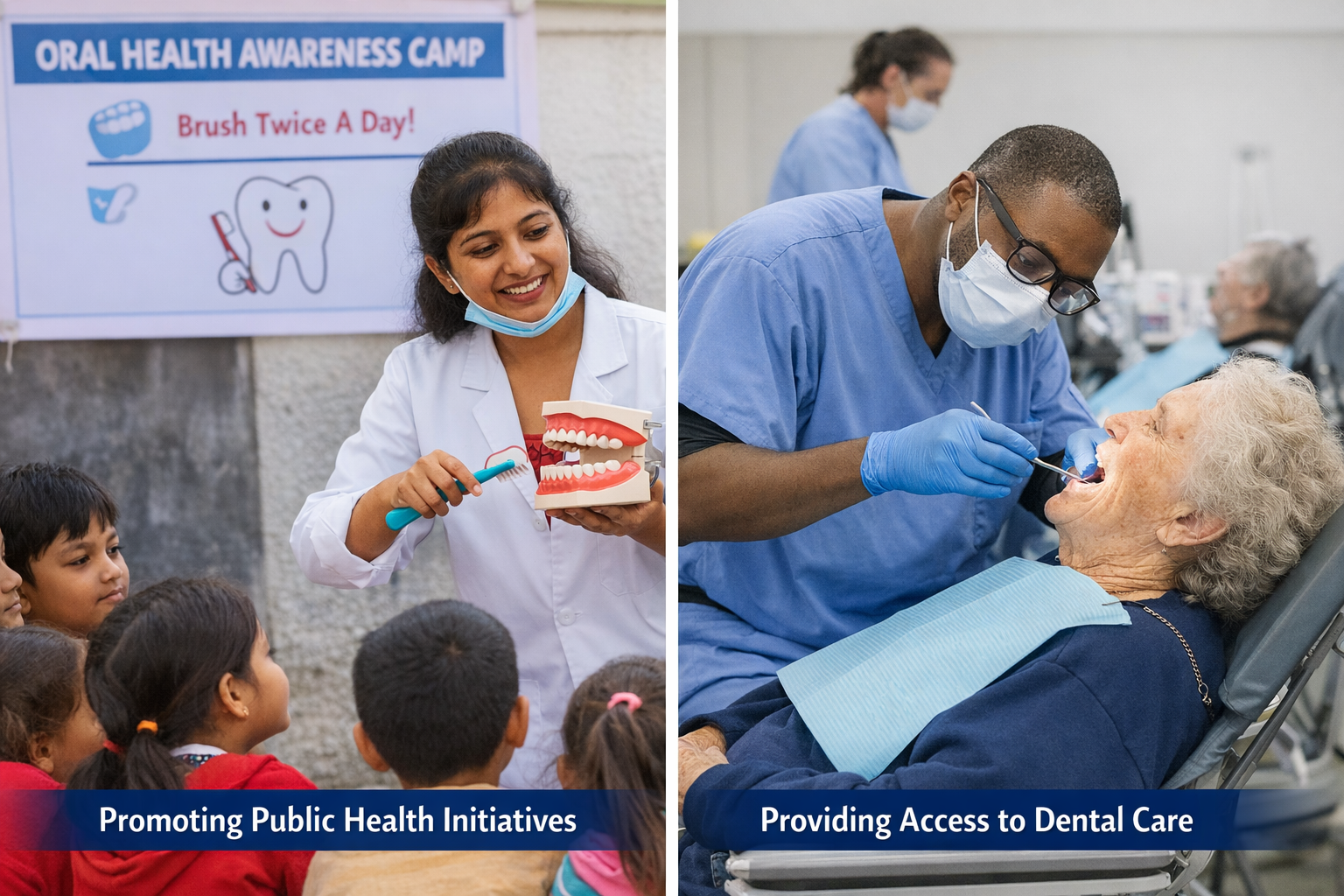
Dentistry has been a profession that has traditionally been considered a clinical profession with the aim of diagnosing, preventing and treating oral diseases at an individual level. Nevertheless, contemporary dentistry is in a wider social context in which oral health cannot be separated in its framework with general health, social justice and community welfare. With an emerging awareness of health inequities and the social determinants of health, the scope of ethical discourse in dentistry is moving more out of the dental chair and on to the broader sphere of public health, care access and its affordability, community involvement and activism.
This paper looks into what constitutes the social aspect of dentistry as it delves into the duties of dentists towards society, their role in enhancing access, their service needs to the community and their ethical obligation in supporting policies that will lead to the well-being of the population. In such a way, it brings to light dentists not as healthcare providers but as socially responsible professionals, who can make up the common good.
Dentistry and Society: The Broaden out the Ethical Lens
The main principles in ethics in dentistry have always been autonomy, beneficence, non-maleficence and justice. The principles traditionally have been implemented as a limited concept based on the individual patient care, seeking informed consent, competent treatment, avoiding harm, and treating the patients equally. Although the above are still the primary elements of the ethical duties of a dentist; it is just one aspect of these duties.
There is a growing awareness in society about oral health as a social health concern and no longer a personal issue. Dental conditions like caries, periodontal diseases and oral cancers are very common, preventable and strongly associated with socioeconomic status, education levels, diet and availability of medical services. As such, the ethical role of dentists is not confined to the treatment of single patients, but it covers the populations and communities. All these wider responsibilities put dental practitioners in a position to reflect on the implications of their skills, behaviors and influence to society in general.
The Role of Dentists toward Public Health
Public health dentistry deals with prevention of oral diseases and oral health promotion on the population level. Morally, dentists should play a role in the health programs in the community that alleviate the burden of diseases and enhance equity. This involves the involvement in prevention programs, health education, surveillance and policy development.
During the initial part of this discussion, we should note the special role of the practice oriented to the health of the population. The awareness of the role of dentists’ responsibilities to public health makes it clearer how dental professionals can address the results at the population level by implementing preventive measures, community-oriented programs, and health promotion activities.
Ethically, the role of public health is very similar to the principle of beneficence, which is seen as acting in the interests of others. Dentists prevent disease by favoring water fluoridation, school based oral health programs, oral screening through vaccination and tobacco cessation programs. Such measures are helpful not only to individual patients, but also to the communities, especially at-risk groups that might not have a consistent access to dental services.
Relationship between Oral Health and General Health
The connection between oral health and general health has been identified by ethically responsible dentistry as inseparable. There is always scientific evidence of the links between oral diseases and systemic diseases like diabetes, heart disease, poor pregnancy and respiratory disease. The neglect of oral health on a societal level may hence widen the general health issues.
It is a moral requirement that dentists work in partnership with other health practitioners in order to encourage interprofessional care. This involves the availing of knowledge, referring to patients in the right way, and involvement in interdisciplinary public health efforts. This type of collaboration facilitates justice in that oral health does not become a periphery part of healthcare systems but rather something that is considered part of general health.
Dental Care and Social Justice
Unequal access to care is one of the highly pressing ethical issues in dentistry. In most communities, both in low and middle-income areas, there exist large segments of the population that have no access to even basic dental care because of either its cost, location, or workforce, or simply lack of awareness. Even in the developed healthcare systems dental treatment is not a universal health provision.
Ethically, this difference is an issue of concern as it brings to mind issues of justice and fairness. As an employee of a privileged profession, dentists possess a moral duty to recognize and deal with these inequities. Individual practitioners are not able to address systemic issues on their own, but they can make a significant contribution to this area by advocating policies and practices that enhance care accessibility.
These include taking part in outreach clinics, charging on a sliding scale where possible, promoting community dental programs and lobbying on the need to include oral health services to the public insurance plan. Such moves also demonstrate the desire to promote distributive justice, i.e. making sure that the fruits of dental knowledge and skills are distributed equally within the society.
Community Service as an Ethical Care
In the ethical identity of dentistry, community service holds a key position. In addition to voluntary charity, community participation is a professional obligation which lies within social accountability. The dentists enjoy the confidence of the population, professional freedom, and specialized training; society, on its part, has a fair share of expectations concerning them.
There are numerous ways of community service, such as free dental service, oral health education in schools, rural outreach programs, and community services to vulnerable populations such as refugees, the aged, and disabled. Such programs not only cover the immediate oral health requirements but they also embrace awareness, prevention and empowerment.
Community service ethically portrays beneficence and solidarity. It enhances the fact that dentistry is not just a commercial service or a business but a profession of care that focuses on humanity. Notably, ethical community service should be respectful to dignity, not exploitative and should be quality of care, irrespective of patients socioeconomic status.
Preventive and Promotional Ethics in Health
Ethical public health practice is based on prevention. Some of the most basic measures that can be taken to help prevent dental diseases include oral hygiene education, dietary counseling, fluoride use, and early intervention. Even when the healthcare systems or market forces are focused on curative and cosmetic treatments, dentists have an ethical responsibility of focusing on prevention.
Promotions of health can be described as the ability to enable individuals and communities to be in charge of their oral health. These comprise culturally sensitive education, effective communication as well as collaboration with schools, community leaders, and policymakers. Dentists can contribute to reducing the long-term misery, medical expenses, and inequality in the society through prevention.
Ethically, preventive dentistry helps underpin non-maleficence through minimizing unnecessary harm and beneficence through enhancing the long-term welfare. It is also in line with sustainability since preventive methods are cheaper and socially friendly compared to reactive methods.
Advocacy and Policy Involvement in Ethics
Dentists can also be the champions of ethical health policies as well as practitioners. Advocacy is the application of professional knowledge and social status in order to impact on the choices that impact the health of the population and access to health care. This can involve work in professional associations, policymaking advice or involvement in the popular debate about health matters.
Some of the areas that the advocacy of ethics is especially relevant are tobacco control, regulation on sugar consumption, occupational oral health safety, and environmental sustainability in the dental practice. Dentists have the obligation to express themselves when the policy or practice is detrimental to the health of the populace or contributes to the inequalities among people.
Advocacy does not mean that an individual has to engage in political partisanship but instead uphold evidence-based, ethically informed views that are focused on the best interests of society. Dentists can facilitate an ethical healthcare context and promote population confidence by participating in advocacy.
Professional Integrity and Trust in the Community
Professional integrity is related to the social responsibilities of dentistry. Dentists are given significantly much autonomy, authority, and respect by the society, which they are supposed to exercise in a responsible manner. The moral behavior in the society as reflected by fair billing procedures, honesty in communication and responsible marketing strengthens the confidence people have in the profession.
Ordinary people may lose trust in the dentists when they act in ways that suggest their profit motive over the lives of the patients or when they fail to uphold their social responsibilities. On the other hand, the obligation to work with the community and to provide ethical suggestions is evident, which reinforces the moral authority and legitimacy of the profession.
A person is not the only one who possesses trust of people. The activities of each dentist would have an impact on the overall perception of the profession in the society. Ethical responsibility is thus not only in regard to personal reputation but also the integrity of dentistry.
Dentistry Education and Ethics
To execute the social responsibilities, education and ethical awareness is needed. Dental training is important in the development of future workforce in their perception of the role to play in society. Clinical dilemmas need not be the only subject in ethics education; it should also encompass public health ethics, social determinants of health, cultural competence, and health policy.
Dental schools can develop a feeling of social accountability by incorporating community-based learning and public health exposure in training programs. This equips the dentists to critically reflect on the role they play in society and to adopt the roles of educators, advocates and leaders.
It is also important to continue with professional development. Ethics is a dynamic process that transforms along with society and dentists should be aware of any new challenges to public health, new technologies, and social demands.
Dentistry: Power toward Social Health
Finally, the ethical obligation towards society by the field of dentistry is an extended perspective of health care as a societal good. Special knowledge of dentists has great potential to increase the quality of life, decrease the suffering, and enhance equity. Professional responsibility and ethical obligation have a role in ensuring that this knowledge is put to good use.
By taking part in a community health program, improving access to health care, caring for the community, and acting ethically, dentists can make societies healthier and fairer. These activities reveal that dentistry has never been a separate field that is restricted to the realms of the private practices, but it is deeply intertwined with the social fabric.
Conclusion
The field of dentistry has much more than an individual scope of ethics, which covers the whole society. The role of dentists in the society as a way of ensuring that everyone has good health, receives proper care, serves the community, and advocates ethics underscores the importance of the profession in enhancing the well being of the society. With such responsibilities adopted, dental practitioners underpin the main ethical principles of beneficence, justice and integrity.
More than ever before, the issue of social responsibility in dentistry has become more crucial due to the existing health inequities and complicated societal issues. Ethical practice in dentistry based on service to persons and communities strengthens the trust of the people and makes oral healthcare play an important role in promoting health and dignity of society on the whole.