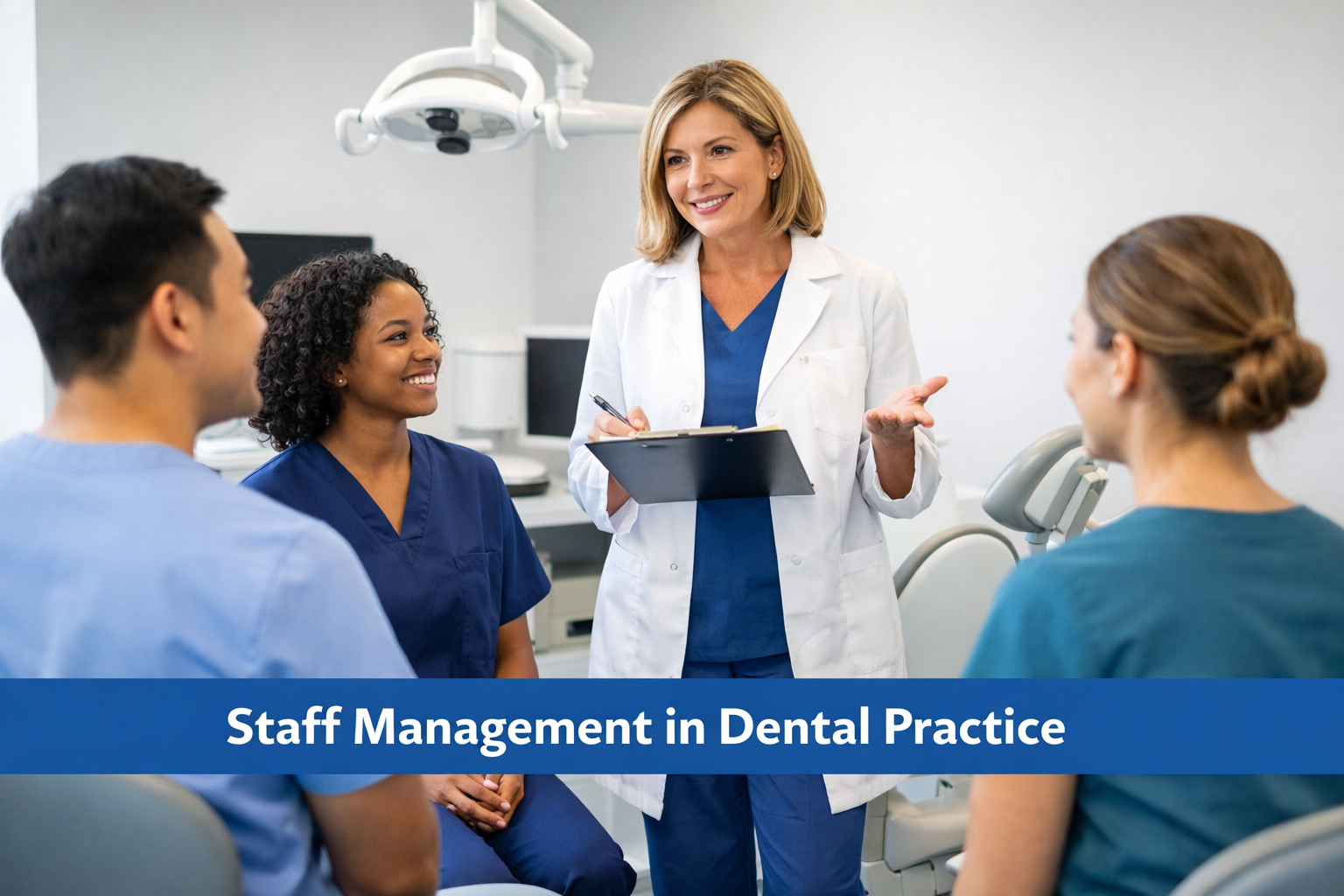
The work of running a dental practice is not limited to patient care based on high quality of care, but also includes the ethical consideration of staff management. Ethical obligations to the dental staff are a key to a professional, respectful and productive working environment. Balancing between leadership responsibilities and observing fairness, dental practitioners are forced to negotiate complicated interpersonal relationships, at the same time, ensuring that ethical decision-making is the main factor in the interaction with the staff. The paper examines the important features of management of staff employed in the dental practice that are fair treatment, professionalism, leadership role and ethical decisions.
Knowing Staff Management in Dental Practice
The topic of staff management in dental practice is not just administrative – it is the implementation of values and ethics of the dental professional. With proper management, all the members of the team, such as dental assistants and the administrative staff members, will feel appreciated, respected, and encouraged in their jobs. Working ethics such as transparency, accountability, and fairness are required in a dental practice, making it flourish.
Dental teams tend to experience special obstacles. The members of the staff can encounter emotionally charged patients, busy timetables, and stressful clinical practices. Ethical personnel management acknowledges these issues and balances them with fair treatment, professional respect and supportive leadership.
This resource on dental team management dental team management resource offers tips on how to manage dental teams effectively to those who might want to get elaborate information on the strategies to implement to have an effective and ethical workplace.
Dental Workplace Fair Treatment
Equal Opportunities and Non-Discrimination
Fair treatment is one of the greatest elements of ethical staff management. All the members of a dental team have the right to work in a non-discriminative environment, regardless of race, gender, age, religion, and other individual traits. Similar treatment is applied in job opportunities including promotions, training and rewarding of achievements.
Even the discriminatory practices albeit in a subtle manner can damage morale, productivity and reputation of the practice. Ethical dental leaders are keen on ensuring that they establish an inclusive environment whereby all people are given equal opportunity in their professional development and acknowledgment.
Open Policies and Practices
Transparency is closely related to fair treatment. Well-defined policies on work hours, payment, and responsibilities of employees are enough to make the employees know their expectations and what the management expects of them. In case of ambiguity in rules, there might occur confusion and disagreements, and this can destroy trust.
Transparent management also includes candor in communication on issues of performance feedback, discipline and expectations in the workplace. The sense of fairness and consistency in decisions will improve loyalty and cooperation when the staff members believe that their decisions are fair.
Workplace Professionalism
Respectful Communication
Professionalism in a dental environment is not only restricted to interactions that exist between the staff and the patients- it goes further to include interactions among staff members. Respectful communication entails listening, using good language as well as positive feedback. Ethical managers will not be favoritistic, gossip, and dismissive as they lead to a toxic work environment.
Conflict management is also required in professionalism. There is never a situation at any workplace without disagreements, however, the way these disagreements are handled calmly, objectively and respectfully is an indication of ethical leadership.
Maintaining Boundaries
Members of the dental team have to collaborate under relatively stressful circumstances in most cases. It is essential to uphold professional boundaries not to have misunderstandings and conflicts. The managers and other staff members must identify the boundaries of personal relationships at the workplace and create a supportive and cooperative atmosphere.
Professional lines of demarcation enable to stick to patient care focus and uphold the integrity of the practice. Staff management ethics fosters the culture in which personal boundaries and professional boundaries are not crossed at the expense of team building.
Dental practices Leadership Responsibilities
Leading by Example
Leading through example is the start of ethical leadership. Dental professionals who show integrity, fairness and accountability lead by example. Words are not always the best way to communicate; as leaders show ethical practices, employees have high chances of following their example.
An example of this would be punctuality, respect of colleagues, and compliance with practice policies, among others, that show concern to ethical standards. Managers who always do the same make a team trust and have credibility.
Empowering Staff
Ethical leadership is also a process of enabling the members of the team to own up and make a meaningful contribution to the practice. Given authority, staff feel appreciated, motivated and dedicated to providing high quality care. The opportunities of professional development, participation in decision making, and promotion of innovation in their jobs may help to achieve empowerment.
The managers need to identify the strengths of individuals and give chances to develop. Employees who are empowered will become more inclined to behave ethically in their turn, which will generate positive feedback in the entire practice.
Ethical Decision-Making in Relationships between Employers and Employees
Striking a Balance between Practice Requirements and Staff Welfare
The ethical decision-making regarding staff management usually entails the compromise between the requirements of the practice and the wellbeing of the employees. As an example, workload allocation ought to be taken into account when setting the schedule to avoid burnout, without interrupting patient care.
Managers have to balance between operations effectiveness and staff welfare. It is important to be driven by ethical considerations rather than financial or convenience driven motives to have a sustainable and motivated workforce.
Counseling in Conflicts and Disciplinary Actions
Any kind of work place is bound to have conflicts. Ethical management involves solving problems quickly, impartially and in a discreet manner. The disciplinary measures are supposed to be founded on objective facts and adhering to the policies that are developed. Managers are not supposed to be biased, preferential, or use punitive action that is not commensurate to the circumstances.
Openness in conflict management and disciplinary measures ensures that the employees are aware that there is integrity in managing work ethics in the workplace and this fosters credibility and responsibility.
Confidentiality and Privacy
One of the ethical tasks is respecting staff privacy. Managers must protect personal information, disclose sensitive issues unnecessarily and keep them confidential when discussing issues at the workplace. Invasion of privacy may hurt relations, reputation, and generate legal complexities.
Developing an Ethical Practice Culture
Promoting Open Communication
An ethical practice culture starts with open communication. Employees need to be free to express their concerns and give feedback as well as report unethical practices without the fear of being punished. Ethical managers promote communication, and they listen to the employee feedback.
Transparency and inclusiveness can be encouraged through regular team meetings, anonymous feedback systems, and open door policies. By making the staff listen, morale is boosted and ethical standards are promoted.
Training and Education
Ongoing education and training strengthens the ethical responsibilities. The employees are to be instructed on ethics and professional conduct at the workplace, as well as conflict resolution. The subjects of the training may be patient confidentiality, professional boundaries and team collaboration.
Training the staff will guarantee that the ethical standards are comprehended, used regularly, and developed in everyday practice.
The Function of Policies and Procedures
Setting up of Effective Rules
Ethical staff management is presented by a set of written policies and procedures. There are also clear guidelines of what is expected in terms of behavior, performance, and professional conduct. Such policies act as a guideline of reference when handling work related problems, which brings uniformity and justice.
The policy also needs to be examined and revised on a regular basis to address any alteration in regulation, workplace relationships, and ethics. A sense of ownership and commitment can also be encouraged by involving the staff in the development and review process.
Supervision and Responsibility
A successful management of staff should be based on the control of the observance of the policies and the responsibility of all the team members. Ethical leaders deal with the violations at all times and would reward exemplary behavior and punish the wrongdoers accordingly. Accountability helps to make sure that the ethical standards do not just exist as aspirations, but are implemented.
Fostering Recognition and Respect
Valuing Contributions
Ethical staff management is based on respect. Every team member, irrespective of the role, should be appreciated and valued by the managers. Depending on the scale of the award, recognition may be formal or informal, like awards or promotions; or verbal or written notes of gratitude.
A sense of appreciation breeds loyalty, motivation and a good working environment. Ethical appreciation motivates employees to be very professional and it enhances a team spirit.
Encouraging Collaboration
Ethical management of staff will encourage team work and not competition among employees. Promoting teamwork, exchanging knowledge and support among each other brings a peaceful working environment where all people strive to achieve common objectives. Teamwork improves patient care, minimizes errors and builds strong professional relationships.
Handling the Ethical Dilemmas within Staff Management
Managing Your High-Stress Situations
Dentistry usually puts pressure on situations, including dealing with an emergency situation or fulfilling high patient expectations. Staff management ethics entail the provision of assistance to team members during such times, guidance, and avoidance of burnout. People in charge must make sure the work load is balanced and resources allocated to deal with stress.
Controlling Conflicting Interests
Misalignment of interests in staff management may also occur including the need to balance between business and employee needs. Ethical decision-making entails openness, equality as well as consultation with the staff where necessary. That is what managers ought to consider as making decisions based on moral values as opposed to convenience or profit.
Constant Reflection and Improvement
Staff management is a continuous process that is ethical. Leaders ought to contemplate their practice, consult and engage in constant improvement. Staying self-conscious and open to change, managers are able to correct cases of ethics failures, increase the workplace culture, and guarantee success in the long run.
Conclusion
This is an ability to manage ethical responsibility towards employees and the dental team which is a key to success in dental practice. Ethical employee management in dentistry practice includes aspects of fair treatment, professionalism and leadership role, ethical decision making and creating a culture of respect and cooperation. This will not only enable the dental practitioners to improve the wellbeing of his staff, but also improve patient care, job satisfaction, and overall reputation of his practice by being ethical in how they interact with their staff.
Leaders in the field of dentistry are expected to be influential, just and transparent to build a positive atmosphere in which employees feel appreciated and encouraged. With the development of effective policies to the encouragement of free communication and appreciation, ethical management of staff provides the basis of a successful, unified, and ethical dental practice.