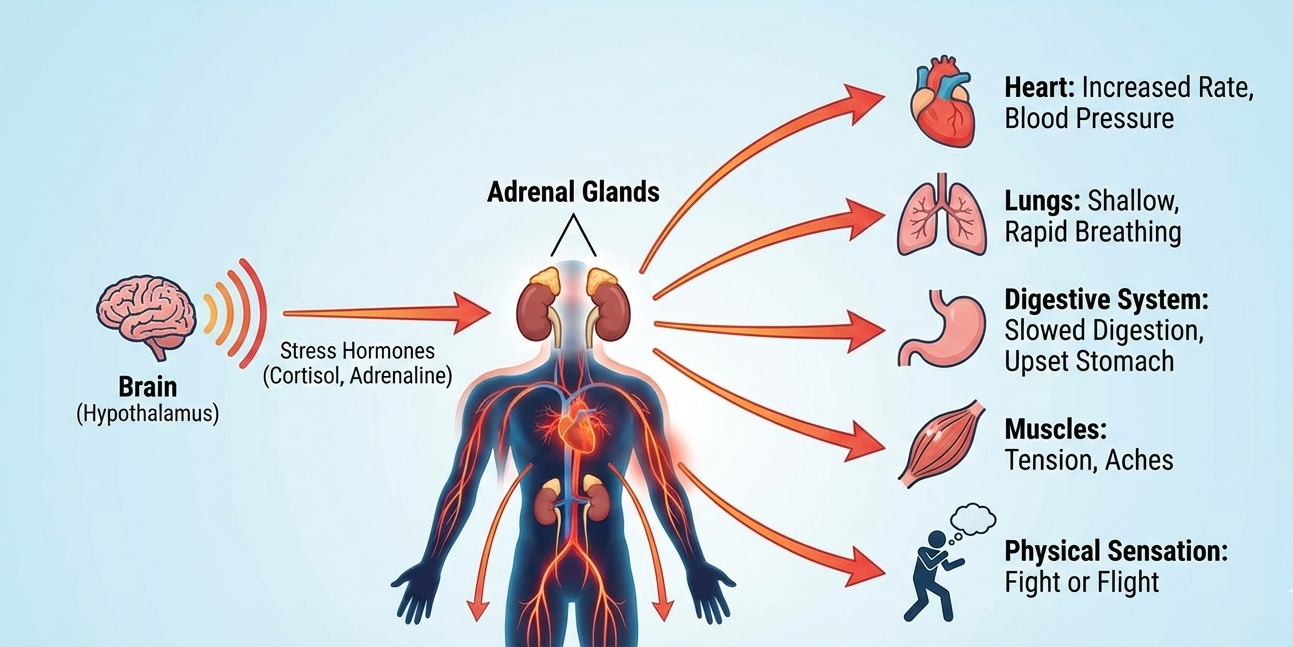
Stress has been described as an experience, whether mental or emotional but most individuals experience it in the body. Common complaints are headaches, tension on muscles, stomach uneasiness, fatigue and tightness of the chest as stressful times come in. These are actual bodily feelings and not perceived illness. The mind and the body are in a close contact, and the impact of psychological stress provokes a sequence of physical responses, which influence almost all body systems.
To comprehend the sensation of stress being physical, it is important to investigate the mechanism of communication between the nervous and endocrine systems in the case of perceived danger. Once the brain realizes stress, it sends messages, which get the body ready to act. Although this reaction is applicable in the short-term scenario, recurrent activation may cause overworking of the body and causes of lasting physical symptoms.
This article describes the biological processes of psychological stress and physical symptoms so that the readers can become aware of how stress is manifested in the body. Knowing these cues, they will be able to react promptly and avoid discomfort related to stress before it evolves into more chronic health issues.
Learning About What it means to be Stressful: A Mind-body Process
The effects of stress are felt all through the body, yet it is initiated in the brain. When an individual feels threatened, frightened, or emotionally strained then the brain sees this as a threat. This perception triggers communication channels which connect the nervous system to the endocrine system so that a well-coordinated body reaction is triggered.
The mind does not differentiate between emotional and physical dangers. The same physiological responses that accompany physical threat can be caused by the looming deadline, unresolved conflict or even financial worry. This is the reason why emotional stress tends to manifest itself physically.
In order to gain deeper insight into such a relationship, one should consider how brain communicates with the body in case of stress and what makes such communication cause any physical reactions.
The Nervous System and the Response to Stress
The initial reaction to stress is through the nervous system. The sympathetic division of the autonomic nervous system is activated when the brain recognizes that it is in danger. This system equips the body to respond quickly by speeding up the heart rate, narrowing the muscles and enhancing alertness.
Meanwhile, the less active system is the parasympathetic nervous system that nurtures relaxation and digestion. This adaptation gives priority to functions of survival and in the process silencing processes that would not be vital to immediate response.
In cases where stress is short-lived, on the completion of the threat, the nervous system returns to normal. However, once there is constant stress, there is an imbalance in this and the body experiences constant physical tension and discomfort.
Stress Response Hormonal Signalling
In conjunction with the activation of the nervous system, hormones are affected by the stress with the help of the hypothalamic-pituitary-adrenal (HPA) axis. It is a system that controls the secretion of stress hormones and this is mainly cortisol and adrenaline.
The hormone cortisol aids in the mobilization of energy by raising the level of blood sugar and the metabolism. Adrenaline raises heart rate and blood pressure and always makes sure that oxygen and nutrients are readily transported to the vital organs. These hormones are needed in the survival in the short term.
In case stress is chronic, cortisol is present over a long period of time. This chronic hormonal prominence disrupts the normal working of the body and causes numerous physical symptoms of stress.
To get a clinical overview of the effects of stress on the body, the reader can consult this source on psychological stress and physical symptoms which lists frequent health effects of stress.
The reason why stress leads to headaches and the tightening of muscles
Muscle tension is one of the most frequent physical symptoms of stress. When a person is stressed, the muscles tighten in readiness of action. In case this contraction continues, then it becomes stiff, sore and painful.
Tension headaches are common in the cases when the muscles of the neck, shoulders, and scalp are strained over a prolonged time. Slowed blood circulation and nerve hypersensitivity of these regions are factors that cause chronic pain.
Unconscious reactions like clenching the jaw and grinding teeth also cause additional strain to the facial muscles, which may cause headaches and jaw pain. These symptoms manifest as a stressed-out response of the body over a long period.
Energy Depletion and Fatigue When Under Stress
Fatigue induced by stress is not merely a consequence of exhaustion of the mind. Chronic stress is something that changes the way of energy regulation on the biological level. High cortisol interferes with the patterns of sleep, and one cannot get a restful sleep.
Stress also enhances energy requirements and compromises energy generation. The muscles will be in a tense position; heart overworks and the brain will be on alert; and this will use up energy. In the long run, such continuous demand causes physical exertion.
Stress-induced fatigue has a tendency of evaporating even after sleep and this is an indication that the body is at the alert position as opposed to recovery.
Gastrointestinal Discomfort and the GutBain Axis
The digestive system is very vulnerable to stress since it is closely related to the nervous system. Stress causes redistribution of blood in the body where the gastrointestinal tract is a slow system.
Stress hormones impact gut motility as well as the population of healthy gut bacteria. It may lead to the development of such symptoms as bloating, nausea, stomach pain, constipation, or diarrhea.
The gut-brain axis enables the emotional states to affect the digestive action directly. Continued stress interferes with this communication and that is why there are persistent gastrointestinal complaints, which get better when stress is treated.
Stress and Strain on Immune System
Stress is chronic and thus immunosuppressive as it inhibits the action of immune cells. In the short run, high levels of cortisol suppress inflammation, but when prolonged, inhibits the ability of the body to combat infections.
This is the reason why people in stress might have frequent illnesses or take long to heal even after a disease. Minor infections can last and the wound healing can be delayed due to poor immune responses.
Physiological signs of immunity are not always considered as stressful symptoms, but because they are direct effects of hormonal and nervous system alterations.
Heart-related Intuitions and Chest Discomfort
The cardiovascular pains that are usually caused by stress include a racing heart, chest tightness, or shortness of breath. The effects of these sensations are the result of heart rate and blood pressure stimulated by adrenaline.
These sensations may become even more terrifying as they are accompanied by muscle tension of the chest area and shallow breathing patterns. Although it is usually harmless, recurrent cardiovascular stimulation exerts tension on the heart and the blood vessels.
It can be understood that these feelings are stress-related and therefore will reduce fear, which in turn serves to continue the stress response.
The Skin, Hormones and Stress Reactions
Internal stress levels are often manifested on the skin. Stress hormones raise the rate of oil production, inflammation, which promotes acne, flare-ups of eczema, and slowing wound healing.
Stress hormone imbalance may also influence growth of hair and skin elasticity. These obvious indications support the fact that stress is not only an emotional problem but also a problem of the body.
Why Physical Stress Symptoms Cannot Be Overruled
The body is overloaded to give physical signs. The disregard of these indicators enables the stress reactions to be so strongly embedded that the chances of chronic pain, gastrointestinal and cardiovascular diseases, and the impairment of the immune system are higher.
Earlier detection of psychological stress and physical symptoms would enable an intervention to be made before long-term harm is sustained. Stress treatment on this level helps to recover and restore the balance of the body systems
Becoming aware of the Stress Signals of the Body
This is because common physical manifestations of stress consist of persistent headaches, pains in muscles, stomach upsets, exhaustion, frequent illness, and sleep disturbances. The symptoms are usually manifested over time, which can be ignored.
The understanding of these cues can assist people to act in advance. Instead of treating the symptoms separately, it is possible to identify the common cause of these symptoms in order to manage stress more efficiently
What to do when under stress in order to prevent chronic stress
To de-stress, it is necessary to tackle psychological and physiological elements. Rest, relaxation, and healthy routines are assisting the nervous system to recover to maintain stress hormone levels.
Exercises lower the tension of muscles and enhance the balance of hormones. Sleep has sufficient rest which refuses nervous system functioning and defends immunity. Breathing and mindfulness methods relax the stress response on a deeper level.
When people react promptly, they are able to avoid physical effects of stress, before it develops into a chronic condition.
Conclusion
Stress is physical since it is physical. Psychological stress triggers biological mechanisms which form the mechanisms to protect the body but when used extensively, the mechanisms result in extensive physical symptoms. In response to chronic stress, headaches, muscle tension, fatigue, digestive problems and immune suppression are not independent entities but rather they are interrelated.
The awareness of the mind-body relationship equips an individual to pay attention to their bodies and act before stress can further degenerate into a chronic condition. When psychological stress and physical symptoms are understood as important indicators, individuals will be able to make informed decisions to restore balance, resilience, and health in the long term.