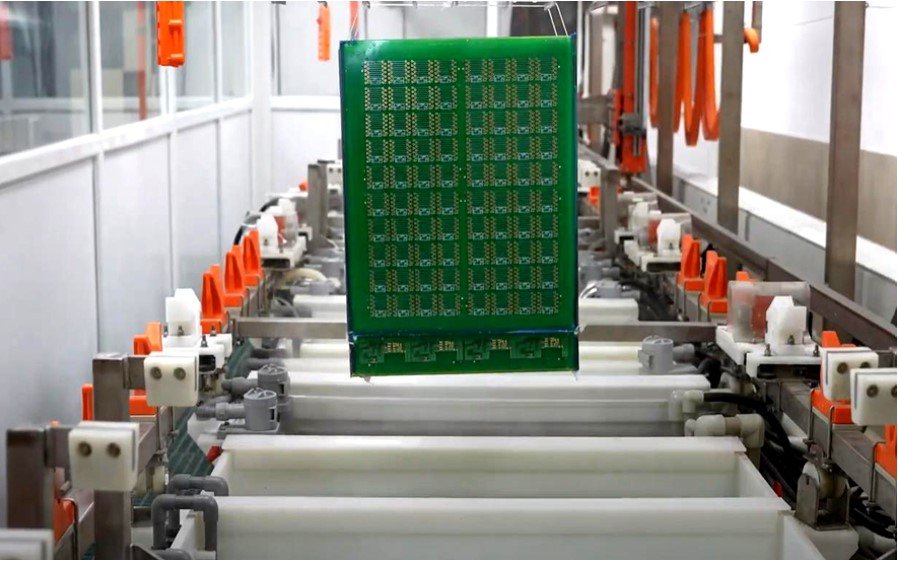
A high speed PCB is specifically engineered to handle fast signal transmission with minimal loss, distortion, and interference. As electronic devices become more powerful and compact, the need for reliable high speed PCB design has increased across industries such as telecommunications, data centers, automotive electronics, medical equipment, and aerospace systems. Unlike conventional circuit boards, a high speed PCB focuses heavily on signal integrity, impedance control, and material selection to ensure consistent electrical performance at high frequencies.
High speed PCB technology is not only about faster data transfer. It is also about maintaining stability, accuracy, and reliability when signals travel at extremely high speeds. Even small design errors can cause reflection, crosstalk, or electromagnetic interference, which can severely impact system functionality.
What Defines a High Speed PCB
A high-speed PCB is typically characterized by signal frequencies where trace behavior must be treated as transmission lines rather than simple electrical connections.
Signal Integrity in High Speed PCB
Signal integrity is the most critical aspect of any high speed PCB. When data rates increase, signals become more sensitive to impedance mismatches and noise. Controlled impedance routing, precise trace geometry, and optimized stack-up design are essential to prevent signal degradation. In a well-designed high speed PCB, signals arrive at their destination with clean edges and minimal distortion.
High Frequency Behavior of PCB Traces
In a high speed PCB, copper traces behave differently compared to low-speed designs. Skin effect, dielectric loss, and propagation delay must be carefully considered. Designers treat traces as transmission lines, calculating impedance values and ensuring uniformity across the board to maintain consistent signal timing.
Materials Used in High Speed PCB
Material selection plays a vital role in high speed PCB performance.
Low-Loss Dielectric Materials
Standard FR4 materials may not be sufficient for advanced high speed PCB applications. Low-loss laminates such as Rogers, Taconic, or high-performance FR4 variants are often used to reduce signal attenuation at high frequencies. These materials help maintain stable dielectric constants, which is essential for predictable signal behavior.
Copper Quality and Thickness
Copper surface roughness and thickness directly affect signal loss in a high speed PCB. Smooth copper finishes and carefully controlled copper weights are preferred to minimize resistance and improve signal transmission, especially in high-frequency designs.
Stack-Up Design for High Speed PCB
The layer stack-up is one of the most important design elements in a high speed PCB.
Controlled Impedance Stack-Up
A high speed PCB stack-up is designed to achieve precise impedance values by controlling the distance between signal layers and reference planes. Power and ground planes are strategically placed to provide stable return paths, reducing noise and electromagnetic interference.
Power Integrity Considerations
In high speed PCB designs, power integrity is closely linked to signal integrity. Proper decoupling, plane capacitance, and low-inductance power distribution help ensure that high-speed components receive clean and stable power during operation.
Routing Techniques in High Speed PCB
Routing strategies significantly impact the performance of a high speed PCB.
Differential Pair Routing
Many high speed PCB designs use differential signaling to improve noise immunity. Differential pairs must be routed with matched lengths, consistent spacing, and controlled impedance to ensure accurate signal transmission.
Length Matching and Timing Control
In a high speed PCB, timing differences between signals can cause data errors. Length matching is used to synchronize signal arrival times, especially in buses and high-speed interfaces such as PCIe, USB, and Ethernet.
Manufacturing Challenges of High Speed PCB
Producing a high speed PCB requires advanced manufacturing capabilities and strict quality control.
Tight Tolerance Fabrication
High speed PCB manufacturing demands precise control over trace width, spacing, and layer alignment. Even minor variations can affect impedance and signal performance. Advanced imaging, drilling, and lamination processes are essential to meet these requirements.
Testing and Validation
High speed PCB testing goes beyond basic electrical checks. Impedance testing, signal integrity analysis, and high-frequency performance validation are necessary to ensure the board meets design specifications. These tests help identify potential issues before the PCB is deployed in real-world applications.
Applications of High Speed PCB
High speed PCB technology is widely used in modern electronic systems where performance and reliability are critical.
Telecommunications and Networking
Routers, switches, and base stations rely on high speed PCB designs to support high data throughput and low latency communication.
Data Centers and Servers
In data centers, high speed PCB solutions enable fast interconnects between processors, memory modules, and storage systems, supporting large-scale computing workloads.
Automotive and Industrial Electronics
Advanced driver assistance systems, industrial controllers, and automation equipment use high speed PCB designs to process data quickly and reliably in demanding environments.
Medical and Aerospace Systems
Medical imaging equipment and aerospace electronics depend on high speed PCB technology for precise data processing and mission-critical reliability.
Future Trends in High Speed PCB
The evolution of electronics continues to push the limits of high speed PCB design.
Higher Frequencies and Data Rates
As technologies such as 5G, AI, and high-performance computing advance, high speed PCB designs must support even higher frequencies and faster data rates. This drives innovation in materials, layout techniques, and manufacturing processes.
Integration and Miniaturization
Future high speed PCB designs will focus on higher integration and smaller form factors while maintaining signal integrity. This requires closer collaboration between designers and manufacturers from the earliest stages of development.
Conclusion
A high speed PCB is the backbone of modern electronic systems that demand fast, reliable, and accurate signal transmission. From material selection and stack-up design to routing strategies and manufacturing precision, every aspect of a high speed PCB must be carefully engineered to achieve optimal performance. Choosing the right high speed PCB manufacturer is crucial for turning complex designs into reliable, production-ready solutions that meet the growing demands of today’s high-performance electronics.