Abstract
The rights of children have gained increased awareness on a global scale because digital media continues to revolutionise the way information is produced, distributed, and consumed. Using the mass media is also important to raise awareness concerning the rights of children, yet they too pose a threat to the safety, privacy and dignity of the children, particularly over the Internet. This paper explains Media and Children’s Rights and the way in which the mass media ought to safeguard and enhance the rights of children in the digital age. It talks of the key issues like children’s representation, child safety on the Internet, media exposure and ethical reporting on minors. The research identifies the duality in the media as a positive supporter of the rights of children and a potential source of harm based on the available academic sources of literature, applicable communication theories, and the qualitative research of the secondary data. The article assumes that the freedom of expression and child protection must be balanced with the assistance of potent ethical theories, regulatory conditions, and media practices connected with children. It makes its recommendations on how media houses ought to be steered to be responsible in their engagement with the concerns of children in the constantly complicated digital world.
Keywords: the rights of children, the responsibility of media, digital media, child protection, ethical journalism
1. Introduction
The topic of media and children’s rights has been at the forefront of global development discourse too, following the presentation of the United Nations Convention on the Rights of the Child (UNCRC), which has defined that children have a right to protection, participation and provision (United Nations, 1989). The perception, interpretation, and application of these rights are dominated by mass media in modern societies. The media influences the views of the population, policy discussions, and institutional responses to issues affecting children by reporting news, producing documentaries and entertainment programs, and through online media (Buckingham, 2011). This has been increased during the digital era, where the content of the media is produced and dispatched faster and in larger volumes than ever before.
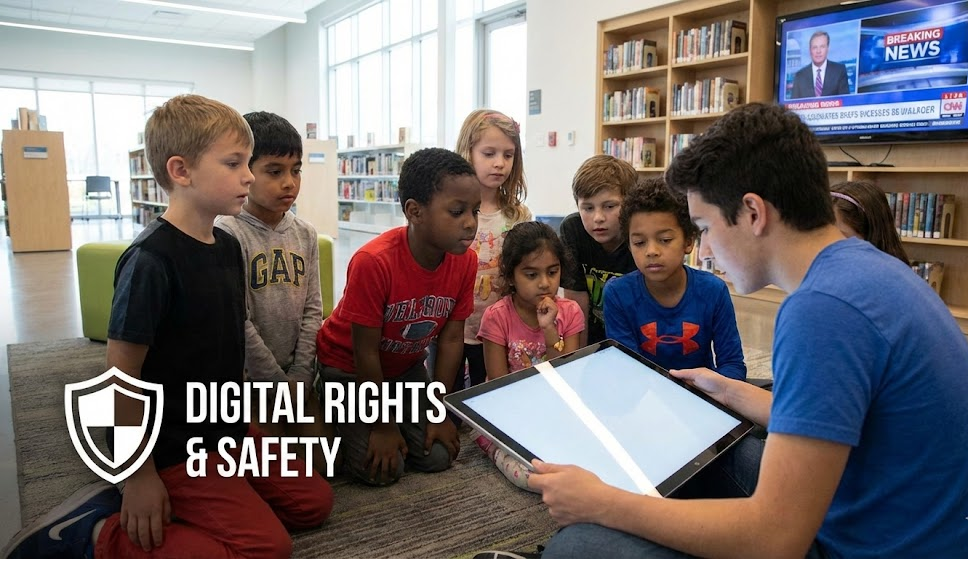
The new rapid increase in digital media has transformed the association of the media with children forever. Children are no longer consumers of television and print journalism since they have become participants of the online space through social media networks, video-sharing platforms, and interactive news platforms (Livingstone, 2014). Even though these sites provide the children with a platform and issues concerning children are raised, the children are confronted with serious threats.
Using the news coverage of the case of child abuse as an example, sometimes some familiar information is disclosed that intrudes upon the privacy of a child, but at other times, the same viral posts on social media will and can permanently expose underage children to the world without their informed consent (Franklin and Parton, 2019). Similarly, a minority of children can be exposed to aggressive or age-inappropriate content because of the algorithm-based content delivery, and it is a tremendous issue in terms of online safety and psychological consequences in the future (Livingstone & Smith, 2014).
In this respect, mass media must play a serious role in making sure that children are not abused as much as in making their rights and well-being better. The media organizations are forced to face complex ethical issues, including how to serve justice to the children, how to report sensitive issues involving minors, and how to balance freedom of speech and the interest of ensuring that the children are not put in harm and that the best interest of the children prevails. In line with the international child advocacy models, the promotion and protection of the rights of children should be the major concern of media practice, particularly when it comes to digital platforms, where the exposure of children grows (Save the Children, 2018).
This paper discusses media and children’s rights and how the mass media is a child guardian and child rights champion in the digital era in protecting and promoting children’s rights. It is attentive to such key issues as child representation, Internet safety, exposure to the media, and ethical reporting. The research, which is anchored on the available literature, relevant theories of communication, and a qualitative review of the secondary information, establishes the prospects and constraints of the mass media in advancing the rights of children alongside the freedom of expression and protection of children.
2. Literature Review
The chapter focuses on media and children’s rights and how the issue of childhood is portrayed in the media. Childhood and the media have been pushed aside as a controversial issue despite the opposing sides to the argument. Social attitudes towards childhood have always been defined through scholarly research on the role of media in that process. The media usually depict children as the victims of some circumstance or social issues and leave little room for children as agents of opinion and rights (Buckingham, 2011). These representations can shape the policy, institutional, and social responses of policymakers, institutions, and individuals to the problems related to children.
The studies also reveal that sensationalism of the misery of children can draw the interest of the people, not only to destroy the dignity and psychological well-being of children (Franklin and Parton, 2019). The ethical representation, including the language, descriptions, and storytelling frames, should be considerate so that it does not strengthen stereotypes or exploit the weakness of children.
2.1 Online Risks and Digital Media
Cyberbullying, unhealthy content, exposure to unhealthy online grooming, and privacy invasion are some of the cyber threats faced by children due to the digital media environment (Livingstone and Smith, 2014). Unlike conventional media, digital media can convey content to children, making it everlasting and infecting the entire world, which can be harmful in the long term.
It has been mentioned that more digital governance and child-centered protection should be implemented to overcome such problems (Third et al., 2017). Media houses that are online are becoming more anticipated to assume the role of safeguarding the rights of children.
3. Theoretical Framework
The present research paper is based on three overlapping theoretical lenses, including Social Responsibility Theory, Agenda-Setting Theory, and Child Rights-Based Approach.
3.1 Social Responsibility Theory
According to Social Responsibility Theory, media freedom should be accompanied by moral responsibility to society, especially concerning the people who are vulnerable in their society, like children (Siebert et al., 1956). The media houses are thus supposed to do the least possible harm and maximize the benefit of the people.
3.2 Agenda-Setting Theory
The agenda-setting theory is the media concept that explains the way media can control the priorities of people by deciding what issues should be given some continuity of coverage (McCombs and Shaw, 1972). Regular media reporting on child protection can take the rights of children to national and international levels.
3.3 Child Rights-Based Approach
The Child Rights-Based Approach acknowledges children as rights holders whose best interests should guide all actions against them (UNICEF, 2018). This framework has been applied to media practice with a focus on participation, protection, and the dignity of children.
4. Methodology
The qualitative research approach used in this article is the analysis of secondary data. There are peer-reviewed scholarly journals, policy frameworks, media codes of ethics, and reports of international child rights organizations. Patterns in the areas of child representation, online safety, and ethical reporting were identified with the help of thematic content analysis. The given strategy allows studying the media responsibility in a holistic way without exposing children to research-related risks.
5. Findings
5.1 Child Representation in Media Materials
It is found that children are often portrayed in adult-focused narratives that focus on emotions more than the views of children. Although it may create awareness, this kind of coverage may not include the voice of children, and their rights to participate may be compromised.
5.2 Internet Security and Media Exposure
The results show that the exposure of children to digital media is on the rise, despite proper protection. The media companies that run online platforms often do not have explicit policies concerning the protection of children in user-created content.
5.3 Reporting and Accountability of the Company in Terms of Ethics
Moral failings were also traced like reporting that reveals information about the minors participating in sensitive cases, which identifies them. The activities are against the professional code and international child rights.
6. Discussion
The results show that the media and children’s rights, the mass media have a two-sided role concerning the rights of children. Ethical media practices can enhance awareness, responsibility, and social change, and unethical practices can lead to permanent damage. Child protection and freedom of expression must be proportional; this needs institutional dedication, professional education, and regulation.
7. Conclusion
During the digital era, the mass media have had more impact than ever on the way the lives and rights of children are portrayed and perceived. Although the media is a strong tool to promote the rights of children, it also poses a great danger in cases of negligence in ethical responsibility. The freedom of expression and ethical practice centered on children is a complex issue that needs to be struck in protecting children in the media space. Media organizations can play a significant role in protecting and promoting the rights of children by embracing rights-based approaches, enhancing accountability, and focusing on the best interests of children.
References
Buckingham, D. (2011). The material child: Growing up in consumer culture. Polity Press.
Franklin, B., & Parton, N. (2019). Social work, the media and public relations (2nd ed.). Routledge.
Livingstone, S. (2014). Children and the internet: Opportunities and risks in a digital world. Policy Press, 18(1), 1–15.
Livingstone, S., & Smith, P. K. (2014). Annual research review: Harms experienced by child users of online and mobile technologies. Journal of Child Psychology and Psychiatry, 55(6), 635–654.
McCombs, M., & Shaw, D. (1972). The agenda-setting function of mass media. Public Opinion Quarterly, 36(2), 176–187.
Save the Children. (2018). Child rights and the media: Putting children first. https://resourcecentre.savethechildren.net/document/child-rights-and-media-putting-children-right
Siebert, F. S., Peterson, T., & Schramm, W. (1956). Four theories of the press. University of Illinois Press.
Third, A., Bellerose, D., Dawkins, U., Keltie, E., & Pihl, K. (2017). Children’s rights in the digital age. UNICEF Office of Research.
UNICEF. (2018). A child rights-based approach to media and communication. UNICEF.
United Nations. (1989). Convention on the Rights of the Child. United Nations General Assembly.