Growth and development are lifelong processes which start even before a child is born. The human body transforms in an astonishing amount of physical, mental, and emotional transformation since the period when the fertilized cell multiplies to become a fully grown adult. These transformations are not spontaneous, they are well controlled by the chemical messengers called hormones. Hormones are known to coordinate the functions of the cells, tissues and organs in such a way that growth occurs at the appropriate rate and development occurs in the normal pattern.
Of the large number of hormones that are utilized in human physiology, there are those whose functions are particularly important in the growth and development. These are growth hormones, thyroid hormones, insulin, and sex hormones. Due to the release of these hormones in their appropriate amounts and at the right times, normal growth and development is achieved. Nevertheless, this process may be disturbed due to hormonal disbalances causing retarded growth, developmental abnormality or even health-related problems that can continue into adulthood.
This article focuses on the role of hormones in controlling growth and development of the human body, how the most important hormones operate in simple terms and how hormonal imbalances may influence normal development.
Hormones and the Endocrine System
The hormones are chemical substances produced by the endocrine glands. Such glands are the pituitary, thyroid, pancreas, adrenal glands as well as the gonads (ovaries and testes). Hormones are released into the bloodstream and once they reach a particular target organ they stimulate a response that may be cell growth, tissue repair or metabolic modification.
Hormones tend to have long-term effects as compared to nerves, which are fast acting in a short period of time. This causes them to be perfect regulators of the long term processes such as growth, puberty and general development. The hormonal cues are of particular significance in childhood and adolescence, during which the body is undergoing rapid changes.
Growth Hormone in Physical Development
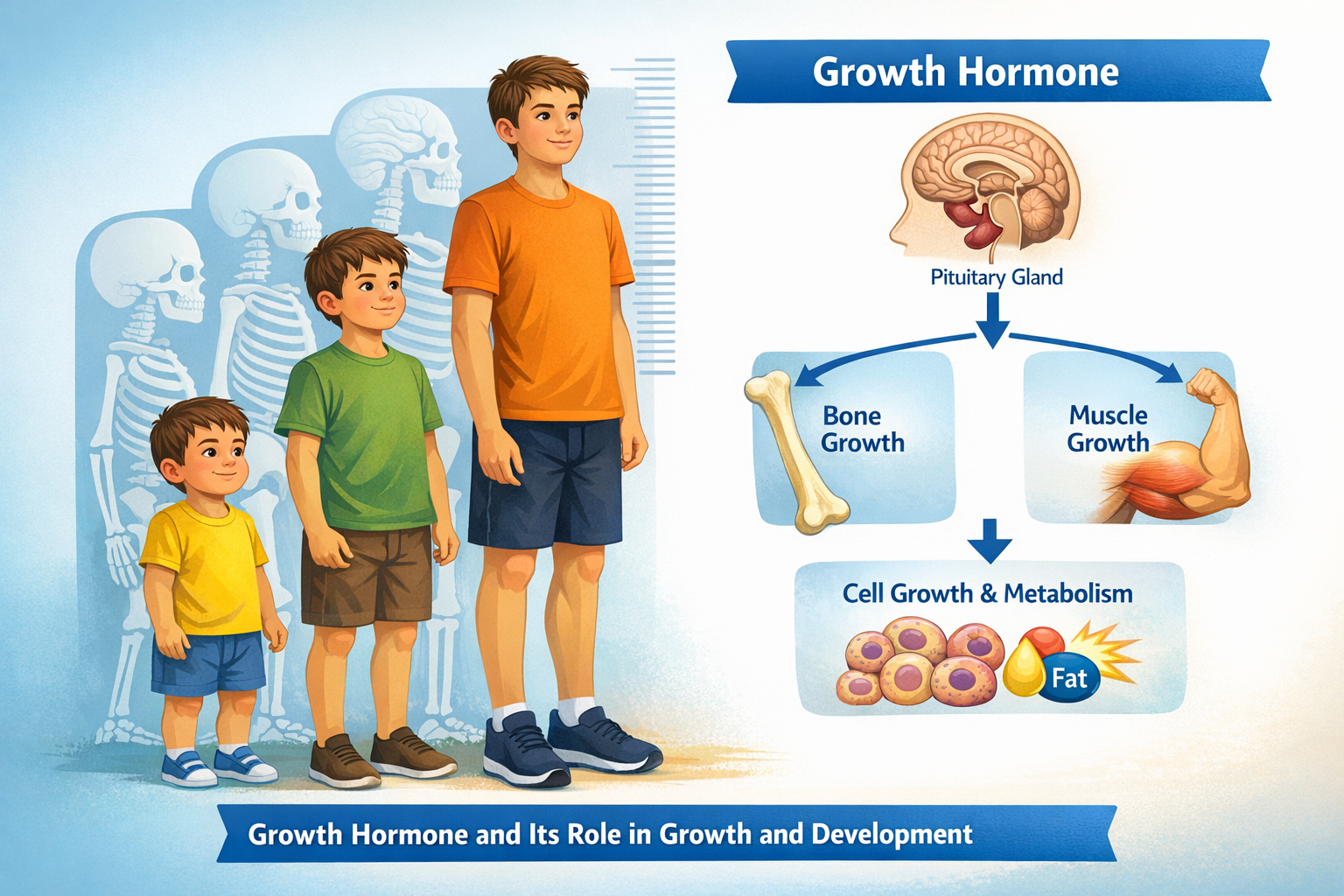
Growth hormone also called somatropin is one of the most significant regulators of human growth. The pituitary gland, which is a small yet effective gland, is situated at the bottom of the brain to produce it.
Growth hormone promotes cell division and protein synthesis as well as stimulates the growth of bones and muscles. It has a significant part in height growth in childhood and adolescence as it acts on the plates of long bones. It also facilitates muscle building and maintenance of good body composition because it determines the body use of fats and carbohydrates.
Growth Hormone throughout the Life Span
During childhood and puberty, growth hormone is at the highest levels as there is rapid increase in physical growth. The body will also secrete more of this hormone during sleep and more during deep sleep which is the reason why a growing child needs adequate rest.
Growth hormone still works in adults, but the effects are no longer height-enhancing but tissues and organs-sustaining. It helps to maintain muscle weight, skeletal health, and energy expenditure. A slow decrease in the levels of growth hormone with age is normal and is one of the factors that are linked to aging.
Growth Hormone Imbalance Effects
Inadequate production of growth hormone in childhood may lead to a retarded growth or height. Children with this condition can be of normal intelligence but develop at a slower rate than the rest.
Conversely, growth hormone when produced in excess could cause abnormal growth. It can make children too tall whereas in adults it can result in unnatural swelling of bones and tissues. These examples demonstrate that it is important that hormonal regulation is accurate to achieve healthy development.
Thyroid Hormones and their Role in Development
Another important element in the growth and development is the thyroid hormones, which are produced by the thyroid gland in the neck. The two primary thyroid hormones are used to control the metabolism which is the process through which the body is able to convert food into energy.
Significance of Thyroid Hormones during Early Life
Thyroid hormones play a crucial role in development of the brain during the moments of pregnancy and early childhood. They affect the development of brain cells and cognitive abilities. Normal learning capability, coordination and sensory development are achieved when thyroid levels are adequate during infancy.
Thyroid hormones in children and adolescents interact with growth hormones to stimulate normal development of bones and physical development. They make sure that tissues are available to be developed and they also make sure that developmental milestones are achieved in good time.
Thyroid Hormone Imbalance and Development Impacts
Children who lack thyroid hormones may experience retarded growth and development. Those children may develop fatigue, gain weight and learning problems. Extreme childhood deprivation may have implications in mental development.
Overabundance of thyroid hormone is less prevalent but poses a risk to development as well by causing excessive metabolism resulting in weight loss, temper tantrums and abnormal body growth patterns.
Insulin and Its Action in Growth and Energy Balance
Insulin is a pancreatic hormone that is mostly recognized to control blood sugar. Nevertheless, it is also very significant in growth and development.
Insulin as a Growth-Supporting Hormone
Insulin assists the cells to absorb glucose that is a significant source of energy. The increasing tissues, particularly the muscles and bones need a continuous supply of energy. Protein synthesis, which is necessary in the growth of new cells and tissues, is also promoted by insulin.
Normal weight gain and muscle development and the physical health of children and adolescents in general are supported by adequate insulin functioning. It collaborates with growth hormones in order to make sure that nutrients are effectively utilized.
Implications of Insulin Imbalance.
Growth and development may be influenced when there is a defect in the production or activity of insulin, as is the case in diabetes. Unregulated blood sugar can decrease the amount of energy that growing tissues can receive. In the long-run, this may disrupt normal physical growth and well-being.
Sex Hormones and Developmental Puberty
Sex hormones are principal in growth and development in teenage years. Estrogen and progesterone in women and testosterone in men are considered to be the main sex hormones. These are the hormones that are produced by the ovaries and testes respectively.
Sex Hormone Role in Puberty
In puberty, sexual hormones cause the secondary sexual characteristics to develop. In men, testosterone stimulates muscle bulk, voice deepening and hair growth. Estrogen in females facilitates the growth of the breast, broadening of the hips and the onset of the menstrual period.
Bone growth is also directed by sex hormones. They lead to the swift increase in height experienced during adolescence and subsequently lead to closing of the growth plates which occurs after the height growth has peaked.
Hormonal imbalance in Adolescence
In case of late or a lack in the production of sex hormones, puberty might be postponed, which will influence physical and emotional development. On the other hand, there is early or over release of hormones resulting in premature puberty that could end the total growth period and affect the ultimate adult height.
Hormonal Interaction during Growth and Development
The process of growth and development does not rely on the action of one hormone. They are rather the product of the joint actions of several hormones. There is interaction between growth hormone, thyroid hormones, insulin and sex hormones in the regulation of metabolism, tissue growth and maturation.
As an example, growth hormone promotes the growth of the bones, yet the thyroid hormones guarantee the availability of energy to this process. Insulin aids in the absorption of nutrients and sex hormones are responsible in refining the growth in adolescence. The complexity and accuracy of hormonal control is emphasized in this coordination.
Hormonal Imbalance and its Effect on Normal Development
Hormonal imbalance may be a genetic, illness, poor nutrition or endocrine gland damage. Excessive or insufficient levels of hormones are likely to interfere with normal growth and development.
Hormonal defects may result in retarded growth in children, maladaptation of body proportions or retarded puberty. Imbalance can have an impact on emotional development and self esteem in adolescents besides physical transitions. These conditions can be managed and assist healthy development by its early detection and appropriate medical care.
Conclusion
Human growth and development cannot be achieved without hormonal control. From the early stage of a person up through adolescence to adulthood, hormones determine the physical transformation of the body, energy consumption, and maturation. Growth hormone aids in growth of height and tissue and thyroid hormones largely maintain metabolism and brain development, insulin aids proper nutrient utilization, and sex hormones promote puberty and reproductive maturity.
Growth and development occur normally when there is a balance in the functioning of these hormones. The impact of the imbalance can be dramatic, which is why the idea of hormonal health should be emphasized. The appreciation of the role of hormones in controlling growth and development can be used to emphasize the finesse in the coordination that occurs in the human body and the importance that the endocrine system plays in ensuring a healthy life.