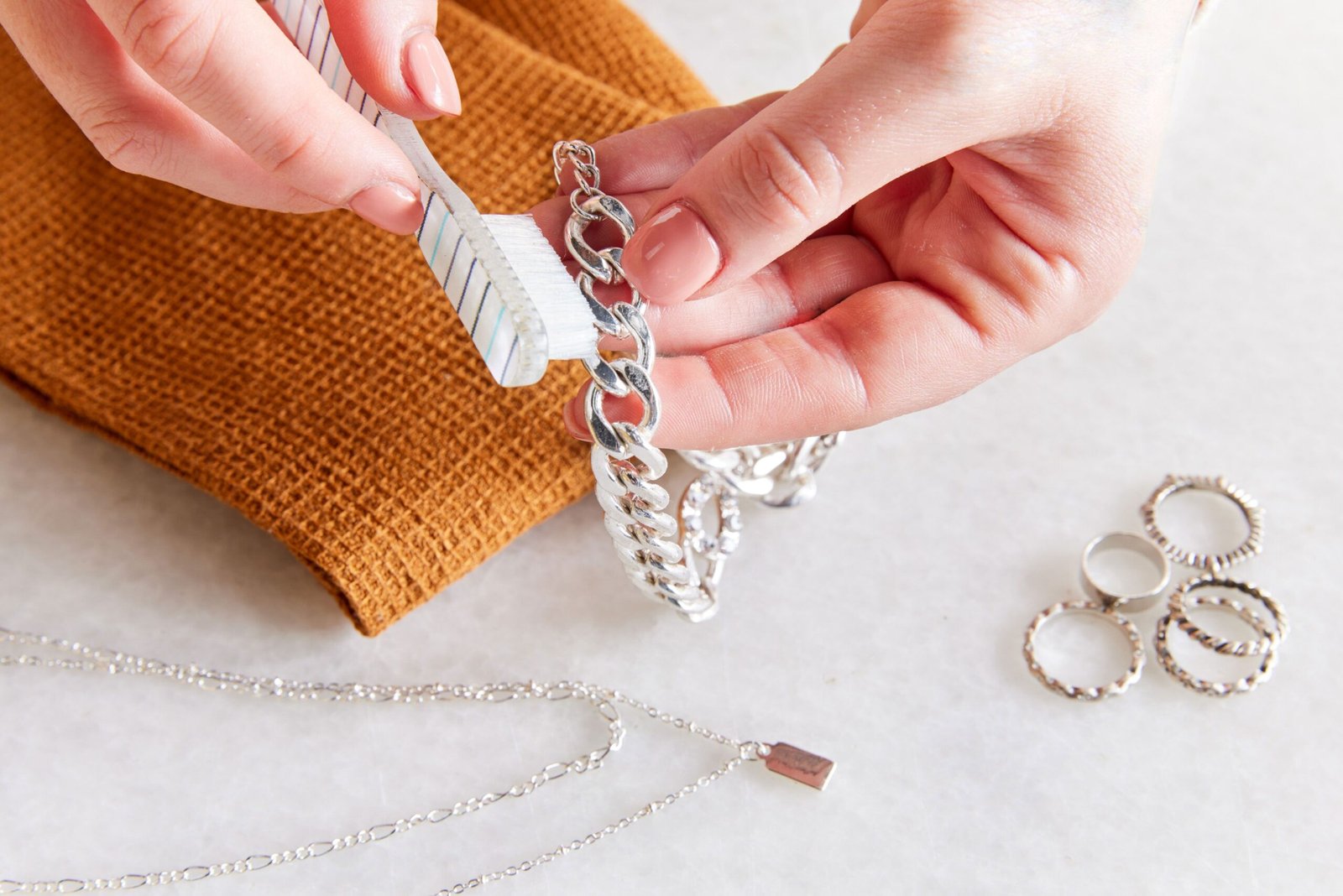
There are few things in a jewelry box as versatile and timeless as sterling silver. Whether it’s a delicate chain passed down from a grandmother, a chunky statement ring, or a simple pair of everyday studs, silver adds a cool, elegant luster to any outfit. However, every silver owner knows the inevitable downside of this precious metal: tarnish.
One day your jewelry is gleaming like moonlight; the next, it has developed a dull, yellowish, or even black coating. Before you panic, it is important to understand that tarnish is not a sign of poor quality. In fact, it is the chemical reaction of the copper alloy in sterling silver reacting to sulfur and moisture in the air. It is a natural process, but fortunately, it is also reversible.
If you are looking for sterling silver jewelry cleaner tips, you have come to the right place. From high-tech commercial solutions to pantry staples found in your kitchen, there are several ways to restore that brilliant shine. Below, we explore the most effective methods, complete with the pros and cons of each, to help you decide which route is best for your beloved pieces.
Method 1: The Aluminum Foil and Baking Soda Bath
This is perhaps the most popular DIY method because it feels a bit like a science experiment and is incredibly effective for pieces with intricate crevices. It uses an electrolytic reaction to transfer the sulfur (tarnish) from the silver to the aluminum foil.
How to do it:
- Line a bowl or baking dish with aluminum foil, shiny side up.
- Place your silver jewelry on the foil.
- Sprinkle a generous amount of baking soda over the jewelry (about 1 tablespoon per cup of water).
- Pour boiling water into the bowl until the jewelry is fully submerged.
- Let it sit for 2 to 10 minutes, depending on the severity of the tarnish. You might smell a sulfurous “rotten egg” odor—that means it’s working!
- Remove the jewelry with tongs, rinse under cool water, and dry with a soft cloth.
Pros:
- Deep Clean: excellent for chains and filigree where a polishing cloth can’t reach.
- Cost-Effective: uses cheap household ingredients.
- No Elbow Grease: the chemical reaction does the scrubbing for you.
Cons:
- Risk to Gemstones: The heat and chemicals can damage soft stones like opals, pearls, and turquoise.
- Patina Removal: If your jewelry has “intentional tarnish” (oxidized details added by the designer for contrast), this method will strip it away, making the piece look flat.
Method 2: Silver Polishing Cloths
For those who prefer a safer, more mechanical approach, a specially treated silver polishing cloth is a must-have tool. These cloths are impregnated with anti-tarnish agents and mild abrasives.
How to do it:
Simply rub the jewelry with the cloth. You will see black residue appearing on the cloth, which is the tarnish being removed. Continue buffing until the shine returns.
Pros:
- Safe for Gemstones: Since you control exactly where you rub, you can avoid damaging sensitive stones.
- Preserves Design: You can polish the high points while leaving the darkened recesses alone, maintaining the depth of the design.
- Convenience: No water or setup required; perfect for a quick touch-up before heading out.
Cons:
- Labor Intensive: Heavily tarnished items or long chains require significant scrubbing.
- Hard to Reach Areas: A cloth cannot clean inside tiny chain links or deep engravings effectively.
Method 3: Commercial Liquid Silver Dip
If you visit a jewelry store, you will likely see jars of liquid cleaner. These are powerful chemical solutions designed to strip tarnish instantly.
How to do it:
Dip the jewelry into the tray provided in the jar, usually for no more than a few seconds. Remove immediately, rinse thoroughly with water, and dry.
Pros:
- Speed: It is instantaneous.
- Uniformity: It cleans every surface the liquid touches.
Cons:
- Harsh Chemicals: These dips can be corrosive. Overuse can eventually make the silver look microscopic and “pitted,” which actually makes it tarnish faster in the future.
- Smell: They often have a strong, unpleasant chemical odor.
- Health Hazard: requires good ventilation and careful handling to avoid skin contact.
Method 4: The Soap and Water Routine
Sometimes, your jewelry isn’t chemically tarnished; it’s just dirty from oils, lotions, and dust.
How to do it:
Mix a few drops of mild dish soap (phosphate-free is best) with warm water. Dip a soft microfiber cloth or a very soft-bristled toothbrush into the suds and gently wash the silver. Rinse and dry immediately.
Pros:
- Gentle: The safest method for almost all jewelry, including costume pieces and those with stones.
- Removes Grime: Excellent for removing the dull film caused by skin oils and cosmetics.
Cons:
- Does Not Remove Heavy Tarnish: This cleans dirt, but it won’t reverse a heavy oxidation chemical reaction.
Method 5: Toothpaste (The Old School Hack)
This is a controversial method, but one that has been used for decades. The grit in toothpaste acts as an abrasive to scrub away tarnish.
How to do it:
Apply a small amount of non-gel, non-whitening toothpaste to a soft cloth or toothbrush. Rub gently on the silver. Rinse thoroughly with warm water and dry.
Pros:
- Accessibility: Everyone has toothpaste at home.
- Effective on Scratches: Can sometimes buff out very minor hairline scratches.
Cons:
- Too Abrasive: Many modern toothpastes contain baking soda or whitening agents that are too harsh and can scratch the surface of high-polish silver.
- Residue: Paste can get stuck in prongs and crevices, hardening like cement if not rinsed perfectly.
Prevention: The Best Medicine
While knowing how to clean silver is vital, preventing tarnish is even better. Here are three golden rules (or silver rules!) to follow:
- Wear It: Believe it or not, the oils in your skin can help keep silver shiny. Constant friction keeps the tarnish at bay.
- Storage: Store silver in an airtight container or a Ziploc bag. Air is the enemy. You can also add anti-tarnish strips or silica gel packets to absorb moisture and sulfur.
- Chemical Avoidance: Put your jewelry on after you have applied perfume, hairspray, and lotion. Avoid wearing silver in chlorinated pools or hot tubs, as the chemicals will turn the metal black almost instantly.
Frequently Asked Questions
1. Can you use jewelry cleaner on sterling silver?
Yes, but you must be careful. “Jewelry cleaner” is a broad term. You should specifically use cleaners labeled for “Silver” or “Sterling Silver.” General cleaners formulated for gold, diamonds, or platinum may not be effective on silver tarnish, or conversely, could contain chemicals that are too harsh for silver alloys. Always check the label to ensure it explicitly states it is safe for silver.
2. How often should I clean my sterling silver?
There is no set schedule, but generally, you should clean it whenever it starts to look dull. For pieces you wear daily, a quick rub with a polishing cloth once a week is usually sufficient. If you are using harsh chemical dips, limit this to once or twice a year to avoid damaging the metal surface.
3. Why did my silver turn black so quickly?
Silver turns black due to exposure to sulfur. If it happened rapidly, you likely came into contact with something high in sulfur. Common culprits include wool clothing, rubber bands, latex gloves, certain foods (like eggs, onions, and mayonnaise), or even high humidity in the air. Additionally, some people’s body chemistry is more acidic, which can cause silver to tarnish faster.
4. Is it safe to shower with sterling silver jewelry?
Water itself generally isn’t the problem; it is the soaps, shampoos, and conditioners that can leave a residue, making the silver look dull. However, shower water is fine compared to pool water or hot tubs, which should always be avoided. The best practice is to take it off to ensure it stays shiny longer.
5. Can I use vinegar to clean silver?
Yes. A mixture of white vinegar and baking soda is a popular DIY cleaning method. Soaking silver in a solution of 1/2 cup white vinegar and 2 tablespoons of baking soda for two to three hours can remove tarnish. However, like other submersion methods, be cautious if your jewelry has gemstones or pearls.
6. Does sterling silver rust?
No, sterling silver does not rust. Rust is a reaction specifically involving iron. However, sterling silver does oxidize or tarnish. While rust eats away at metal and destroys it, tarnish acts as a coating on the surface that can be polished off without damaging the structural integrity of the piece.
7. Is sterling silver real silver?
Yes. Pure silver (99.9%) is too soft to be used for functional jewelry; it would bend and break easily. Sterling silver is an alloy consisting of 92.5% pure silver and 7.5% other metals (usually copper) to provide durability. This is why you will often see the “925” stamp on sterling silver pieces.
8. What is the safest way to clean silver with pearls?
Pearls are organic and extremely porous; they can be destroyed by vinegar, ammonia, or commercial dips. The safest way to clean silver jewelry that features pearls is to use a mild soap and water solution on a soft cloth, carefully wiping the metal parts while avoiding the pearl. Never submerge pearl jewelry in water or chemicals.
Source: Malisse