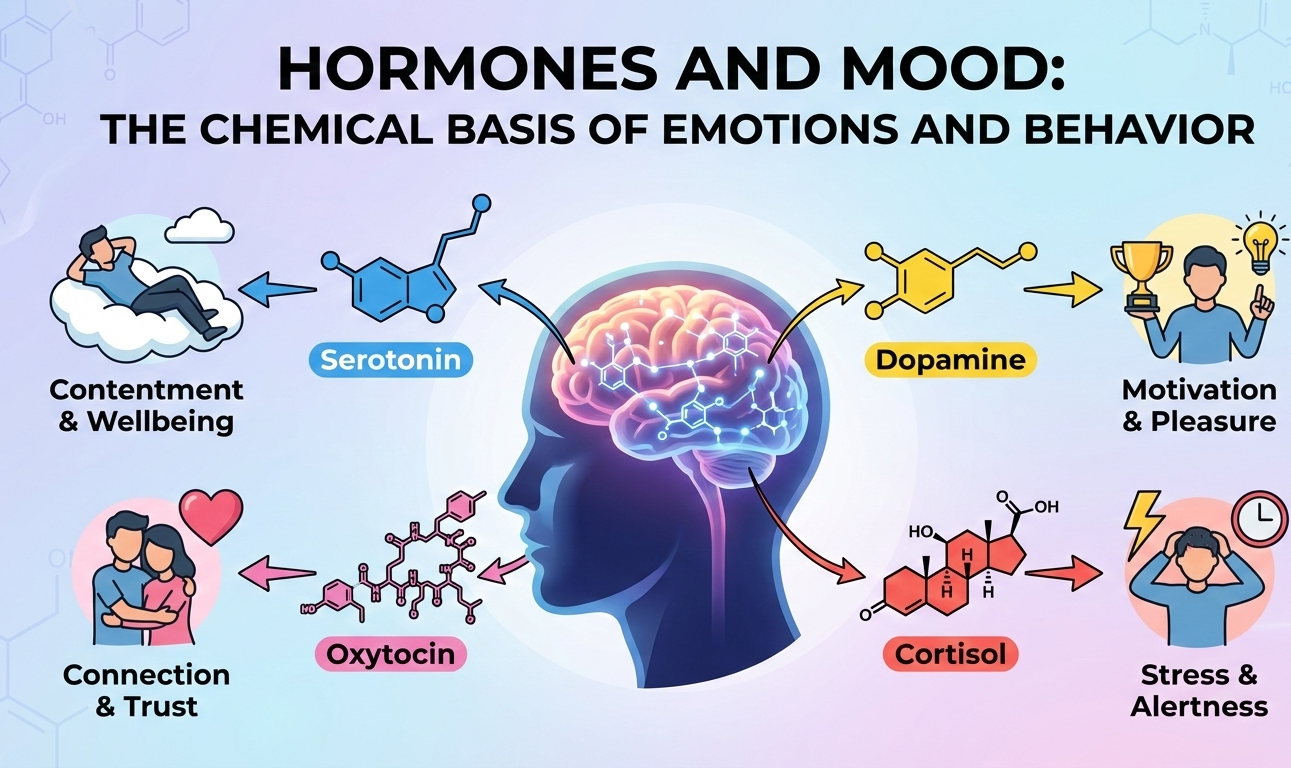
Chemical processes that take place in the body have a great impact on human emotions and behaviour. Although the thoughts, experiences, and environment have critical roles in determining the way people feel and behave, hormones are the biological basis of emotional behaviour. These neurotransmitters affect the stress levels, happiness, motivation, concentration, and emotional strength. The knowledge of the hormones and mood allows to explain why emotional condition may vary quickly and why the long-term disorders may influence psychological well-being.
The hormones circulate and interact with the brain and other organs, and they determine the response of emotions and behavior patterns. Under a balanced amount of hormones, people are expected to feel emotionally stable and psychologically well. But the hormonal balance may be disturbed and results in mood swings, anxiety, lack of motivation, or chronic stress. A discussion of the effect of hormones on emotional well-being is an important contribution to the understanding of the biological nature of emotional as well as the behavior in our daily lives.
The Relationship between Hormones and Emotional Well-Being
Emotional well-being describes the capacity to control emotions, deal with stress and positively perceive life. Hormones are critical in the regulation of these emotional states of interacting with the nervous system and the brain chemistry. Endocrine system releases the hormones which directly influence the mood-regulating parts of the brain, such as pleasure, fear, and emotional control parts.
Hormonal equilibrium enables the emotions to react correctly to the occurrences in life. Emotional responses can either be overdone or underdone in case the balance is disturbed. This understanding of this relationship shows the value of hormonal health to the emotional and mental stability.
Readers can visit this elaborate discussion of how mental health is affected by hormone imbalances and how hormone imbalances affect emotional wellbeing.
Serotonin: The Emotional Stability Hormone
One of the most significant hormones that affect mood is serotonin. Serotonin is also called a feel-good chemical and helps one feel calm, emotionally stable, and contented. It is important in controlling mood, sleeping, eating, and social behaviour.
When serotonin is sufficient, it gives the person an emotional sense of wellness and sharpness of mind. Low levels of serotonin can result in sadness, irritation, or lack of concentration in people. Mood disorders and emotional instability have been linked to long term serotonin imbalance.
Serotonin is also beneficial in emotional regulation since it assists the brain to cope with stressful conditions. This hormone helps people to react rationally and not to act on the spur of the moment in emotionally difficult circumstances.
Dopamine and Motivation
Dopamine is greatly related to motivation, pleasure, and reward. It strengthens behaviours by producing a sense of satisfaction upon the attainment of goals or by participating in activities that are pleasurable. Dopamine stimulates concentration, motivation and the desire to work on worthwhile activities.
Good balance of dopamine facilitates motivation and emotional interest. In situations where there is a low concentration of dopamine, the individual might experience lack of motivation, disengagement, or even be emotionally flat. Conversely, high levels of dopamine activity may cause impulsive behaviour and emotional lack-of-control.
The motivation of dopamine defines how hormones directly determine the behaviour and the emotional choice.
Stress Response and Cortisol
Commonly referred to as the stress hormone, cortisol is widely used. It is secreted by adrenal glands during stress whether physical or emotional. Cortisol is very important to the body to assist in responding to the challenges through enhancing alertness, controlling sugar level, and energy stores.
Cortisol is helpful in the short-term conditions and helps to survive. Nevertheless, in case of the chronic stress, the release of cortisol may be prolonged and cause some negative impact on the emotional state. High level of cortisol is related with anxiety, irritability, sleep disturbances and emotional exhaustion.
Standard cortisol enables people to deal with stress without being overwhelmed by their emotions.
Emotional Reactivity and Adrenaline
Another hormone that is related to stress is adrenaline, which puts the body in a position of urgent performance. It raises the heart rate, improves clarity of sight, and makes one more alert when encountering hard situations. Adrenaline facilitates fast response and short-term emotional acuity.
Although adrenaline is necessary to act upon the danger or excitement, its overuse due to frequent activation results in being emotionally tensioned and restless. Constant adrenaline discharge can be the factor of anxiety and inability to relax.
The relationship between cortisol and adrenaline indicates the influence of the hormonal reactions on the emotional response to the stress.
Balance and Control of Hormones and Emotions
The regulation of emotions relies on the concerted action of various hormones. Serotonin helps in remaining calm, dopamine helps in motivation, cortisol helps in stress management, and adrenaline helps in responding fast. Combined, these hormones enable people to become emotionally friendly to various experiences.
In cases where this balance is kept, the emotions become malleable and fit. When one hormone is disturbed, it may have an impact on others causing emotional instability. This interrelationship system lays emphasis on the whole hormonal harmony in the emotional health.
Hormones and Anxiety
Stress hormones are associated with hormonal imbalances that usually cause anxiety. High cortisol and adrenaline levels may excess the nervous system resulting in unending worry and emotional sensitivity.
Anxiety can also be caused by the low levels of serotonin which result in the inability of the brain to control fear. Knowing these hormonal effects allows to understand how anxiety may become overwhelming despite having no threats within the immediate perspective.
Hormonal balance helps to achieve emotional balance and strength.
Hormones and Happiness
Happiness is a psychological condition that is supported by the activity of hormones. Dopamine combined with serotonin helps in generating satisfaction, joy and emotional gratification. The positive experiences are supported by these hormones, and they promote social connection.
Moderate level of hormones helps a person to enjoy pleasure without being either emotional or not. All these systems may cause disruptions, subsequently resulting in the emotional numbing or decreased enjoyment in daily activities.
Sustained emotional well-being is therefore necessitated by hormonal support.
Hormones and Patterns of Behaviors
Hormones do not only affect emotions but behaviour as well. Dopamine influences the decision-making and goal-oriented behaviours, and cortisol influences the response to pressure and responsibility. Adrenaline affects taking of risks and the intensity of emotion.
The cause of these hormonal impacts is the fact that emotional states can determine level of productivity, interpersonal interaction and personal decisions. With a balanced level of hormones, one is able to think and be aware of their feelings.
Long-term Hormonal imbalances and mental health
Emotional well-being may decrease when hormonal imbalances continue with time. Stress, which is chronic, may interfere with the regulation of cortisol; and the long-lasting imbalance of serotonin might impair mood stability. These disturbances may affect emotional strength and normal functioning.
The identification of the functioning of hormones in emotional health creates an incentive to manage stress, sleep and lifestyle factors that affect hormonal balance actively.
Promoting Hormonal Emotional Wellbeing
The habits that are favorable to emotional well being are those that favor hormonal balance. Exercises aid in maintaining normal levels of dopamine and cortisol, whereas sleep aids in serotonin production. Stress management helps to minimize the release of too much adrenaline.
These are lifestyle indicators that collaborate to keep people emotionally stable and psychologically healthy.
Conclusion
A chemical basis of emotions and action is made up of hormones. The body controls stress, motivation, happiness, as well as emotional balance through the concerted efforts of serotonin, dopamine, cortisol and adrenaline. Having these hormones working together the individuals will be emotionally stable and psychologically resilient.
The hormonal explanation of emotional well-being has shown that it is necessary to maintain the balance of the endocrine system. Understanding the effect of hormones on mood and behaviour is important because it can provide people with the valuable understanding of the human mind and of biological processes that condition all our daily emotional experiences.