Events connected to home improvement, renovations, and property showcases often look simple on the surface. An open house, a contractor demo, or a home improvement expo may not seem as complex as a music festival or stadium event—but once foot traffic increases, guest management quickly becomes a challenge.
This is where event wristbands quietly become one of the most effective organizational tools available.
Wristbands are no longer limited to entertainment events. They are increasingly used at open houses, renovation walkthroughs, trade events, and exhibitions to manage entry, support safety, and keep events running smoothly without slowing down visitors.
Why Wristbands Are Useful Beyond Traditional Events
At many home-focused events, organizers face similar questions throughout the day:
- Has this person already checked in?
- Are they allowed to re-enter?
- Are they a guest, contractor, exhibitor, or staff member?
- Do they have access to restricted areas?
Without a simple system, staff often rely on verbal confirmation or memory, which becomes unreliable as crowds grow. Wristbands solve this by providing clear visual identification that anyone assisting with the event can understand instantly.
This reduces confusion and helps staff focus on guiding visitors rather than policing access.
Managing Steady Foot Traffic at Open Houses
Open houses and renovation showcases often involve a steady flow of visitors entering and exiting throughout the day. Unlike ticketed events with set arrival times, these gatherings depend on flexibility and ease of access.
Wristbands help by:
- Confirming check-in without repeated verification
- Allowing visitors to leave and return easily
- Reducing congestion at entry points
For property tours and renovation demonstrations, this creates a better experience for both hosts and visitors.
Event Duration Is the First Thing to Consider
Choosing the right wristband starts with understanding how long it needs to last.
Short-Term Events
Single-day events, open houses, and short demos usually require lightweight wristbands that are quick to apply and easy to manage. These wristbands prioritize speed and convenience over long-term durability.
Multi-Day Events
Larger expos or multi-day renovation shows benefit from wristbands that can withstand extended wear. Durable materials help prevent tearing, fading, or accidental removal over time.
Matching wristband durability to event length helps avoid replacements and access issues.
Crowd Size and Visibility Matter
As attendance increases, visibility becomes more important. Wristbands that are easy to spot allow staff to make quick decisions without stopping visitors for questions.
Color-coding is particularly effective. Different colors can be used to represent:
- Visitors
- Exhibitors
- Contractors
- Staff or volunteers
This visual system simplifies communication and reduces delays, especially during busy periods.
Wristbands and Basic Security
While most open houses and renovation events are friendly environments, security still matters. Wristbands discourage unauthorized access and help maintain boundaries without creating tension.
Tamper-resistant wristbands are especially helpful for:
- Restricted areas
- Equipment zones
- Staff-only sections
By establishing clear visual rules, wristbands support safety without feeling intrusive.
Choosing the Right Wristband Material
Different materials serve different purposes. Understanding these options helps organizers make practical choices.
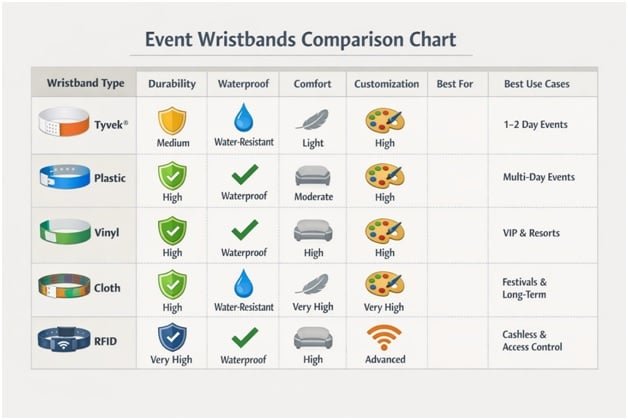
- Tyvek® wristbands are lightweight and cost-effective, making them suitable for short-term access and one-day events.
- Vinyl or plastic wristbands offer greater durability and are better suited for multi-day use or environments where moisture may be present.
- Cloth wristbands are comfortable for extended wear and are often used when attendees may keep them on for several days.
Each option balances comfort, durability, and cost differently.
Comfort Improves Compliance
Comfort plays a bigger role than many organizers expect. Wristbands that are uncomfortable or irritating are more likely to be removed, damaged, or transferred.
Lightweight materials and secure closures help ensure wristbands stay on as intended. This improves compliance and reduces the need for replacements or re-checks.
Wristbands as an Organizational Tool
Beyond access control, wristbands help events feel organized. When staff can instantly recognize who belongs where, interactions become smoother and more confident.
Visitors also benefit. Clear systems reduce confusion and help guests feel guided rather than monitored.
A Practical Resource for Comparing Wristband Options
For organizers trying to compare materials, security features, and event use cases, this guide to choosing wristbands for events provides a clear breakdown of which options work best for different types of events, venues, and crowd sizes.
It’s particularly useful when deciding how wristbands should align with event duration, environment, and access needs.
Common Takeaways from Event Organizers
Organizers who adopt wristbands for open houses and renovation events often notice:
- Faster check-ins
- Fewer access questions
- Better staff coordination
- Improved visitor flow
These improvements may seem subtle, but together they create a noticeably smoother event.
A Simple Solution with Lasting Impact
Wristbands may appear to be a small detail, but their impact on organization, safety, and visitor experience is significant. When chosen thoughtfully, they support event goals without adding complexity. For open houses, renovation projects, and large-scale exhibitions, wristbands offer a flexible, low-cost way to manage access and maintain order—allowing organizers to focus on showcasing their work instead of managing logistics.