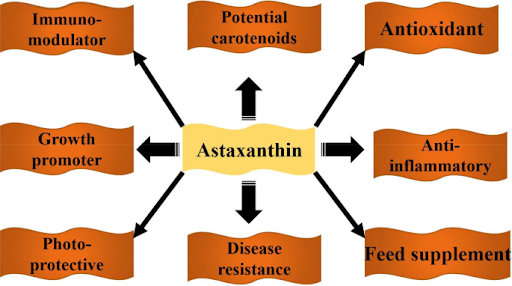
In recent years, interest in natural antioxidants has grown significantly among health-conscious adults, athletes, and professionals seeking to better understand how nutrition supports long-term wellness. Among the many compounds studied for their antioxidant properties, astaxanthin has gained attention for its unique structure and biological activity. Unlike many wellness trends that come and go, astaxanthin has been the subject of decades of scientific research, particularly in the fields of cellular health and oxidative stress.
This article provides a foundational, research-focused overview of astaxanthin, explaining what it is, how it works in the body, and why it is often categorized among the most powerful natural antioxidants. The goal is education—not promotion—so readers can develop an informed understanding of this compound and its role in human biology.
Understanding Oxidative Stress and Antioxidants
To understand astaxanthin, it is first necessary to understand oxidative stress. Oxidative stress occurs when there is an imbalance between free radicals—unstable molecules generated during normal metabolism—and the body’s ability to neutralize them. While free radicals are a natural byproduct of breathing, digestion, and physical activity, excessive accumulation can damage cells, proteins, and DNA.
Natural antioxidants help maintain balance by stabilizing free radicals before they cause harm. Many people are familiar with antioxidants such as vitamin C, vitamin E, and beta-carotene. Astaxanthin belongs to the same broad family of compounds but behaves differently at the cellular level.
What Is Astaxanthin?
Astaxanthin is a naturally occurring carotenoid pigment responsible for the red and pink coloration found in certain marine organisms. It is produced primarily by microalgae and accumulates in the marine food chain, particularly in organisms exposed to high levels of environmental stress such as intense sunlight or oxygen-rich water.
From a biochemical perspective, astaxanthin is classified as a xanthophyll carotenoid. Its molecular structure distinguishes it from other carotenoids, allowing it to interact with cell membranes in a way that many antioxidants cannot. This structural uniqueness is central to how astaxanthin functions in the body.
How Astaxanthin Works in the Body
At the cellular level, astaxanthin interacts with lipid bilayers—the protective membranes surrounding cells. Unlike antioxidants that work only inside or outside the cell membrane, astaxanthin is able to span the membrane itself. This positioning allows it to neutralize free radicals on both sides of the cell barrier.
Researchers often describe this behavior as “membrane-wide protection.” Because many forms of oxidative damage begin within cell membranes, astaxanthin’s ability to stabilize these structures is considered particularly significant.
For readers seeking a more detailed scientific overview of what astaxanthin is and how it works, foundational research explains how its molecular orientation supports cellular stability without converting into a pro-oxidant under stress—an issue observed with some other antioxidants at high concentrations.
Why Astaxanthin Is Considered a Powerful Antioxidant
The phrase “astaxanthin antioxidant” appears frequently in scientific literature due to its strong free-radical-scavenging activity. Laboratory studies have shown that astaxanthin demonstrates a higher antioxidant capacity compared to several well-known carotenoids. However, its strength is not simply a matter of numerical antioxidant scores.
What sets astaxanthin apart is its stability. Some antioxidants can become unstable after neutralizing free radicals, potentially contributing to oxidative stress instead of reducing it. Astaxanthin, by contrast, remains stable after electron donation, which is one reason it continues to be studied in the context of long-term cellular protection.
Natural Antioxidants and Human Health
Natural antioxidants play a critical role in supporting the body’s defense systems. They work synergistically rather than independently, meaning no single antioxidant functions in isolation. Astaxanthin is often studied as part of a broader antioxidant network rather than as a standalone solution.
Health researchers emphasize that antioxidant balance is influenced by many factors, including diet, physical activity, environmental exposure, and aging. For athletes and professionals exposed to physical or mental stress, oxidative load may be higher, increasing interest in compounds that help maintain equilibrium.
It is important to note that antioxidants do not eliminate free radicals entirely—nor should they. Free radicals also serve essential signaling functions in the body. Instead, antioxidants help regulate excess oxidative activity, supporting normal physiological processes.
Astaxanthin and Cellular Resilience
Cellular resilience refers to a cell’s ability to maintain function under stress. Oxidative stress is one of the primary challenges to cellular resilience, particularly in tissues with high energy demands such as muscles, the brain, and the cardiovascular system.
Astaxanthin’s ability to integrate into cell membranes has led researchers to explore its role in maintaining membrane integrity. When membranes are stable, cells are better equipped to regulate nutrient flow, waste removal, and communication with other cells.
This membrane-protective behavior distinguishes astaxanthin from water-soluble antioxidants, which primarily function in fluid environments rather than lipid-rich structures.
Differences Between Astaxanthin and Other Carotenoids
While astaxanthin is structurally related to beta-carotene and lutein, its functional behavior is distinct. Beta-carotene, for example, is converted into vitamin A in the body, whereas astaxanthin is not. This means astaxanthin does not accumulate as vitamin A, reducing concerns related to excessive conversion.
Additionally, astaxanthin does not cross into pro-oxidant behavior under high oxidative pressure, a factor that continues to draw scientific interest. This consistency is particularly relevant when studying oxidative stress over extended periods rather than short-term exposure.
Ongoing Research and Scientific Interest
Astaxanthin continues to be studied across multiple disciplines, including nutritional science, cellular biology, and exercise physiology. Researchers are particularly interested in how it interacts with mitochondrial function—the process by which cells generate energy.
Because mitochondria are a major source of free radicals, protecting them from oxidative damage is considered essential for long-term cellular efficiency. Astaxanthin’s lipid-soluble nature allows it to localize in areas where oxidative stress is most likely to occur.
Importantly, scientific consensus emphasizes that ongoing research is necessary to fully understand optimal intake levels, long-term effects, and interactions with other nutrients.
A Balanced Perspective on Antioxidant Education
Educational discussions about antioxidants should remain grounded in evidence rather than hype. While astaxanthin is frequently described as a powerful antioxidant, it should be viewed as part of a larger nutritional framework rather than a singular solution.
Health-conscious individuals benefit most from understanding how natural antioxidants function within complex biological systems. Diet diversity, lifestyle habits, and overall wellness strategies all contribute to oxidative balance.
Astaxanthin’s growing visibility in research reflects genuine scientific interest rather than marketing alone. By examining its structure, behavior, and biological role, readers can better understand why it continues to be studied alongside other natural antioxidants.
Conclusion
Astaxanthin represents a unique intersection of marine biology and human health research. Its molecular structure, membrane-spanning behavior, and stability under oxidative stress distinguish it from many other antioxidants. For professionals, athletes, and wellness-focused individuals seeking evidence-based education, understanding how astaxanthin works at the cellular level provides valuable insight into the broader role of natural antioxidants.
Rather than viewing astaxanthin as a trend, it is more accurate to see it as an evolving subject of scientific inquiry—one that contributes to a deeper understanding of oxidative stress, cellular resilience, and long-term health balance.