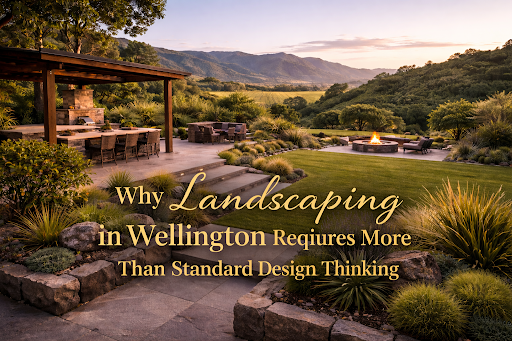
Landscaping in Wellington is rarely straightforward. While the city offers stunning views and strong outdoor living culture, it also presents challenges that demand more than generic design approaches.
Wind exposure, steep terrain, and changing weather patterns all influence how outdoor spaces perform. Designs that work well in flatter or calmer regions often struggle here. To create outdoor areas that remain comfortable, durable, and usable over time, landscape planning must respond directly to Wellington’s unique conditions.
Wind Shapes Everyday Use
Wellington’s wind is one of its defining features. It affects comfort, plant health, and how often outdoor spaces are actually used.
Without shelter, seating areas become impractical and exposed zones are avoided. Wind also increases evaporation, dries soil faster, and stresses plants that are not suited to constant airflow.
Effective design considers wind direction and strength early. Shelter planting, screening, and smart layout choices help create protected spaces that feel inviting rather than exposed.
Slopes Demand Technical Planning
Many Wellington properties are built on hillsides. While this adds visual appeal, it complicates access, stability, and drainage.
Sloped sections require careful management of soil pressure and water movement. Retaining structures, steps, and terraces must be designed to perform safely over time. Poor planning in these areas often leads to erosion or movement issues.
Thoughtful landscape design uses elevation changes to create functional zones instead of fighting against the terrain.
Rainfall Cannot Be Ignored
Periods of heavy rainfall place pressure on outdoor surfaces and planting. Drainage failures are one of the most common causes of long-term landscape problems.
Pooling water, saturated soil, and surface runoff can damage lawns, paths, and retaining features. Drainage solutions must be integrated into the design rather than added as a correction later.
According to the National Institute of Water and Atmospheric Research, rainfall intensity in parts of New Zealand has increased, making water management a critical consideration in outdoor planning. Landscapes that do not address this risk are more vulnerable to damage over time.
Plant Selection Requires Local Insight
Planting choices that succeed in other regions may fail in Wellington. Wind exposure, salt air near the coast, and varied soil conditions all influence plant survival.
Choosing plants based purely on appearance often leads to high replacement rates. Successful landscapes prioritise hardy varieties that can tolerate local conditions while still offering visual interest throughout the year.
This local knowledge is essential for creating planting schemes that remain healthy rather than requiring constant intervention.
Spaces Must Work Year Round
Wellington’s climate encourages outdoor living across seasons, but only when spaces are designed to support it.
Sun orientation, surface materials, and shelter influence comfort in both summer and winter. A space that works well during calm weather may become unusable during colder or wetter months.
Designing for year-round use means creating flexible areas that adapt to changing conditions instead of relying on a single ideal scenario.
Maintenance Planning Matters
Maintenance is often underestimated in outdoor design. In Wellington, wind-blown debris, moisture, and fast plant growth can increase upkeep demands.
Designs that ignore maintenance quickly lose appeal. Narrow access points, overcrowded planting, and delicate materials all add unnecessary effort.
Practical planning considers how the space will be maintained over time, ensuring it remains enjoyable rather than burdensome.
Experience Makes the Difference
Many challenges of landscaping Wellington properties are not obvious at the design stage. They emerge over time if they are not addressed early.
Experience helps identify potential issues before they become problems. Understanding how materials age, how water behaves on slopes, and how people actually use outdoor spaces leads to better outcomes.
Final Thoughts
Wellington landscapes require more than standard design thinking. Wind, terrain, rainfall, and maintenance realities all demand a tailored approach.
When these factors are considered from the beginning, outdoor spaces become resilient, comfortable, and genuinely usable. Thoughtful planning transforms Wellington’s challenges into strengths, creating landscapes that continue to perform well long after installation.