Introduction
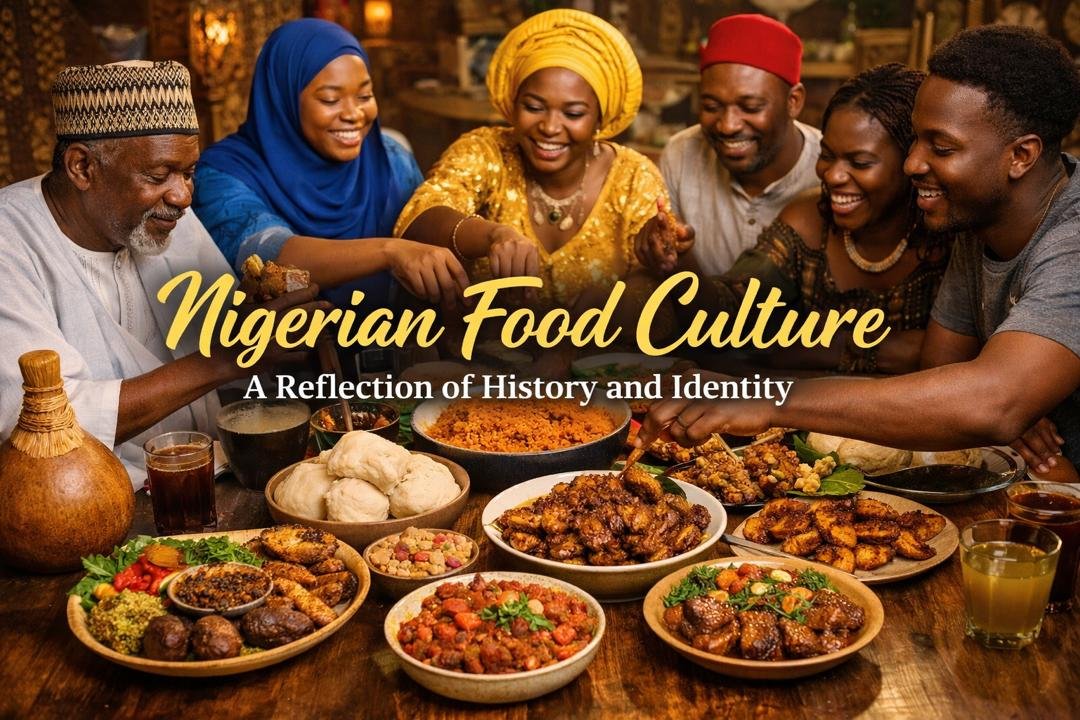
Food is considered as one of the most persistent forms of culture, identity and collective memory. In many societies, the foods consumed by the populations, the manner in which meals are prepared, and the conditions surrounding the meals are usually very insightful about the past, cultures, and social organization of the people. Nigerian Food culture is central in life and culture. Eating is not just about food, it is also about socializing and identifying with the food, and identification.
That is why Nigeria is described as one of the most culturally diverse countries in the world, as there are more than 250 ethnic groups, and there is a great variety of languages, traditions, and belief systems. The food culture of the country reflects this diversity to a large extent. Diversity of ingredients, cooking techniques and eating behavior in various parts all contributes to what is referred to as the Nigerian cuisine. The Nigerian food culture also fosters unity despite the differences in the regions since people unite in sharing meals, festivals, and national meals.
In this paper, the author analyzes the Nigerian food as a cultural profile that is determined by geography, farming, and history. It examines how food expresses regional identities and social practices besides pointing out to common experiences in the country. The special attention is paid to the significance of community meals as one of the specific aspects of Nigerian society.
The Geographical Diversity and its impact on the Nigerian Food Culture
The geography of Nigeria is significant in determining the food practices. The country is located within multiple ecological areas, which are coastal areas, mangrove swamps, rainforests, savannah grasslands, and semi-arid areas. All these environments have their own crops, livestock and food resources and this also affects the diets in the region.
The climate in the southern regions of Nigeria especially on the coastal and rainforests is wet and rains heavily. Such conditions prefer the growth of root crops like cassava, yam, cocoyam, and plantain. The palm trees grow very well here and palm oil is a common ingredient in most of the dishes prepared in the south. There are also numerous rivers, creeks, and the Atlantic coastline, which also help to make the diet rich in fish, crayfish, and other seafood.
Conversely, the country to the north, which is mostly northern Nigeria is mainly savannah and semi-arid and has lower rainfall. This has led to the increased cultivation of such grains like millet, sorghum, maize and rice. Farming of livestock is also common resulting in the high consumption of beef, goat meat and dairy products. These environmental factors have been attributed to the dominance of grain foods and meat stews in the diets of North Nigeria. Geography thus defines what one can eat as well as the manner in which food is cooked and eaten. Seasonal variations have an impact on food production, food preservation, and common meals. Through this, geography has become a pillar to the Nigerian food culture.
Agriculture as a Cultural Process
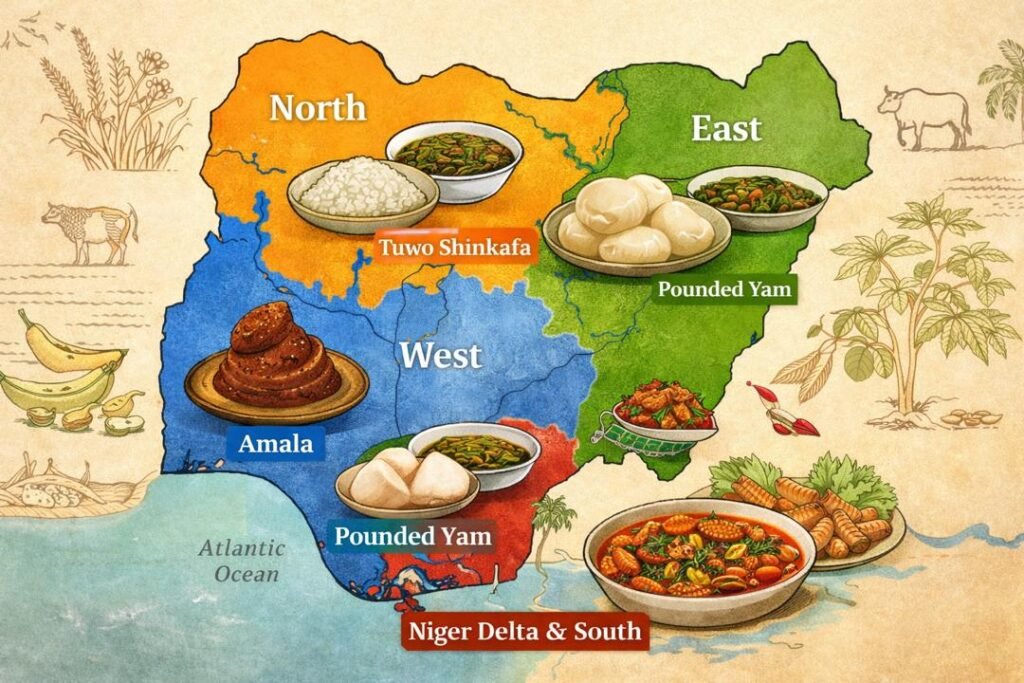
Nigeria agriculture is closely related to culture and tradition. Agriculture is not just an economic enterprise, it is a lifestyle that creates social structure, practices, and food traditions. Nigeria has several communities who engage in subsistence agriculture to produce food that was mainly used at home consumption and local markets. The traditional agricultural customs affect the foods that are perceived as staple. Cassava and yam are staples in most of the southern communities, and processed into either garri or fufu or pounded yam. The ground grains, i.e., millet and sorghum are made into thick puddings or flatbreads in the north.
There are usually festivals and community celebrations during harvest times. These gatherings are based on gratitude, generosity, and communal cohesion. Food prepared in such situations is distributed to a wide group which strengthens social connections and group identity.
Agriculture knowledge is generational with women at the forefront as they have traditionally involved themselves in food preparation and processing. This knowledge transfer makes culinary traditions more lasting and makes sure that there is continuity of the Nigerian food culture.
The History of the Nigerian Cuisine
The years of history, migration, trade, and colonization influenced the Nigerian cuisine. Prior to the introduction of foreign foodstuffs, indigenous peoples depended on locally available food items and created regional techniques to prepare their food including roasting, boiling, steaming, smoking and fermentation. The food culture was greatly impacted by the trade routes especially in north Nigeria. The Trans-Saharan trade brought in spices and cooking methods as well as grains of North Africa and the Middle East. Such influences are reflected in the use of spices and cooking of food like masa and tuwo.
The trade activities along the coastlines exposed the southern part of Nigeria to European and Asian influence. Some of the ingredients which were introduced in these interactions and have become critical ingredients in Nigerian cooking include rice, tomatoes and chili peppers. An example is tomatoes that are now featured in most soups and stews in the country.
Colonialism had a substantial impact on the food culture in Nigeria as well. Bread, tea and canned foods which were new food commodities were brought by the British colonial rule. The urban centers embraced western style of dining especially among the educated elite. Nevertheless, instead of displacing the native food culture, the colonial culture blended with the local culture to create a hybrid but clearly Nigerian food culture.
Urbanization that followed independence further changed the Nigerian cuisine. Moving to the cities combined people of various ethnicities and caused the process of food sharing and its acculturation. In the present day, numerous regional cuisines are spread throughout the country, which also leads to a unified cuisine.
The Regional Identities Expressed through Food
One of the most powerful representatives of regions and ethnic identity in Nigeria is food. Every region boasts of its local food which is usually symbolic and cultural.
Nigerian Food Culture Northern Part of Nigeria.
Food in northern Nigeria depends on the climate, agricultural activities, and the Islamic culture. Some of the staple foods are tuwo shinkafa (rice pudding), tuwo masara (maize pudding), and tuwo dawa (sorghum pudding). Such food is normally eaten with soups, like miyan kuka (baobab leaf soup) or miyan taushe (pumpkin soup).
Northern foods tend to be weak in spices in relation to the southern foods though they are heavy in taste. Common are the fermented foods and the dairy products which are a reflection of pastoral traditions. The preparation and consumption of food is frequently adhered to halal, which strengthens religious identity. Food is often consumed in groups and the members of the family share their meal in one bowl. The practice is focused on humility, equality, and family togetherness.
Western Nigerian (Yoruba) Food Culture
The Yoruba food is associated with variety and complexity. Amala, eba, and pounded yam are also considered as staple foods, which are typically accompanied by different kinds of soups, including ewedu, gbegiri, and ogbono. Ingredients that are necessary include palm oil, locust beans (iru) and dried fish.
Food is a socially important aspect in Yoruba culture. Hospitality is also given great importance and visitors are usually given food as a sign of appreciation. Ceremonies like weddings, burials and naming ceremonies are elaborately made to show status in society and social responsibility.
Food Culture Eastern Nigerian (Igbo)
Yam is not just food to the Igbo people of eastern Nigeria, it is also a cultural symbol. Yam festivals are a festival of harvest, masculinity and prosperity. Pounded yam, ofe onugbu (bitter leaf soup) and ofe nsala (white soup) are the dishes that are at the core of Igbo cuisine. Food is also strongly correlated with social life and rituals. Food is cooked to celebrate the significant life occasions, an invitation to guests, and ancestors. Food sharing helps strengthen kinship and community.
Niger Delta and Southern Nigeria
Niger Delta is renowned with the savory and delicious soups that are highly dependent on the palm oil, seafood, and greens. The dished foods like banga soup, owho soup, afang soup, and seafood pepper soup depict the riverine nature of the region.
Daily meals revolve around fish and seafood with spices and herbs providing an extra flavor. Abundance and cultural heritage is manifested in food in this region.
Food, Social Traditions, and Cultural Values
Hospitality, respect, generosity, and communal living are social values that are deep-rooted in the Nigerian food culture. Food is a moral obligation given to the guest irrespective of their economic status. Denying to eat food can be understood as disrespectful or unfriendly.
Food is also a way of supporting social hierarchies and esteem towards the senescence. Special portions are allocated to the elders in most societies and they are served first. Through attending common meals, children learn how to be disciplined, patient and well mannered.
The food preparation has long been determined by gender roles because women do all the cooking and distribute food. Though these functions are changing in contemporary society, women are still the central repositories of gastronomic knowledge and culture.
Collective National Experiences through Food
Food is a unifying factor in Nigeria thus despite the regional variations. Some of its food items have become national symbols served irrespective of ethnicity and religious boundaries. An example is Jollof rice which is commonly considered a national dish and is done on both celebrations and parties as well as on daily meals.
Senior citizens of all social classes use street food like suya, akara, puff-puff, and so on and this has formed common eating experiences in the open places. Cultural boundaries are also blurred in food markets and roadside sellers as they act as places of encounters.
Food helps bring together people during religious and national events. During Eid and Christmas, Muslims and Christians usually share food, which helps to establish the respect and unity between these groups of people.
The Cultural Significance of Community Dining
One of the characterizing features of the Nigerian food culture is communal eating. Meals are traditionally served in a common bowl, which allows sharing, equality, and trust. The habit enhances family ties and encourages socialization.
Sharing food together is also a setting of learning and moral teachings. Children acquire cultural norms through observing older members of the society during meals. Sharing food can solve conflicts, which is why it promotes peace. In the contemporary urban environments, where individual dishes are predominant, community food is still valued in terms of festivities and family events. Food sharing has remained an activity of wealth and solidarity.
The Nigerian Food in a Globalized World
Over the last several years, the Nigerian cuisine acquired the international status. The Nigerian food culture has already been exposed to the global population through the Nigerian restaurants, food festivals, and social media. Diaspora communities can even have a great role in keeping the traditional recipes and adjusting them to new environment.
Globalization has also affected the choices of food in Nigeria as it has resulted in integrating traditional and international foods. Even with these developments, the Nigerian cuisine has been tightly connected with the history, culture and community values.
Conclusion
The food culture in Nigeria is very strong and representative of the history, geography and the nation. Influenced by various ecology, rural activities and historical connections, the Nigerian cuisine articulates regional affiliations, yet also promotes the common national experience. Food is a symbol of social practices, a social value, and an essential part of the life of a community.
The significance of communal dining, hospitality and sharing meals proves that the Nigerian cuisine is not merely a set of dishes; it is a piece of culture that lives. Nigeria is a country that maintains its food culture as a powerful indicator of identity, strength and cohesion, as it keeps interacting with the rest of the world. By food, the Nigerians keep their past, their present and future as a people.
Get more well researched information Nigerian food and culture here.