Every hospital deals with the frustration of trying to grab a syringe size, only to find the cupboard bare. You need your stock to include standard vaccinations, blood draws, drug administration, and emergencies while keeping a small footprint in your storage room. If you are a medical provider stockpiling supplies, having the right medical supply syringes means knowing what you actually use versus what sits around collecting dust on shelves.
The facilities we work with often start with good intentions, but end up with gaps in their supplies. Perhaps you have a supply of 3 mL syringes and are temporarily running low on the tuberculin size during flu season. Or maybe your lab is consistently buying 10 mL syringes when most things you use really require no more than 5. Getting that balance right can save you money and avoid those cringe-inducing moments when the staff have to wing it.
Understanding Your Basic Syringe Needs
Start with the core sizes that handle 80% of your daily procedures. For the majority of the clinics and labs, 1 mL, 3 mL, 5 mL, and 10 mL syringes with appropriate needle gauges are indispensable. Tuberculin syringes for exact measurements under 1 mL are needed for allergy testing, neonatal dosing, and tuberculosis screening.
The trick is matching syringe capacity to actual use cases. A 10mL syringe is perfect for flushing IV lines, but feels like holding a bazooka to give a little old IM injection. A study of needlestick prevention states that the use of the correct-size syringe with a safety device will reduce workplace injuries and enhance procedure efficiency.
Safety Features That Actually Matter
Safety-engineered syringes have come a long way from the clunky retractable models that frustrated everyone a decade ago. Modern options include passive safety mechanisms that activate automatically, shielded needles that protect after withdrawal, and retractable designs that work smoothly without adding steps to your workflow.
We’ve learned that staff compliance with safety devices depends heavily on ease of use. If a safety syringe requires extra effort or slows down procedures, people find workarounds that defeat the purpose. The best safety syringes feel almost identical to conventional ones until the moment you need that protection. Training matters too, but intuitive design matters more.
Pairing Syringes with Essential Supplies
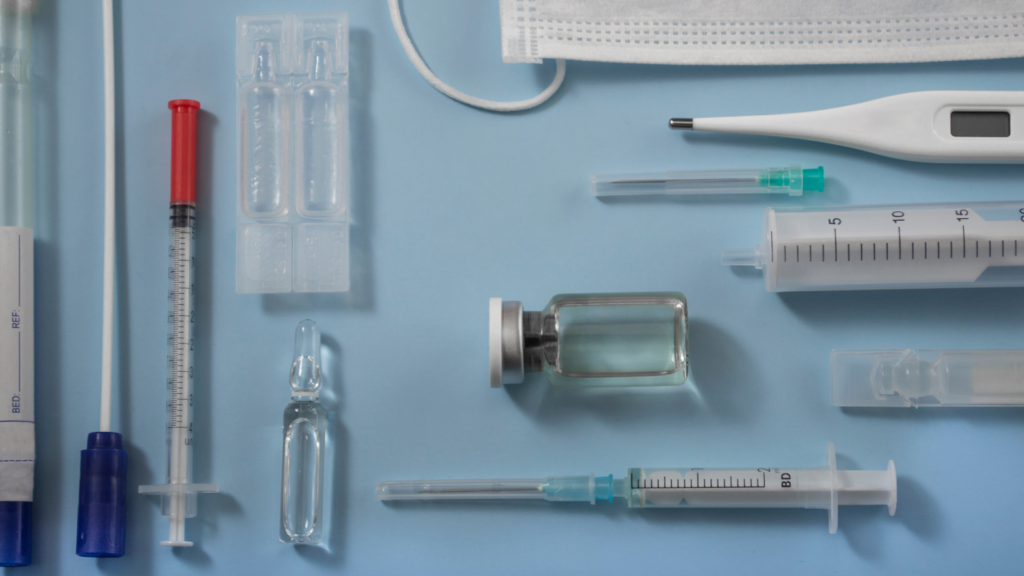
Syringes don’t work in isolation. As part of your acquisition strategy, you need to include them in a kit with alcohol prep pads, tourniquets, gauze and adhesive bandages. When those things run out at different times, you have incomplete procedure kits that waste staff time on scavenger hunts.
AOSS Medical Supply understands this coordination challenge better than most distributors. They’ve built their inventory systems to make bundled ordering straightforward. You don’t have to make five different orders for syringes, prep pads, tourniquets, gloves, and sharps containers there because everything is consolidated through their platform. Their staff also has a complete medical equipment store inventory, in addition to the usual injection supplies.
Specialty Syringes for Specific Procedures
Beyond general-use syringes, certain procedures demand specialized equipment:
- Insulin syringes with ultra-fine needles for diabetic patients
- Catheter tip syringes for wound irrigation and feeding tube administration
- Luer lock syringes when secure connections are non-negotiable
- Oral medication syringes for liquid dosing in pediatrics and geriatrics
Don’t overstock specialty items that your facility rarely uses. Track your actual consumption over several months before committing to bulk orders. If you perform blood gas analysis weekly rather than daily, maintaining a modest supply makes more sense than buying in volume.
Smart Inventory Management for Medical Facilities

Set par levels based on real usage data, not guesswork. Most facilities benefit from a two week supply of high-use items with monthly deliveries for specialty products. Build in safety margins for seasonal variations. Flu season will absolutely drain your tuberculin and 1 mL syringe inventory faster than normal.
Rotate stock properly to avoid expiration waste. Syringes have a long shelf life, but boxes that linger for years require disposal. Set up storage so that the oldest stock is positioned at the front, easily used first when performing restock tasks.
Simplify Your Procurement Process
Managing medical supply inventory shouldn’t consume hours of administrative time each week. The right supplier relationship turns this from a tedium into a background task that you can set and forget. When your staff knows that orders will be filled in full and on time at the right price, they can concentrate on patient care rather than chasing backorders.
Ready to make the most of your syringe inventory and end supply shortages?
Contact us for a consultation, and we’ll help you develop a stocking plan that aligns with the actual requirements of your facility. We’ve assisted in getting hundreds of clinics and labs with the right setup; let us do the same for you.
Frequently Asked Questions
What size syringes should all medical facilities keep on hand? Needle and syringe sizes commonly used include 1 mL, 3 mL, 5 mL, and 10 mL syringes, with tuberculin (TB) syringes used for measurements less than 1 mL.
Is the use of safety-engineered syringes mandated in all health care facilities? Occupational Safety and Health Administration regulation requires healthcare facilities to consider safer medical devices where they are compatible with devices that workers are using, feasible, effective, and available to prevent needlesticks.
What is the best way for facilities to decide on proper levels of needle-syringe stock? Track actual use in 3 months, determine average daily usage, keep at least two weeks available for high-use items, and adjust for seasonal use.
What is a Luer lock and a Luer slip syringe? Luer lock syringes are designed with screw connections that tighten and hold needles in place during high-pressure injections; Luer slip syringes simply slide on, which is faster but less secure than Luer lock for high-pressure use.
Can you use expired syringes as long as the package is not compromised? No, syringes that are past their expiration should not be used because the sterility of the product can no longer be ensured past expiration.