The imaging systems are of essence in contemporary science, medicine, engineering, security, and normal digital communication. Imaging technologies convert physical signals, which are either invisible or unintelligible, into visual images, as it is in the case of medical scans used to assist doctors in diagnosing diseases, and physically present images (such as smartphone images of everyday events). To comprehend the workings of these systems, one needs to see the full picture- i.e. the imaging pipeline or workflow.
This article has a detailed description of the functionality of the imaging system and it takes the reader through the process of obtaining an image to the final image display. The discussion of the process of the capture, processing, storage, transmission, and eventual visualization of raw signals can help us realize the significance of every step in the process of creating quality and accurate images.
Knowing Imaging Systems and their Purpose
An imaging system refers to a system consisting of hardware, software and computational means to capture and display image. In its simplest form, an imaging system is designed to transform the physical phenomena e.g. light, sound waves or electromagnetic radiation into images which can be interpreted and interpreted by humans or by a machine.
There are great varieties of imaging systems depending on their usage. For example:
- Medical imaging systems are X-ray, ultrasound, CT and MRI scans.
- There are digital imaging systems comprising cameras, scanners, and satellite imaging systems.
- Industrial imaging systems facilitate quality control, automation and machine vision.
Nevertheless, the majority of imaging systems have a similar pipeline in spite of these differences. Such a common structure gives us a chance to speak about a certain structure that describes how images are created, improved, and reflected.
General Description of the Imaging Pipeline
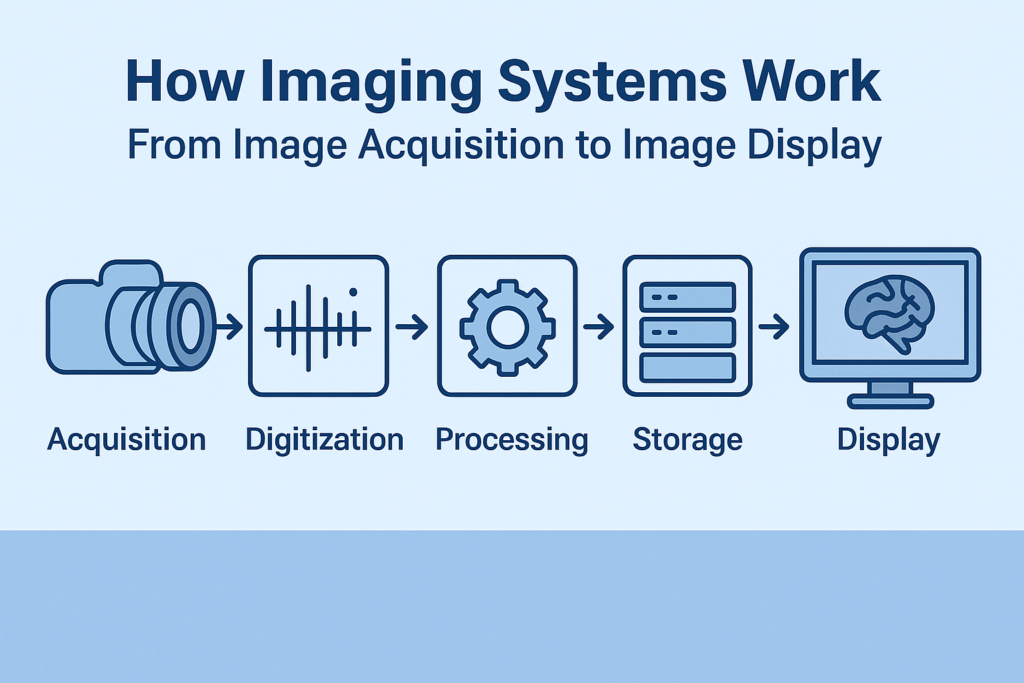
The imaging pipeline is the path of the data flow through which the data flows through before it is finally made into an image. These phases make sure that raw signals are properly recorded, improved and represented in a format that can be interpreted appropriately.
Generally, the imaging pipeline comprises of the following steps:
- Image acquisition
- Digitization and signal conversion.
- Image enhancement and processing.
- Storage and management of images.
- Image transmission
- Picture presentation and visualization.
These stages collectively make the entire imaging workflow, which guarantees consistency, accuracy, and quality of various imaging applications. The general background of this notion may be searched deeper by this source on the basics of the workflow of medical imaging.
Image Acquisition: Raw Data – Capture
What Is Image Acquisition?
The primary and the most vital stage of any imaging system is image acquisition. It entails the process of obtaining uncoded information in a physical location through sensors or detectors. At this point, there is nothing like an actual image according to the conventional meaning. Rather, the system gathers raw signals that are a measure of changes in physical energy.
For example:
- Sensors in optical imaging take up the emitted or reflected light on objects.
- Medical imaging involves detectors that pick-up X-rays, sound waves or magnetic signals.
- Satellite imaging involves the use of sensors to pick up the reflected electromagnetic radiations of the surface of the earth.
This raw data is very sensitive to capture the quality of the final image.
Sensors and Detectors
Sensors are equipment which reacts to physical stimulus and turns it into electric signals. Common types include:
- Digital cameras contain CCD and CMOS sensors.
- The optical systems Photodiodes
- The ultrasound imaging transducers.
- X-ray scintillation detectors and CT scintillation detectors.
All types of sensors are tailored to particular types of energy and use. The factors that determine the performance of the sensors should include sensibility, resolution, noise, and dynamic range.
Significance of Acquisition Parameters
Parameters like exposure time, sampling rate, resolution and field of view are then chosen to suit acquisition. Misplaced settings may result in poor quality data which cannot be properly rectified afterward and therefore acquisition is an initial step in the imaging process.
Signal Conversion and Digitization
An Analog Signal into a Digital Data
The majority of sensors generate analog electrical signals which change continuously with time or space. Digital data however is needed to inform and store information in computers. This is where signal conversion comes in.
This stage involves:
- Sampling, in which continuous signals are sampled.
- Quantization, in which the signal values are coded to a set of numbers of finite value.
The outcome is the digitalization of the original physical signal.
Analog-to-Digital Converters (ADCs)
Digital converters are very crucial elements that convert analogue signals into a digital format. The image quality depends on the way an ADC works including:
- Bit depth, that defines intensity resolution.
- Sampling frequency, which has an influence on spatial or temporal resolution.
- Noise properties, that determine image sharpness.
Proper digitization will guarantee that relevant information in the original signal is saved to be used in the future.
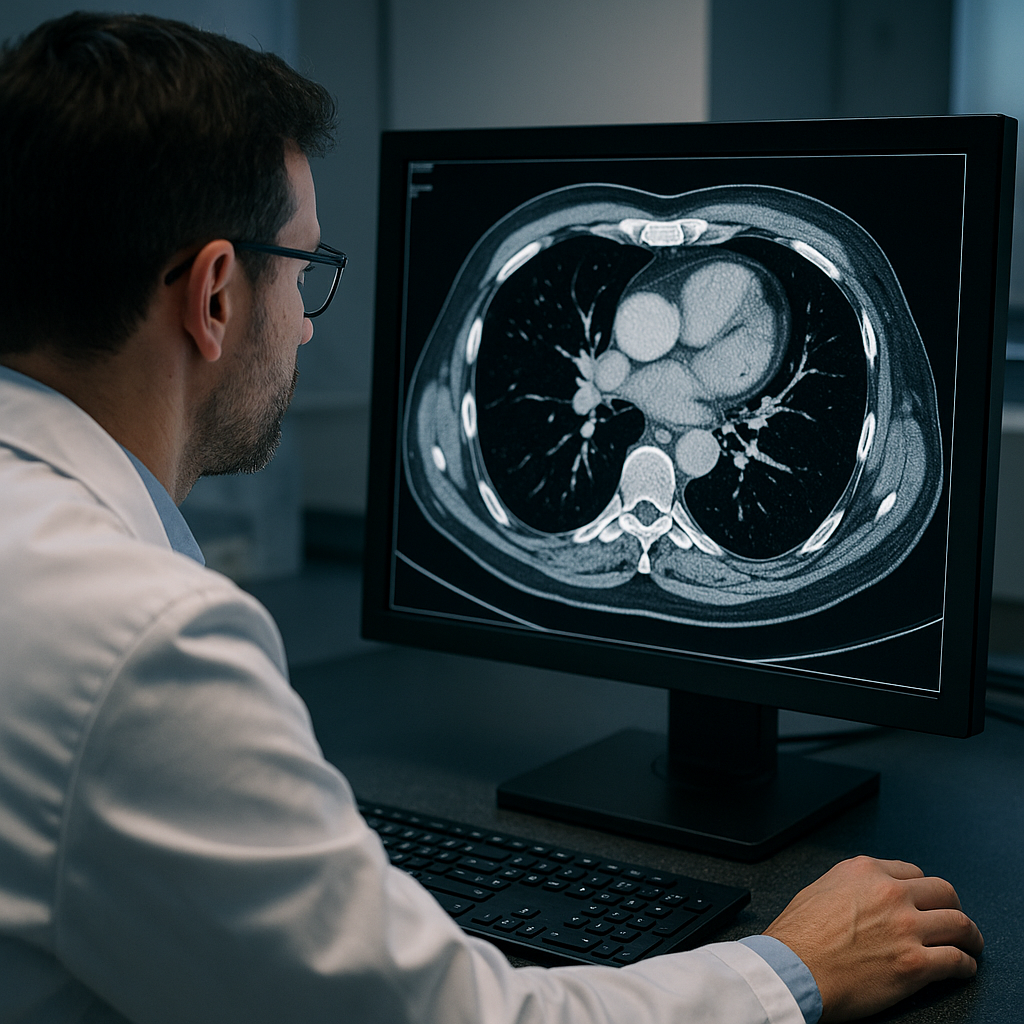
Image Processing: Process and Improving Data
Purpose of Image Processing
After getting the digital data, image processing methods are used to enhance image quality and acquire valuable information. Image processing converts the raw pixel data into an image that is meaningful and useful in an analytical way.
This step is important since raw images are usually filled with noise, distortions or low contrasts that hinder important details.
Popular Image Processing Operations
Image processing may be categorized as being of several types:
Image Enhancement
Enhancement techniques are used to enhance the visual quality of images without any change in the content. Examples include:
- Noise reduction
- Contrast enhancement
- Sharpening
- Brightness adjustment
Image Restoration
The purpose of restoration is to mitigate known distortions of the underlying imaging system or environment, e.g. motion blur or sensor noise.
Image Segmentation
Segmentation breaks down an image into useful parts or objects, and this is critical in machine vision and medical applications.
Feature Extraction
This step will determine important patterns, shapes, or textures that can be analyzed, classified, or automatically decided.
The processing steps should be thoroughly designed, such that the necessary information is saved, and that the interpretability should be enhanced.
Storage and Data Management of Image
Why Image Storage Matters
Large amounts of data are usually produced by imaging systems. It needs efficient storage where images can be stored to be analyzed later, shared and documented legally or scientifically.
In medical imaging, e.g. scanning of patients, they should be stored safely and can be accessed over extended durations.
Compression and File Formats
The images are saved in standardized file formats, which are quality, compatibility, and storage efficient. Common formats include:
- General imaging JPEG and PNG.
- TIFF as a high quality archival storage.
- DICOM for medical imaging
Compression methods compress files and therefore it is more efficient with regard to storage and transmission. Nevertheless, compression may ruin images too much hence a balance should be maintained.
Data Security and Integrity
Image storage systems are storage systems that ensure protection against unauthorized access and loss of data. Integrity checks check whether the stored images do not change with time and this aspect is very critical in diagnostic and forensic applications.
Image Transmission: Visual Information
Role of Image Transmission
Image transmission facilitates exchange of images between systems, devices or locations. Telemedicine, remote sensing, and cloud storage as well as collaborative research rely heavily on this.
Transmission refers to the transfer of image information through networks without distorting the quality and accuracy.
Transmission Challenges
Key challenges include:
- Limited bandwidth
- Data latency
- There is the risk of losing or corrupting data.
- Security and privacy issues.
Optimized protocols, compression techniques, and encryption techniques are used in imaging systems to resolve these issues.
Significance in the Contemporary Uses
In other sectors like the medical field, quick and efficient image transmission enables professionals to examine scans over distance, enhancing access to knowledge and accelerating the decision-making process.
Image Showing and Picture Viewing
Between Data and Visual Perception
Image display is the last step in the process of imaging. Here, digital data is processed and then translated to visual format, which can be understood by humans.
Display devices include:
- Computer monitors
- Medical-grade displays
- Mobile screens
- AR and VR systems.
Display Characteristics
The quality of image display is dependent on:
- Resolution
- Brightness and contrast
- Color accuracy
- Viewing angle
Special displays are also tuned in a professional environment, e.g., radiology, to provide a precise reflection of image details.
Visualization Techniques
Sophisticated visualization tools, including 3D representation, color mapping, and interactive zoom, assist users to navigate through the complicated data in an image. The methods contribute to increased awareness and help to make more informed analysis.
Combination of the Full Imaging Process
Why Each Stage Matters
The imaging system is strong in that all the stages are seamlessly integrated. The failure or defects in one phase may have the impact on the whole pipeline. For example:
- Processing can never correct poor acquisition.
- Lack of proper storage can lead to loss of data.
- Poor displays could conceal important information.
The designers and users can maximize effectiveness in all levels by seeing imaging systems as a workflow that is interconnected.
Individual Accuracy and Quality
The important considerations to achieve the quality images are:
- Hardware design
- Software algorithms
- System calibration
- User training
One step supports the other and the end picture is true to the original physical phenomenon.
Conclusion
Imaging systems are potent systems that convert the original physical signals to visual information that is meaningful. Since the images are recorded in the time of data capture, up to the ultimate screen presentation, each process of the imaging pipeline is crucial in measuring the quality and reliability of the images displayed.
When we are aware of the entire imaging process, namely, acquisition, digitization, processing, storage, transmission, and display, we can see the way modern imaging technologies can be used in supporting important medical, scientific, industrial and daily life uses. Highlighting the significance of every procedure does not only enhance the system construction and application but also makes sure that the images are correct, understandable and reliable.
With the ever-changing imaging technologies, the good knowledge of this workflow will still be critical to professionals and students alike to mold more effective, accurate, and effective imaging systems.