There are few spaces of the home where renovation costs run higher, and in more places, than the bathroom. Each fixture—from the toilet to the taps to the tiles—comes with a bewildering range of costs and it’s almost impossible to understand which are worth the extra money and which are just overpriced for what they are. The shower valve is an extra £70 or £700. The toilet is £120 or £1,000+. Trying to balance it all whilst standing in a showroom or scrolling through a website becomes overwhelming.
Shower Valves Should Be Worth Real Money
One fixture that should not be purchased cheap? The shower valve. The basic mixer valve costs maybe £60-80; it mixes hot and cold. Great. It does its job. But the difference between that and the proper thermostatic valve (£200-300) is something one feels every single day.
The thermostatic valve can keep temperatures constant even when someone flushes the toilet or turns on the sink tap. Without this, one essentially plays a game of tag in their own shower to dodge the scalding hot blast that comes every time someone else uses water in their home or the freezing cold surge. Not only is this inconvenient, but it’s also dangerous—for children who can’t move as quickly or for the elderly—who cannot react as fast to sudden changes.
Additionally, the inner workings matter. Cheap valves begin dripping/lost temperature control within a few years. Decent thermostatic valves continue functioning properly for 15 years—and longer—with minimal HVAC issues. Buying an additional valve means calling a plumber and potentially having to dismantle tiles; spending extra now saves more down the line.
Additionally, anti-scald features keep dangerously hot water from coming through even if something gets stuck in the plumping. The additional £100-150 might feel like a lot, but without it, who knows what can happen? This fixture is one where extra money makes sense because something of value actually comes from it, rather than expensive aesthetics.
Toilets Should Not Be Premium Price
Toilet systems are good waste of money, however. A solid, no-frills toilet costs £200-300—not the £700 designer features and plumbing.
Dual-flush for water-saving abilities is worthwhile but it’s part of more toilets these days rather than just the premium options. Soft-close seats are nice (no one likes a slamming lid) but again, it comes across multiple price points. Wall hung toilets are modern looking and give access to cleaning underneath; again, that’s an installation convenience regardless of toilet price.
The cheapest toilet systems can be questionable—thinner porcelain, shoddy flushing mechanisms that constantly clog—so one doesn’t want to go bottom barrel either. But a mid-range toilet system functions correctly, without clogs or problems comparable with any other comparable priced model. Going beyond this is merely aesthetic or bragging rights; no one spends time in the bathroom appreciating how nice the toilet looks anyway!
Taps Both Ways
This is where taps become more complicated. A chrome mixer tap costs £40-60 and works just as well as a £400 designer-version in matte black or brushed brass—but does it? It depends. It depends on what’s inside.
A decent internal mechanism (ceramic disc cartridge) works for years where cheaper options (rubber washer) begin leaking within months. But therein lies another caveat—lots of mid-range offerings (£80-120) also have good-quality internals, primarily going towards good branding and styling. Good internals constitute better functioning over time; cheap options look better than they ultimately work.
The finish holds more weight. Chrome on legitimate brass holds up well over time. Chrome on cheap metal looks questionable within a couple years. Everyone wants those trendy finishes right now—matte black, brushed gold, whatever—and those can lend themselves towards wearing sooner than nickel; they also show wear from fingerprints more than standard chrome.
However, it’s also determined by how much wear goes into the tap. A basin tap that gets turned on a dozen times a day/household vs a bath tap that never gets turned on and ignored it’s better to spend more where appropriate.
Tiles Show Where Money Goes
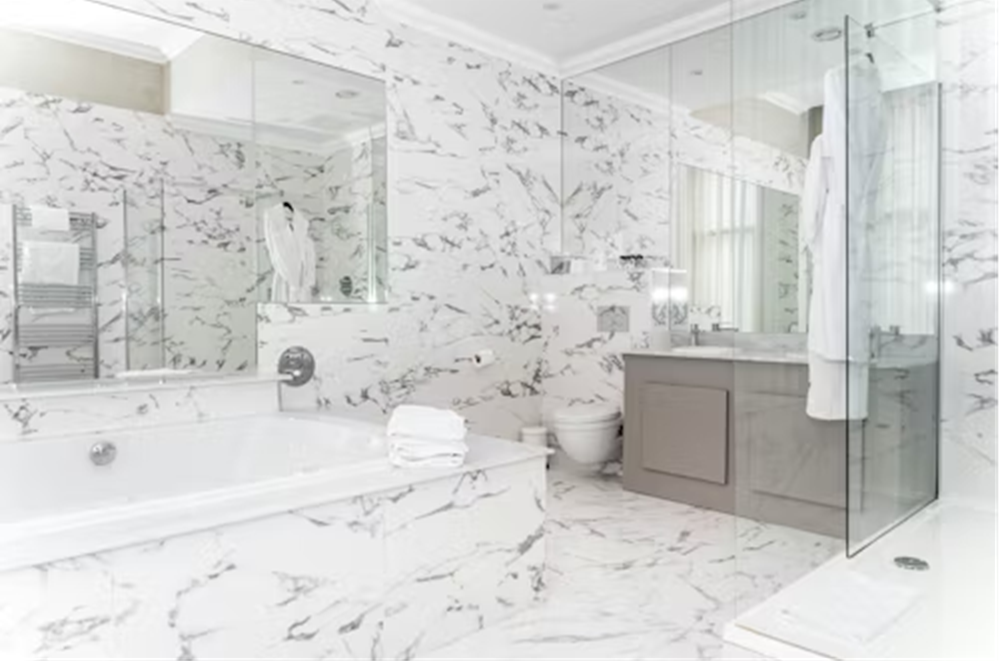
Tiles cover a majority of visible square footage in the bathroom so this is one place equity makes a difference; however, one does not have to go designer tiles at £70 per tile—which shows where more value works.
Generally speaking around £20-35 per square meter tiles get the job done at decent quality with decent quality selection; even pricey equivalents rival lesser tiles based on porosity rating (for absorption), slip resistance and abrasion class.
Really terrible tiles are awful—slight differences in size make them impossible to lay down properly since they’re not evenly distributed; cheap glaze wears off quickly; absorption rates aren’t ideal for wet areas—but once people get into lower tiers, performance quality has more to do with specifications than cost.
Tiles can heavily dictate how a bathroom looks so it’s worthwhile selecting something that looks good; there are affordable bathroom tiles that take into consideration both cost and aesthetics rather than cheap filler tiles or super premium options where mid-range options perform similarly.
Storage and Mirrors Work Off Demand
Storage and mirrors run much of the same course, as there are aesthetic pieces versus purely functional pieces regardless of location and value.
A simple framed mirror costs £30-50 vs an illuminated mirror with demisting and magnifying features—£300-500—and it’s certainly based on whether people will ever use them or feel them awesome in the moment before never using them again.
Storage works similarly—as a recessed cabinet will always cost more than wall-mounted shelving (which can be found for £25), it’s about whether people have small bathrooms—where shelving protrudes most functionally—and spaces which can accommodate smaller storage over larger storage without price playing too much into it.
Soft-close hinges and decent screws make for solid-hinged cabinets without cheap-feeling motion—and avoiding buying the absolute cheapest (it looks terrible) means spending just a bit more for sturdiness works well.
Moisture matters as cheap particle board dissolves fast—and spending more for proper moisture-resistant materials makes all the difference when they’re not in luxury prices.
Ventilation Provides No Visual Appeal Yet Everyone Needs It
Ventilation has no visual appeal whatsoever but prevents costly outliers down the line—a basic extractor fan costs £30-50; proper extractor units (humidity sensor and adequate extraction) costs £100-150—and the difference lies in protecting everything else in the bathroom versus just moving air around. This is one of those spendings that pays back via prevention versus anything actually seen in daily operation (and appreciated).
Where Money Truly Matters
Overall, it’s clear that money is best spent when it makes a difference on daily experiences, safety features and longevity—shower valves that maintain temperature, ventilation which actually prevents problems from occurring, durable internals for the taps that will get touched often.
Getting this right helps manage budgets more effectively and allows owners to still create desirable spaces without spending more money on things which truly don’t matter.