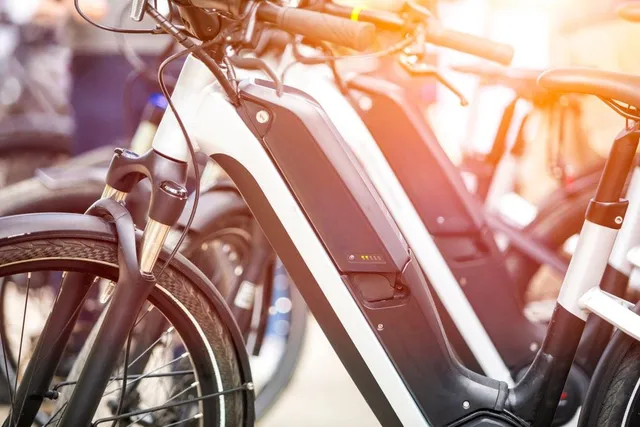
Electric bicycles have revolutionized urban transportation and recreational cycling, offering pedal-assisted freedom that extends range and conquers challenging terrain. At the heart of every e-bike’s performance lies its battery system—the component that determines how far you’ll ride, how long your investment will last, and ultimately, your satisfaction with electric cycling.
Understanding e-bike battery technology empowers riders to make informed purchasing decisions and maximize their battery’s lifespan through proper care and usage.
Decoding E-Bike Battery Specifications
When evaluating e-bike batteries, several key specifications determine real-world performance. Voltage and amp-hours work together to define total energy capacity, measured in watt-hours (Wh). A 36-volt battery with 14 amp-hours delivers 504Wh of total capacity, while a 48-volt system with 17.5 amp-hours provides 840Wh. Higher watt-hour ratings translate directly to extended range between charges.
Voltage levels affect more than just capacity. Higher voltage systems (48V or 52V) deliver more powerful assistance, particularly beneficial for climbing steep hills or carrying heavy loads. They also run more efficiently, generating less heat during operation. However, 36V systems remain popular for lighter riders and flat terrain applications where the power difference proves negligible.
The quality of cells within the battery pack matters enormously. Reputable e bike battery manufacturer partners source cells from established producers like Samsung, LG, Panasonic, or Sony.
These premium cells offer consistent performance, reliable safety characteristics, and longevity that justifies their higher cost. Generic or unbranded cells may save money initially but often fail prematurely or exhibit unpredictable behavior.
Lithium Battery Chemistry: Understanding Your Options
Modern e-bikes predominantly use lithium-based battery chemistries, though specific formulations offer different performance characteristics. Lithium-ion (Li-ion) batteries represent the most common choice, balancing energy density, cost, and safety effectively. These batteries handle hundreds of charge cycles while maintaining reasonable capacity, typically retaining 80% capacity after 500-1000 full charge cycles depending on usage patterns and care.
Lithium polymer (LiPo) batteries provide slightly higher energy density in more flexible form factors, allowing designers to create integrated battery designs that blend seamlessly with frame geometry. However, LiPo cells require more careful handling and sophisticated battery management systems to prevent safety issues.
Lithium iron phosphate (LiFePO4) batteries prioritize safety and longevity over energy density. These robust systems tolerate abuse better, resist thermal runaway, and often survive 2000+ charge cycles. The trade-off involves lower energy density—you’ll carry more weight for equivalent range. Touring cyclists and commercial delivery fleets often prefer LiFePO4 batteries for their exceptional durability despite the weight penalty.
Realistic Range Expectations and Influencing Factors
Manufacturer range claims often paint optimistic pictures based on ideal conditions: flat terrain, minimal wind, lightweight rider, maximum pedal assistance, and optimal temperatures. Real-world range varies significantly based on multiple factors riders can control and some they cannot.
Rider weight dramatically impacts range. A 150-pound rider might achieve 60 miles on a charge where a 220-pound rider sees only 40 miles with identical conditions. Cargo weight compounds this effect—grocery runs and commuting with laptop bags consume additional energy.
Assistance level selection provides the most direct rider control over range. Maximum assistance drains batteries quickly but makes steep climbs effortless. Eco modes stretch range substantially, sometimes doubling the distance covered, though requiring more rider effort. Smart riders adjust assistance dynamically, using higher power only when necessary and conserving energy on favorable terrain.
Battery Management Systems: The Intelligent Guardian
Sophisticated battery management systems (BMS) protect modern e-bike batteries from conditions that would cause premature failure or safety hazards. The BMS monitors individual cell voltages continuously, ensuring balanced charging and preventing any cell from overcharging or over-discharging beyond safe limits.
Temperature sensors throughout the battery pack trigger protective actions if cells overheat during heavy use or charging. The BMS may reduce available power output or pause charging until temperatures return to safe ranges. This thermal management prevents the thermal runaway conditions that generate alarming headlines about battery fires.
Communication between the BMS and e-bike controller enables smart power management. The system can limit current draw during battery voltage sag, preventing sudden power cuts that could destabilize the bike. Some advanced systems provide diagnostic data to riders through smartphone apps, reporting battery health metrics, remaining cycle life, and maintenance recommendations.
Maximizing Battery Lifespan Through Proper Care
Simple habits dramatically extend e-bike battery longevity, protecting your investment and maintaining performance for years. Charging practices exert the greatest influence on battery lifespan. Avoid completely draining batteries before recharging—lithium cells prefer partial discharge cycles. Ideally, recharge when capacity drops to 20-30% remaining rather than riding until power cuts out.
Storage conditions matter enormously for battery health. Store batteries at room temperature when possible, avoiding garages or sheds that experience temperature extremes. For long-term storage exceeding two weeks, charge batteries to approximately 60% rather than full or empty. Check stored batteries monthly and top up if charge drops below 40%.
Clean battery contacts regularly, removing dirt and corrosion that increases electrical resistance. Inspect housing for cracks or damage that might allow moisture intrusion. Never pressure-wash batteries directly, as water ingress through seals causes irreparable damage.
Charging Infrastructure and Practices
Most e-bikes include dedicated chargers matched to their battery specifications. These chargers implement the proper charging profiles for safe, efficient charging. Using incorrect chargers risks overcharging, generating excessive heat, or charging too rapidly for safe chemical reactions within cells.
Charging duration depends on battery capacity and charger output. A typical 500Wh battery with a 2-amp charger requires 4-5 hours for complete charging from empty. Higher-output 4-amp chargers halve this time but generate more heat. Some e-bikes support fast charging, though frequent fast charging may accelerate long-term aging.
When to Replace Your E-Bike Battery
Batteries don’t fail suddenly in most cases but gradually lose capacity over time. Most riders notice diminishing range as the first sign of battery aging. When your regular commute that once required 40% battery charge now consumes 60%, capacity has declined significantly.
Most e-bike batteries deliver 500-1000 full charge cycles before dropping to 80% capacity. With typical usage patterns of 2-3 charges weekly, this translates to 3-6 years of service life. Heavy users charging daily might see 2-3 years, while occasional recreational riders could exceed 8 years with the same battery.