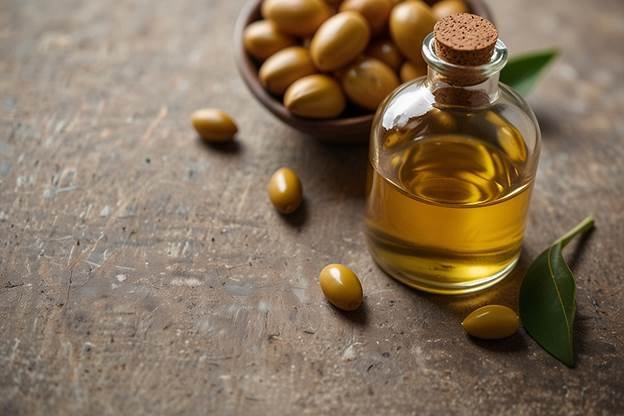
My bathroom cabinet used to look like a skincare store exploded in it. Serums, moisturizers, eye creams, treatments for this, solutions for that. I was spending hundreds of dollars trying to fix my combination skin that somehow managed to be both oily and dry at the same time.
Then a friend suggested something that sounded too simple to work: jojoba oil for facial treatment.
Just oil. Plain oil. On my face. The same face that breaks out if I even look at heavy moisturizers wrong.
I was skeptical. But I was also tired of spending money on products that promised miracles and delivered mediocrity. So I bought a small bottle of organic jojoba oil for about fifteen dollars and figured I’d give it two weeks.
That was eight months ago. My expensive moisturizer is still sitting in the cabinet, barely touched.
What Makes Jojoba Oil Different
Here’s the thing I didn’t know before I started researching: jojoba oil isn’t technically an oil at all. It’s a liquid wax. And weirdly, its molecular structure is almost identical to the sebum your skin naturally produces.
Think about that for a second. Your skin is already making its own moisturizer. Jojoba oil for facial treatment works because it’s so similar to what your body produces that your skin basically thinks it’s getting exactly what it needs.
This is why it works for pretty much every skin type. If you have dry skin, jojoba oil provides moisture without feeling greasy. If you have oily skin like mine, it actually tricks your skin into producing less oil because it thinks there’s already enough.
I know that sounds like marketing nonsense, but I watched it happen on my own face. Within about ten days, the oily patches on my forehead and nose started calming down. My skin just looked more balanced.
My First Week Experiment
The first time I used jojoba oil for facial treatment, I was nervous. I cleansed my face, dried it mostly but not completely, and put three drops in my palm. That’s it. Three drops for my entire face.
I warmed it between my hands and pressed it gently into my skin, starting from the center of my face and working outward. It absorbed almost immediately. No greasy residue. No shine. Just soft, hydrated skin.
The next morning, I woke up expecting a breakout. My skin usually punishes me for trying new things. But nothing happened. My skin looked normal. Actually, better than normal. It looked calm.
By day three, I noticed the dry patches around my nose were gone. By day five, my skin texture felt smoother. By the end of week one, I was genuinely impressed.
The Science Behind Why It Works
I’m not a dermatologist, but I got curious and did some digging. Turns out jojoba oil for facial treatment has some solid science backing it up.
It’s loaded with vitamin E, which is a powerful antioxidant that helps fight free radicals and can reduce signs of aging. It also contains B-complex vitamins, zinc, and copper, all of which play roles in skin health and wound healing.
The anti-inflammatory properties mean it can help with conditions like eczema and psoriasis. And because it’s non-comedogenic, meaning it doesn’t clog pores, it’s actually helpful for acne-prone skin.
That last part blew my mind. I’d spent years avoiding oils because I thought they’d make me break out. But jojoba oil for facial treatment actually has antibacterial properties that can help prevent acne. Some studies even show it can help heal acne scars faster.
How I Actually Use It
After eight months, I’ve figured out what works best for my skin. Here’s my routine:
Morning: After cleansing, while my face is still slightly damp, I use two drops of jojoba oil. I press it into my skin, then apply sunscreen over it. The oil actually helps my sunscreen spread more evenly.
Night: After cleansing, I use three to four drops. Sometimes I mix it with a drop of vitamin C serum. I massage it in gently, paying extra attention to the areas around my eyes where I’m starting to see fine lines.
Makeup removal: This is where jojoba oil really shines. A few drops on a cotton pad removes everything, even waterproof mascara, without tugging on my skin. Then I cleanse normally.
The key is using it on damp skin. This helps lock in moisture. And you need way less than you think. I’ve had the same $15 bottle for six months and I’m only halfway through it.
What Changed in My Skin
The most obvious change was texture. My skin just feels smoother now. The rough patches are gone. When I put on makeup, it goes on more evenly and looks more natural.
The fine lines around my eyes haven’t disappeared, but they’re definitely less noticeable. My skin looks plumper and more hydrated, which makes sense since jojoba oil helps your skin retain moisture.
My complexion is more even too. I used to have some redness and irritation, especially in the winter. That’s mostly gone now. My skin just looks calmer and healthier overall.
And the breakouts? They’re rare now. When I do get one, it heals faster than it used to. I think that’s the antibacterial and wound-healing properties at work.
The Unexpected Benefits
Beyond my face, I started using jojoba oil for other things. It’s great as a cuticle oil. I put a drop on my fingernails before bed and my cuticles look so much better.
I also use it on my lips when they’re really dry. It’s more effective than most lip balms I’ve tried, and it lasts longer.
My friend who originally recommended it uses it as a hair treatment. She puts it on her ends before blow-drying. I haven’t tried that yet, but I probably will.
Things to Keep in Mind
Jojoba oil for facial treatment isn’t a miracle cure. It’s not going to erase deep wrinkles or fix serious skin conditions. If you have a skin issue that needs medical attention, you should see a dermatologist.
Also, like with any new skincare product, patch test it first. Jojoba oil is generally well-tolerated, but allergic reactions can happen. Put a tiny bit on your inner arm and wait 24 hours to make sure you don’t react.
And quality matters. Look for organic, cold-pressed jojoba oil. The cold-pressing process preserves more of the beneficial compounds. It should be clear or slightly golden and shouldn’t have a strong smell.
For more detailed information about using jojoba oil for face care, including specific techniques and additional benefits, sites like HealthPally have comprehensive guides that break down everything you need to know.
The Cost Reality Check
Let’s talk money for a second. My previous moisturizer cost $80 and lasted maybe two months if I was careful with it. That’s $480 a year.
My bottle of jojoba oil cost $15. At my current usage rate, one bottle lasts about six months. That’s $30 a year.
I’m saving over $400 annually by switching to jojoba oil for facial treatment. That’s not counting the eye cream I don’t buy anymore, or the acne treatments I no longer need, or the makeup remover I replaced.
The financial savings alone would be worth it. But the fact that my skin actually looks better? That’s the real win.
Not for Everyone, But Worth Trying
I’m not going to sit here and tell you jojoba oil is the answer to all skincare problems. Skincare is personal. What works for me might not work for you.
But if you’re frustrated with expensive products that aren’t delivering results, or if you’re looking for something simpler and more natural, jojoba oil for facial treatment is worth trying.
It’s affordable enough that if it doesn’t work, you’re not out much money. And if it does work, you might find yourself wondering why you ever spent so much on complicated skincare routines.
For me, the switch to jojoba oil was about more than just saving money or simplifying my routine. It was about finding something that actually worked with my skin instead of trying to force my skin to work with a product.
Eight months in, I’m not going back to my old routine. My skin is happier, my wallet is happier, and my bathroom cabinet is a lot less cluttered.
Sometimes the simplest solutions really are the best ones.
About: Mansoor Ali is the founder of MajestySEO, a digital marketing agency he started in 2012. They specialize in custom SEO and powerful link building strategies.